

Online courses directory (19947)

Prisoners' Dilemma and Nash Equilibrium. More on Nash Equilibrium. Why Parties to Cartels Cheat. Game Theory of Cheating Firms. Prisoners' Dilemma and Nash Equilibrium. More on Nash Equilibrium. Why Parties to Cartels Cheat. Game Theory of Cheating Firms.

Comment les humains s’organisent-ils en sociétés ? Qu’appelle-t-on « familles » et comment se constituent-elles ? Quel regard et quels types d’analyse l’anthropologie propose-t-elle sur les systèmes de parenté, symboliques, politiques, religieux ?
L’anthropologie prospective nous aide à comprendre et à anticiper les phénomènes qui transforment nos modes de vie contemporains. Elle pose un regard transversal sur les actions, les pratiques et les dires des personnes avec lesquelles travaillent les chercheurs.
« Entrer en anthropologie », c’est accepter de changer son regard sur le monde et de se décentrer par rapport à ses habitudes. Si vous désirez comprendre un peu mieux le monde et ses changements contemporains, suivez ces chercheurs sur leur terrain et expérimentez d’autres repères culturels.
Durant ces quelques heures, vous serez amenés à débattre avec des professeurs et des étudiants autour de questions sur la famille, les migrations, les mondes virtuels ou encore les mondes des invisibles. Vous apprendrez les bases de l'approche anthropologique et ce qu'elle peut vous apporter en termes de réflexion sur votre propre société, sur votre vie et votre quotidienneté. Ce cours vous donne l’opportunité de comparer vos expériences et d’échanger vos points de vue avec des personnes d’autres horizons.
Les six semaines de cours aborderont une série de thématiques illustrées par des exemples concrets de modes d’existence divers et disséminés sur le globe. Des enseignants plongés au cœur des pratiques sociales et des enjeux politiques et économiques les plus variés partageront avec vous leur expérience après des années d'immersion sur les terrains de recherche qui les passionnent.
Si vous êtes curieux de tout et que comprendre votre propre société mais aussi des sociétés méconnues vous intéresse, ce cours s'adresse à vous !
How do human beings organize themselves in societies? What do we call “families” and how do they form? What type of analysis does anthropology propose about parenthood, and symbolic, political and religious systems?
Prospective anthropology helps us to understand and anticipate phenomena that transform our ways of life today. It gives a cross-cutting look at the actions, practices, and words of those people with whom anthropological researchers work.
To understand anthropology is to accept changing your view of the world, and to shift your perpsective of your own habits. If you want to understand the world and its contemporary changes more deeply, follow these researchers in their field, and experiment with other cultural references.
In this course, you will debate with professors and students about family, migrations, virtual worlds, and the world of « invisibles. » You will learn the basis of the anthropological approach and what it can bring you as a reflection tool about your own society and your everyday life. This course gives you the opportunity to compare your experiences and to exchange points of view with people from all around the world.
Professors immersed in the heart of various social practices, political and economic issues will share their experiences with you after years of research in fields that they are passionate about.
If you are curious about everything, and if you are interested in understanding your own society but also unknown societies, this course is for you!

Interested in gaining the basic skills needed to go beyond simple IP address management? It may be time to consider management tools like DHCP and DNS in your quest to optimize your network infrastructure management.
This computer science course is an introduction to working with Dynamic Host Configuration Protocol (DHCP) in a Windows Server networked environment where you’ll have an opportunity to learn the basics of IP address management, DHCP scope creation and configuration and how to manage and maintain a DHCP infrastructure.
This self-paced interactive computer science course is the third in a series of courses where you’ll have the opportunity to learn the fundamentals of Windows Server 2012 operating system administrative tasks. Through video, practical exercises, and assessments, the task-focused material is designed to ensure you can confidently perform the relevant task.
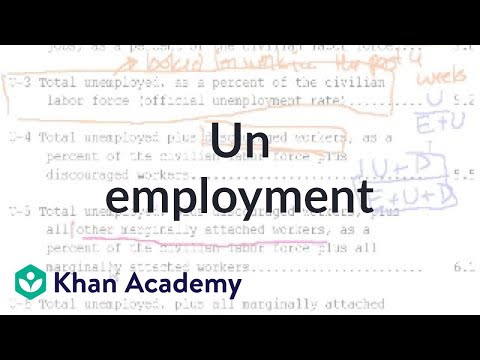
Discussions of economic topics and how they relate to current events. Unemployment. Unemployment Rate Primer (v2). Unemployment Rate Primer. Simple Analysis of Cost per Job Saved from Stimulus. Unemployment. Unemployment Rate Primer (v2). Unemployment Rate Primer. Simple Analysis of Cost per Job Saved from Stimulus.

The Power of the Docs. Pseudo-Code. Clarifying with Comments.

Know when someone is lying to you. You will learn how to spot deception and uncover hidden emotions.

Nanoelectronic devices are an integral part of our life, including the billion-plus transistors in every smartphone, each of which has an active region that is only a few hundred atoms in length.
This nanotechnology course explains the fundamentals of nanoelectronics and mesoscopic physics.
Even with NO prior background in quantum mechanics, you should learn about cutting-edge developments and concepts that will prepare you for a future in nanotechnology and nanoelectronics.
Indeed we hope you will be excited to join the field and help invent the new devices that will shape the electronics of this century and meet its challenges.
Second in a two part series, this nanotechnology course provides an introduction to more advanced topics, including the Non-Equilibrium Green’s Function (NEGF) method widely used to analyze quantum transport in nanoscale devices. We will explore a number of topics within nanoelectronics, taking a more in depth look at quantum transport, gaining greater insight into the application of the Schrodinger Equation, and learning the basics of spintronics.
“The course was just awesome!”
- Student from Part A
This course is the latest in a series offered by the nanoHUB-U project which is jointly funded by Purdue and the National Science Foundation with the goal of transcending disciplines through short courses accessible to students in any branch of science or engineering. These courses focus on cutting-edge topics distilled into short lectures with quizzes and practice exams.

KIeHealthX will introduce students to the field of eHealth and its opportunities and challenges. During the course you will get to know the different concepts that are used in the field and learn how it developed historically. This basic knowledge will help you to understand the opportunities and challenges of the field. You will meet different stakeholders from various countries and get to know their views on the opportunities and challenges of eHealth. We will introduce you to eHealth strategies and frameworks for developing and analyzing them. You will get to know methods for eHealth service development and discuss basic requirements that are necessary to achieve sustainable eHealth applications for both clinical professionals and patients.
You will see examples of eHealth applications in different contexts and for different users. We will discuss questions such as:
- What is it that is so unique about the health sector?
- What factors are important - to avoid failures when implementing eHealth?
- What are usable tools for care professionals?
- How can patients best organize and use their own health data to improve their condition?
eHealth is a global issue but successful eHealth implementation is very dependent on the local context. At the end of the course you will have a basic understanding what eHealth is and how to set up eHealth strategies and discuss them in your specific context. You will also get to know success factors and pitfalls for the development of sustainable eHealth services and their implementation.

This course is offered in collaboration with EIT Health.

Learn how electronic gadgets are designed, developed, and built as embedded systems that shape the world.
This is part one of a two part sequence. Together these are hands-on, learn-by-doing courses that show you how to build solutions to real-world problems using embedded systems. In this course, we take a bottom-up approach to problem solving, building gradually from simple interfacing of switches and LEDs to complex concepts like a microcontroller-based pacemaker, digital lock, and a traffic light controller. We will present both general principles and practical tips for building circuits and programming the microcontroller in the C programming language. You will develop debugging skills using oscilloscopes, logic analyzers, and software instrumentation. Laboratory assignments are first performed in simulation, and then you will build and debug your system on the real microcontroller. At the conclusion of this part 1 you will possess the knowledge to build your own traffic light controller from the ground up.
This is the fourth time we have offered this course. Since the reviews have been overwhelmingly positive we do not plan major changes over the previous offerings of the course. We did however break the large class into two smaller classes. There are eight labs in part 1 and six labs in part 2. Students can pick and choose a subset of labs to achieve certification. The three labs that students found most rewarding in this part were designing the software algorithm for a demand pacemaker, interfacing switches and LEDS, and the finite state machine traffic light controller.
To complete this course, you will be required to purchase a Texas Instruments TM4C123 microcontroller kit and a few electronic components.
This microcontroller has a state-of-the-art ARM Cortex-M4 processor.
We will provide instructions about purchasing the kit and installing required software at: http://edx-org-utaustinx.s3.amazonaws.com/UT601x/index.html.

We will explain how to start with raw data, and perform the standard processing and normalization steps to get to the point where one can investigate relevant biological questions. Throughout the case studies, we will make use of exploratory plots to get a general overview of the shape of the data and the result of the experiment. We start with RNA-seq data analysis covering basic concepts of RNA-seq and a first look at FASTQ files. We will also go over quality control of FASTQ files; aligning RNA-seq reads; visualizing alignments and move on to analyzing RNA-seq at the gene-level: counting reads in genes; Exploratory Data Analysis and variance stabilization for counts; count-based differential expression; normalization and batch effects. Finally, we cover RNA-seq at the transcript-level: inferring expression of transcripts (i.e. alternative isoforms); differential exon usage. We will learn the basic steps in analyzing DNA methylation data, including reading the raw data, normalization, and finding regions of differential methylation across multiple samples. The course will end with a brief description of the basic steps for analyzing ChIP-seq datasets, from read alignment, to peak calling, and assessing differential binding patterns across multiple samples.
Given the diversity in educational background of our students we have divided the series into seven parts. You can take the entire series or individual courses that interest you. If you are a statistician you should consider skipping the first two or three courses, similarly, if you are biologists you should consider skipping some of the introductory biology lectures. Note that the statistics and programming aspects of the class ramp up in difficulty relatively quickly across the first three courses. By the third course will be teaching advanced statistical concepts such as hierarchical models and by the fourth advanced software engineering skills, such as parallel computing and reproducible research concepts.
These courses make up 2 XSeries and are self-paced:
PH525.1x: Statistics and R for the Life Sciences
PH525.2x: Introduction to Linear Models and Matrix Algebra
PH525.3x: Statistical Inference and Modeling for High-throughput Experiments
PH525.4x: High-Dimensional Data Analysis
PH525.5x: Introduction to Bioconductor: annotation and analysis of genomes and genomic assays
PH525.6x: High-performance computing for reproducible genomics
PH525.7x: Case studies in functional genomics
This class was supported in part by NIH grant R25GM114818.
HarvardX requires individuals who enroll in its courses on edX to abide by the terms of the edX honor code. HarvardX will take appropriate corrective action in response to violations of the edX honor code, which may include dismissal from the HarvardX course; revocation of any certificates received for the HarvardX course; or other remedies as circumstances warrant. No refunds will be issued in the case of corrective action for such violations. Enrollees who are taking HarvardX courses as part of another program will also be governed by the academic policies of those programs.
HarvardX pursues the science of learning. By registering as an online learner in an HX course, you will also participate in research about learning. Read our research statement to learn more.
Harvard University and HarvardX are committed to maintaining a safe and healthy educational and work environment in which no member of the community is excluded from participation in, denied the benefits of, or subjected to discrimination or harassment in our program. All members of the HarvardX community are expected to abide by Harvard policies on nondiscrimination, including sexual harassment, and the edX Terms of Service. If you have any questions or concerns, please contact harvardx@harvard.edu and/or report your experience through the edX contact form.
We begin with an introduction to the biology, explaining what we measure and why. Then we focus on the two main measurement technologies: next generation sequencing and microarrays. We then move on to describing how raw data and experimental information are imported into R and how we use Bioconductor classes to organize these data, whether generated locally, or harvested from public repositories or institutional archives. Genomic features are generally identified using intervals in genomic coordinates, and highly efficient algorithms for computing with genomic intervals will be examined in detail. Statistical methods for testing gene-centric or pathway-centric hypotheses with genome-scale data are found in packages such as limma, some of these techniques will be illustrated in lectures and labs.
Given the diversity in educational background of our students we have divided the series into seven parts. You can take the entire series or individual courses that interest you. If you are a statistician you should consider skipping the first two or three courses, similarly, if you are biologists you should consider skipping some of the introductory biology lectures. Note that the statistics and programming aspects of the class ramp up in difficulty relatively quickly across the first three courses. By the third course will be teaching advanced statistical concepts such as hierarchical models and by the fourth advanced software engineering skills, such as parallel computing and reproducible research concepts.
These courses make up 2 XSeries and are self-paced:
PH525.1x: Statistics and R for the Life Sciences
PH525.2x: Introduction to Linear Models and Matrix Algebra
PH525.3x: Statistical Inference and Modeling for High-throughput Experiments
PH525.4x: High-Dimensional Data Analysis
PH525.5x: Introduction to Bioconductor: annotation and analysis of genomes and genomic assays
PH525.6x: High-performance computing for reproducible genomics
PH525.7x: Case studies in functional genomics
This class was supported in part by NIH grant R25GM114818.
HarvardX requires individuals who enroll in its courses on edX to abide by the terms of the edX honor code. HarvardX will take appropriate corrective action in response to violations of the edX honor code, which may include dismissal from the HarvardX course; revocation of any certificates received for the HarvardX course; or other remedies as circumstances warrant. No refunds will be issued in the case of corrective action for such violations. Enrollees who are taking HarvardX courses as part of another program will also be governed by the academic policies of those programs.
HarvardX pursues the science of learning. By registering as an online learner in an HX course, you will also participate in research about learning. Read our research statement to learn more.
Harvard University and HarvardX are committed to maintaining a safe and healthy educational and work environment in which no member of the community is excluded from participation in, denied the benefits of, or subjected to discrimination or harassment in our program. All members of the HarvardX community are expected to abide by Harvard policies on nondiscrimination, including sexual harassment, and the edX Terms of Service. If you have any questions or concerns, please contact harvardx@harvard.edu and/or report your experience through the edX contact form.

Learn how to create Wordpress plugins from scratch!

Combining leadership, management & entrepreneurship skills, discover the 21 Principles of 21st Century Leadership.

Learn how to create an online course using the Moodle Learning Management System.

Learn yoga 30 minutes a day with poses, teachings for meditation, breathing, philosophy, chai tea. Beginners welcome.

An exploration of the scenery, culture and of course plants of one of the world's biodiversity hot spots.
In the PH525 case studies, we will explore the data analysis of an experimental protocol in depth, using various open source software, including R and Bioconductor. We will explain how to start with raw data, and perform the standard processing and normalization steps to get to the point where one can investigate relevant biological questions. Throughout the case studies, we will make use of exploratory plots to get a general overview of the shape of the data and the result of the experiment.
We will learn the basic steps in analyzing DNA methylation data, including reading the raw data, normalization, and finding regions of differential methylation across multiple samples.
This class was supported in part by NIH grant R25GM114818.
This course is part of a larger set of 8 total courses running Self-Paced through September 15th, 2015:
PH525.1x: Statistics and R for the Life Sciences
PH525.2x: Introduction to Linear Models and Matrix Algebra
PH525.3x: Advanced Statistics for the Life Sciences
PH525.4x: Introduction to Bioconductor
PH525.5x: Case study: RNA-seq data analysis
PH525.6x: Case study: Variant Discovery and Genotyping
PH525.7x: Case study: ChIP-seq data analysis
PH525.8x: Case study: DNA methylation data analysis
HarvardX requires individuals who enroll in its courses on edX to abide by the terms of the edX honor code. HarvardX will take appropriate corrective action in response to violations of the edX honor code, which may include dismissal from the HarvardX course; revocation of any certificates received for the HarvardX course; or other remedies as circumstances warrant. No refunds will be issued in the case of corrective action for such violations. Enrollees who are taking HarvardX courses as part of another program will also be governed by the academic policies of those programs.
HarvardX pursues the science of learning. By registering as an online learner in an HX course, you will also participate in research about learning. Read our research statement to learn more.
Harvard University and HarvardX are committed to maintaining a safe and healthy educational and work environment in which no member of the community is excluded from participation in, denied the benefits of, or subjected to discrimination or harassment in our program. All members of the HarvardX community are expected to abide by Harvard policies on nondiscrimination, including sexual harassment, and the edX Terms of Service. If you have any questions or concerns, please contact harvardx@harvard.edu and/or report your experience through the edX contact form.

China (Part 1): Political and Intellectual Foundations: From the Sage Kings to Confucius and the Legalists is the first of ten parts of ChinaX, that collectively span over 6,000 years of history. Each part consists of 4 to 8 weekly "modules," each with videos, readings, interactive engagements, assessments, and discussion forums. There are a total of 52 modules in ChinaX.
Parts 1-5 make up China: Civilization and Empire, taught by Professor Peter K. Bol. Parts 6-10 make up China and the Modern World, taught by Professor William C. Kirby.
For more information about ChinaX, please visit the ChinaX page.
HarvardX requires individuals who enroll in its courses on edX to abide by the terms of the edX honor code. HarvardX will take appropriate corrective action in response to violations of the edX honor code, which may include dismissal from the HarvardX course; revocation of any certificates received for the HarvardX course; or other remedies as circumstances warrant. No refunds will be issued in the case of corrective action for such violations. Enrollees who are taking HarvardX courses as part of another program will also be governed by the academic policies of those programs.
HarvardX pursues the science of learning. By registering as an online learner in an HX course, you will also participate in research about learning. Read our research statement to learn more.
Harvard University and HarvardX are committed to maintaining a safe and healthy educational and work environment in which no member of the community is excluded from participation in, denied the benefits of, or subjected to discrimination or harassment in our program. All members of the HarvardX community are expected to abide by Harvard policies on nondiscrimination, including sexual harassment, and the edX Terms of Service. If you have any questions or concerns, please contact harvardx@harvard.edu and/or report your experience through the edX contact form.
If you’re interested in data analysis and interpretation, then this is the data science course for you.
Enhanced throughput: Almost all recently manufactured laptops and desktops include multiple core CPUs. With R, it is very easy to obtain faster turnaround times for analyses by distributing tasks among the cores for concurrent execution. We will discuss how to use Bioconductor to simplify parallel computing for efficient, fault-tolerant, and reproducible high-performance analyses. This will be illustrated with common multicore architectures and Amazon’s EC2 infrastructure.
Enhanced interactivity: New approaches to programming with R and Bioconductor allow researchers to use the web browser as a highly dynamic interface for data interrogation and visualization. We will discuss how to create interactive reports that enable us to move beyond static tables and one-off graphics so that our analysis outputs can be transformed and explored in real time.
Enhanced reproducibility: New methods of virtualization of software environments, exemplified by the Docker ecosystem, are useful for achieving reproducible distributed analyses. The Docker Hub includes a considerable number of container images useful for important Bioconductor-based workflows, and we will illustrate how to use and extend these for sharable and reproducible analysis.
Given the diversity in educational background of our students we have divided the series into seven parts. You can take the entire series or individual courses that interest you. If you are a statistician you should consider skipping the first two or three courses, similarly, if you are biologists you should consider skipping some of the introductory biology lectures. Note that the statistics and programming aspects of the class ramp up in difficulty relatively quickly across the first three courses. By the third course will be teaching advanced statistical concepts such as hierarchical models and by the fourth advanced software engineering skills, such as parallel computing and reproducible research concepts.
These courses make up 2 XSeries and are self-paced:
PH525.1x: Statistics and R for the Life Sciences
PH525.2x: Introduction to Linear Models and Matrix Algebra
PH525.3x: Statistical Inference and Modeling for High-throughput Experiments
PH525.4x: High-Dimensional Data Analysis
PH525.5x: Introduction to Bioconductor: annotation and analysis of genomes and genomic assays
PH525.6x: High-performance computing for reproducible genomics
PH525.7x: Case studies in functional genomics
This class was supported in part by NIH grant R25GM114818.
HarvardX requires individuals who enroll in its courses on edX to abide by the terms of the edX honor code. HarvardX will take appropriate corrective action in response to violations of the edX honor code, which may include dismissal from the HarvardX course; revocation of any certificates received for the HarvardX course; or other remedies as circumstances warrant. No refunds will be issued in the case of corrective action for such violations. Enrollees who are taking HarvardX courses as part of another program will also be governed by the academic policies of those programs.
HarvardX pursues the science of learning. By registering as an online learner in an HX course, you will also participate in research about learning. Read our research statement to learn more.
Harvard University and HarvardX are committed to maintaining a safe and healthy educational and work environment in which no member of the community is excluded from participation in, denied the benefits of, or subjected to discrimination or harassment in our program. All members of the HarvardX community are expected to abide by Harvard policies on nondiscrimination, including sexual harassment, and the edX Terms of Service. If you have any questions or concerns, please contact harvardx@harvard.edu and/or report your experience through the edX contact form.

A systematic approach to learning digital photograph workflows
Add to calendar

Trusted paper writing service WriteMyPaper.Today will write the papers of any difficulty.