

Online courses directory (108)
Коротко о курсе
В курсе рассматриваються вопросы, посвященные определению эфективности применения различных видов альтернативных топлив. Определенный интерес представляет обоснование целисообразностивыращивания сельскохозяйственных культур для производства биотоплива. В курсе рассматриваються следующие темы: введение в менеджмент альтернативных топлив в АПК; показатели эффективности использования энергетических ресурсов; эффективность использования альтернативных топливно-энергетических ресурсов; свойства и применение газообразных топлив; эффективное использование биотоплива растительного происхождения; расположение заводов по производству биотоплива.
Навыки приобретенные в ходе курса?
Целями данного курса являются:
1. Дать студентам основные понятия о менеджменте альтернативных топлив в сельском хозяйстве.
2. Познакомить студентов с экономическими и энергетическими методами сравнения и оценки альтернативных моторных топлив.
3. Показать возможность практического применения альтернативных топлив на конкретных примерах.
4. Показать методику определения целесообразности производства биотоплив из сельскохозяйственных культур и определения оптимального расположения заводов по производству биотоплива.
В конце этого курса, каждый студент должен уметь:
1. Пользоваться понятиями и терминологию, которые используются в менеджменте альтернативных топлив в сельском хозяйстве. Анализировать общую тенденцию рынка энергетических ресурсов, роль альтернативных видов топлива (в том числе возобновляемые).
2. Определять стоимость энергии топлив и сравнить различные виды моторных топлива.
3. Выполнять экономическую и энергетическую оценку эффективности использования сельскохозяйственных культур для производства биотоплива.
4. Проводить анализ экономической эффективности использования альтернативных видов топлива сельскохозяйственной техникой.
5. Определять оптимальное расположение заводов по производству биотоплива.
Предварительные знания
Базовые знания в области математики, экономики, мобильных энергетических средств.
Структура курса
Глава 1
1: Введение в менеджмент альтернативных топлив в АПК.
1.1. Предмет дисциплины.
1.2. Общая тенденция рынков энергетических ресурсов.
1.3. Общие тенденции рынка нефти.
1.4. Современное состояние использования энергетических ресурсов в сельском хозяйстве.
1.5. Задачи менеджмента альтернативных топлив
Глава 2
2: Показатели эффективности использования энергетических ресурсов.
2.1. Система показателей эффективности использования энергетических ресурсов.
2.2. Структура потребления топливно-энергетических ресурсов и классификация моторных топлив.
2.3. Показатели использования. Условное топливо, тепловые и технические топливные эквиваленты.
2.4. Показатели наличия
2.5. Показатели результативности.
Глава 3
3: Эффективность использования альтернативных топливно-энергетических ресурсов.
3.1. Методика оценки топлив. Эксплуатационно-потребительские показатели.
3.2. Производственно-технологические показатели.
3.3. Экологические показатели топлив.
3.4. Стоимость энергии топлив.
3.5. Определение целесообразности производства топлив растительного происхождения.
3.6. Оценка эффективности использования альтернативных моторных топлив.
Глава 4
4: Свойства и применение газообразных топлив.
4.1. Историческая справка.
4.2. Эксплуатационно-технические требования к газообразным топливам.
4.3. Физическо-химические свойства сжиженного нефтяного газа.
4.4. Основные свойства природного газа.
4.5. Основные свойства биогаза и тенденции его производства.
4.6. Оценка применения газообразных топлив.
4.7. Опыт использования биогаза как моторного топлива.
4.8. Оценка эффективности применения передвижных автомобильных газовых заправщиков.
4.9. Оценка эффективности применения автомобильных газонаполнительных компрессорных станций.
Глава 5
5: Эффективное использование биотоплива растительного происхождения.
5.1. Производство и использование биотоплива для дизельных двигателей.
5.2. Преимущества и недостатки использования биодизельного топлива.
5.3. Основные физические свойства биотоплив.
5.4. Основные эксплуатационные свойства.
5.5. Адаптация автотракторных двигателей для работы на биотопливах.
5.6. Производство и использование биоэтанола.
5.7. Биоэтанол как моторного топлива для двигателей с искровым воспламенением.
5.8. Применение спиртов в дизельных двигателях.
Глава 6
6: Расположение заводов по производству биотоплива.
6.1. Схемы производства биотоплива.
6.2. Необходимая площадь под энергетическое биосырье.
6.3. Средний радиус перевозок.
6.4. Оптимальное расположение предприятий по производству биотоплив с учетом урожайности растительного биосырья.
6.5. Алгоритм выбора схемы расположения заводов по производству биотоплива.
Как зарегистрироваться на курс:
Нажмите, пожалуйста, сверху на ссылку "ENROL FOR FREE" (на немецком "KOSTENLOS EINSCHREIBEN")

потом введите Ваше имя, фамилию, е-маил и простой пароль
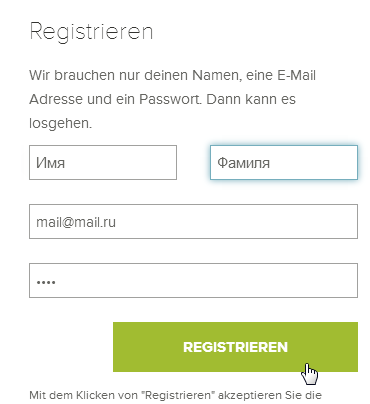
нажмите, пожалуйста, не зеленную кнопку, чтобы получить ссылку для активации

посмотрите, пожалуйста, Ваш почтовой ящик (или спам)

нажмите потом на ссылку "активировать"
Вы зарегистрированы!
Целью курса Международного Аграрного менеджмента является обеспечение теоретическими знаниями для принятия эффективных решений и объяснение изученного материала на конкретных практических примерах в области производства. В данном курсе обсуждаются возможности приобретения долгосрочных средств производства, например, трактора. При этом возникает вопрос о покупке или аренде этого средства производства, в связи с чем будут разъяснены теоретические основы для принятия экономически выгодного решения. Затем теория будет показана на конкретных практических примерах. В итоге полученные результаты будут разъяснены и оценены.
Курс состоит из 5 модулей.
Представленные примеры взяты из реальных сельскохозяйственных предприятий.
В каждом модуле курса отведено время для дискуссий и вопросов в виртуальном чате, к которому имеют доступ все пользователи.
Kursbeschreibung
Dieser MOOC bereitet die wissenschaftlichen Grundlagen des Klimawandels und dessen Folgen für Natur und Gesellschaft auf. Die Grundlage bildet der 5. Sachstandbericht des IPCC. Alle Interessierten können sich hier eingehend mit dem Thema verständlich aufbereiteter Wissenschaft beschäftigen. Lehrkräfte und Studierende können das Thema auch im Sinne einer Bildung für nachhaltige Entwicklung in den Unterricht aufnehmen und Energiemanager und -berater in Kommunen und Städten erhalten mit diesem Kurs eine einfache Möglichkeit, sich klimafit zu machen und bestehendes Wissen zu vertiefen.
Gefördert wird das Projekt von der Robert Bosch Stiftung.
Was lerne ich in diesem Kurs?
- Ein fundiertes Grundverständnis des Klimasystems und des Klimawandels erwerben und die Bedeutung komplexer Zusammenhänge im Klimasystem verstehen.
- Natürliche und anthropogene Einflüsse auf das Klimasystem sowie die natürliche interne Klimavariabilität unterscheiden können.
- Ursachen des anthropogenen Klimawandels verstehen.
- Verschiedene Szenarien für den Klimawandel im 21. Jahrhundert verstehen.
- Folgen des anthropogenen Klimawandels für Natur und Gesellschaft verstehen und einordnen sowie einen Überblick über Handlungsoptionen erwerben.
- Die wissenschaftliche Arbeitsweise in der Klimaforschung und ihre wichtigsten Methoden kennenlernen. Interessengeleitete Informationen von wissenschaftlich belastbarem Wissen unterscheiden können und inhärente Unsicherheiten richtig einordnen können.
- Verlässliche Quellen für wissenschaftliche Informationen und aufbereitete Darstellungen kennenlernen.
- Wissenschaftliche Institutionen in der Klimaforschung und Forscherpersönlichkeiten exemplarisch kennenlernen.
Welches Vorwissen brauche ich?
Du brauchst kein Vorwissen, um erfolgreich am Kurs teilzunehmen.
Kursstruktur
Hauptsprecher
• Prof. Dr. Mojib Latif, GEOMAR Helmholtz-Zentrum für Ozeanforschung Kiel
• Prof. Dr. Jochem Marotzke, Max-Planck-Institut für Meteorologie Hamburg
• Prof. Dr. Michael Schulz, MARUM – Zentrum für Marine Umweltwissenschaften an der Universität Bremen
• Prof. Dr. Hermann Lotze-Campen, Potsdam-Institut für Klimafolgenforschung
• Prof. Dr. Anita Engels, Exzellenzcluster „Integrated Climate System Analysis and Prediction“ (CliSAP) an der Universität Hamburg
Programmauswahl:
Einführung und Moderation: Dirk Steffens (Wissenschaftsjournalist und Filmemacher)
Kapitel 1: Klimasystem und Klimawandel
Dr. Paul Becker (Deutscher Wetter Dienst): Klima, Wetter, Witterung, Extremereignisse
Prof. Dr. Mojib Latif (GEOMAR): Das Klimasystem und seine Komponenten
Prof. Dr. Mojib Latif (GEOMAR): Wie funktioniert der (natürliche) Treibhauseffekt?
Prof. Dr. Mojib Latif (GEOMAR): Menschliche Emissionen verstärken den natürlichen Treibhauseffekt
Prof. Dr. Mojib Latif (GEOMAR): Weitere Antriebe und interne Variabilität
Dr. Sonja Peterson (Institut für Weltwirtschaft): Quellen+ Ursachen menschl.Treibhausgasemissionen
Dr. Sonja Peterson (Institut für Weltwirtschaft): Regionale Verteilung der Treibhausgasemissionen
Kapitel 2: Modelle und Szenarien
Prof. Dr. Jochem Marotzke (MPI met.): Die Modellierung des Klimasystems
Prof. Dr. Jochem Marotzke (MPI met.): Was ist ein Klimamodell?
Dr. Marco Giorgetta (MPI met.): Die wichtigsten Klimaszenarien
Dr. Tatiana Ilyina (MPI met.): Wie sieht das Klima in einer wärmeren Welt aus?
Prof. Dr. Jochem Marotzke (MPI met.): Warum 2 Grad?
Prof. Dr. Jochem Marotzke (MPI met.): Zusammenhang von Temperatur- und Emissionszielen
Dr. Christiane Textor (Deutsche IPCC-Koordinierungsstelle): Die Rolle des Weltklimarats IPCC
Kapitel 3: Klima der Vergangenheit
Prof. Dr. Michael Schulz (MARUM): Welche Informationen finden wir in einem Bohrkern?
Prof. Dr. Michael Schulz (MARUM): Vom Bohrkern zur Temperaturkurve der Vergangenheit
Dr. Ute Merkel (MARUM): Zusammenhang von CO2-Konzentration und Erdtemperatur
Prof. Dr. Gerald Haug (MPI Chemie): Klimawandel und die Maya
Dr. Ute Merkel (MARUM): Klimawandel der jüngeren Vergangenheit und der menschliche Einfluss
Prof. Dr. Michael Schulz (MARUM): Resümee: Botschaften aus der Klimageschichte
Kapitel 4: Folgen des Klimawandels
Prof. Dr. Hermann Lotze-Campen (PIK): Das Mosaik der Folgen des Klimawandels
Prof. Dr. Ulf Riebesell (GEOMAR): Ein Ökosystem unter Stress: Beispiel Ozeanversauerung
Prof. Dr. Hermann Lotze-Campen (PIK): Klimarisiken. Eine Definition
Prof. Dr. Hermann Lotze-Campen (PIK): Globale Folgen des Klimawandels in einzelnen Sektoren
Prof. Dr. Manfred Stock (PIK): Folgen des Klimawandels in Deutschland
Dr. Susanne Grossman-Clarke (PIK): Folgen des Klimawandels in Städten
Kapitel 5: Klimawandel und Gesellschaft
Prof. Dr. Anita Engels (CliSAP): Was bedeutet Klimawandel für die Gesellschaft und wie reagiert sie?
Prof. Dr. Beate Ratter (CliSAP): Anpassung an den Klimawandel
Prof. Dr. Michael Brzoska (CliSAP): Grenzen der Anpassung: Ressourcenkonflikte
Prof. Dr. Jürgen Scheffran (CliSAP): Grenzen der Anpassung: Migration
Prof. Dr. Hermann Held (CliSAP): Die 2 Grad-Grenze der Internationalen Klimapolitik
Prof. Dr. Anita Engels (CliSAP): Erfolge und Herausforderungen der Internationalen Klimapolitik
Prof. Dr. Hermann Held (CliSAP): Optionen und Instrumente im globalen Klimaschutz
Prof. Dr. Anita Engels (CliSAP): Europäische und deutsche Klimapolitik
Abschlussprüfung
Teilnehmer, die sich mit dem Zertifikats-Track angemeldet haben, können die Prüfung zwischen dem 05-19. Juli ablegen.

How can we think of culture as a tool to understand foreign societies?
Why emerging countries consider cultural values as instrumental in their quest for modernization?
How can art contribute to a country’s public image?
These are central questions in an increasingly globalized world. Through a case study on global culture, this online course on the first ever award for contemporary art in China named CCAA aims to address these questions and identify some possible answers.
While working through six chapters, you will receive exclusive reading material, supplementary videos and background information about the developments in the Chinese art scene of the last 40 years, the Chinese Contemporary Art Award established by Mr Uli Sigg as well as the Sigg Collection as part of the newly created museum M+ in Hong Kong.
Moreover, you get insights into contemporary Chinese art, first-hand information about the art scene in China, and a wide range of contacts with relevant local and international institutions and actors.
What will I learn?
In this online course you will learn about...
- ... the crucial stakeholders, institutions and networks that influence/d Chinese contemporary art.
- ...divergent terminological interpretations in a global context.
- ... how questions can be discussed and approached with the CCAA case study, by applying it to other topics in the field of global culture.
- ... the strategy of running an art award, as used by Uli Sigg to explore and describe the - to him unknown - field of Chinese contemporary art.
- ...the ambivalences of Chinese art historiography and how to build a sensorium for different interest groups and their agendas
- ... a method on how to study cultural milieus with the help of a specific model.
- and finally, you will develop criteria necessary for critically engaging with contemporary Chinese art.
By working through the entire online course, you will acquire the skills and knowledge needed to analyze and navigate the Chinese contemporary art scene.
What do I need to know?
If you opt for the Certification of Accomplishment track, you might have experience in a cultural or artistic field to bring in individual perspectives and your personal expertise. Such prior knowledge will help you while writing the assignment and applying models and methods.
With its audit track, the CCAA online course also welcomes curious individuals.
Course Structure
This online course will be accessible for one year, beginning on April 13, 2016. For the first six weeks, it will be released as a time-based MOOC with a new chapter launched every Wednesday. Later on, it will be available as a self-paced course.
The course includes six chapters:
1 - Chinese contemporary art in the context of cultural globalization
Chapter 1 gives you an insight into the complexity of how cultural globalization can be approached in form of a case study and why the example of China is appropriate to study these questions.
2 - Bringing up China – Uli Sigg, his collection and its internationalization
Chapter 2 «Bringing up China» leads to discussions on how culture can be understood as a tool in order to understand foreign societies and how Mr Sigg strategically approached China’s art scene.
3 - The west discovers contemporary Chinese Art — and so does China
Chapter 3 investigates how art can contribute to a country’s public image and how this has been used by different actors to promote a certain impression of Chinese society and cultural production.
4 - The Story of the Unknown Artist. From mapping the art scene to promoting excellency.
Chapter 4 broaches the subject on how the CCAA’s approach on promoting artists has changed over the years and why the model of the «unknown artist» is introduced to trace these changes.
5 - Locating the CCAA – From letter-box company to multi-purpose centre
Chapter 5 traces back the adaptations of the art prize and its institutional representation over the last 15 years. The learners find out about the enormous shifts in Chinese society, politics and also the art scene.
6 - 15 Years CCAA – Whom does Chinese contemporary art belong to?
Chapter 6 aims to discuss the question of independence in art on the occasion of the CCAA’s first encounter with government censorship during the 15-year anniversary show in Shanghai. Finally, the massive museum project M+ is presented.
The course features two different tracks. The Audit Track is for free and allows learners to get familiar with the subject. The Certificate Track costs €119. To obtain a Certificate of Accomplishment , participants must submit an assignment. The ZHdK Centre of Further Education evaluates assignments four times a year.
This MOOC was developed by four eminent scientists who together authored the health chapter in the recent 5th Assessment report of the IPCC. They offer you a short crash-course into the topic of climate change, tailored to senior policy-makers and negotiators of climate agreements, particularly as an input into the climate conference COP21 in Paris in December this year.
This 1 week MOOC requires 3 hours of investment time and provides hard evidence for four key arguments as to why health is and should be central in climate policy.
Two positive arguments:
1. Health is a positive motivator, a driving force for citizens and policy-makers to care about and act on climate change.
2. The huge health co-benefits must enter the risk-benefit calculations.
However, two arguments pertain to the restrictions that our health and physiology impose on humans under climate change, particularly in a world that is +4°C warmer:
1. There are health limits to adaptation.
2. Decreased work productivity in hot countries.
Finally, we should consider health as an indicator, not only for sustainable development, but also for climate policy.
Who should take this MOOC?
Senior, experienced members of climate negotiation teams from all 195 member states of the UNFCC. The course is launched to allow policy-makers involved in the Climate Conference COP21 in Paris 2015 to take it as part of their brief.
In addition, any policy maker at local, national, regional and global levels would benefit from the course, but in keeping with the philosophy of MOOCs, the course is open to any citizen interested in the topic.
What do I need to know?
Participants should be familiar with the essentials of the climate systems and the current debate on mitigation and adaptation policies, as well as proposals for fair financing of the shared but differentiated responsibilities of rich and poor countries, which are the agenda of the COP21 conference.
What will I learn?
(i) The participant will understand why health is not another sector but a key argument in developing climate policy and fair share of the burden and benefits of climate policies.
(ii) The participant will learn the scientific evidence behind the four key climate policy arguments based on human health:
1. Health is a positive motivator, a driving force for citizens.
2. The huge health co-benefits must enter the risk-benefit calculations.
3. There are health limits to adaptation.
4. Decreased work productivity in hot countries.
Course Structure
The course is organised in 4 lectures, each developing the evidence for the 4 health arguments, which we propose are inherent in all negotiations on climate policy:
1. Health is a positive motivator, a driving force for citizens.
2. The huge health co-benefits must enter the risk-benefit calculations.
3. There are health limits to adaptation.
4. Decreased work productivity in hot countries.
The four short lectures (8 minutes) are complementary and follow a common storyline. So it is desirable that the participants watch all of them. This would be an essential useful minimum of investment.
We offer 7 optional quiz questions for each lecture in case the participant wishes to check on his or her comprehension of the factual information provided.
Our discussion forums are key to our MOOC concept. This enables participants to engage in an exchange of views and information on any topic they wish related to the course topic. The course instructor and his assistant will actively participate in the forums.
Weekly YouTube feedback video: The course instructor will personally answer questions that are of great common interest or are frequently asked during a weekly youtube video, put on line each Friday at 2pm CET.
Personal email feedback: The instructor and our team will be available to respond to individual questions and comments directed at us through internal mail during the 3 months of the course will be online.

Course Summary
Modelling and simulation make a particular part of the world easier to define, visualize and understand. Both require the identification of relevant aspects of a situation in the real world and then the use of different types of models for different objectives and the definition of the most suitable model parameters.
This course provides to you a number of methods suitable for modelling technical systems and processes in a wide range of applications. These applications cover a range from image processing via machine learning to face recognition.
After introducing the techniques in general, you train their application to real problems employing the widely used modelling and simulation tool MATLAB®.
What will I learn?
- You will be acquainted with the concepts of modelling and simulation
- You will be able to implement and simulate models using MATLAB®.
- You will acquire further knowledge of Image Processing, Optical Character Recognition, Machine Learning and Face Recognition.
- If you are an enthusiastic student with only rudimentary programming knowledge you can acquire an understanding of basic MATLAB® programming.
What do I have to know?
The course will be taught on an academic level for undergraduate students. Therefore, mathematics and physics knowledge of at least secondary education level as well as programming knowledge is a prerequisite. MATLAB® is commercial software. As a result of support from MathWorks, students will be granted a downloadable license to MATLAB® for the duration of the course.
Course Schedule
Chapter 1: Introduction to MATLAB Concepts
Chapter 2: Modelling and Simulation
Chapter 3: The Basic Problem Solving Toolbox
Chapter 4: Advanced Problem Solving Methods
Chapter 5: Statistics and Image Processing
Chapter 6: Machine Learning in a Nutshell
Chapter 7: Optical Character Recognition
Cahpter 8: Face Recognition

Social innovations, i.e. new social practices, are everywhere and largely influence our lives: they change the rules of the game in business, civil society and politics. With social innovations, we can design social practices that are more beneficial, sustainable or just.
But what are social innovations? And what effects can they have? This course is an introduction to the topic. You will gain an overview of what social innovations are, how they function and how they can be developed.
What will I learn?
You will learn what social innovations are and understand how they can help solve societal problems. You will get an overview of important literature and debates on social innovation.
You will also learn and apply methods to develop, implement and scale social innovations. Exercises will allow you to apply the methods, develop your own ideas and gather first-hand experiences.
What do I need to know?
This is an introductory course. Previous knowledge is not required. The course is designed for people interested in understanding and/or designing societal change.
Course Structure
This is a self-paced course. This means that once the course initially begins, you can make your way through the course chapters at your own pace, without time pressure or deadlines.
Chapter 1: A New Innovation Paradigm
In this chapter, you will learn what “social innovation” means. You will get an overview of how social innovations can be developed and implemented. Also, we explain the differences between all the “social” something-concepts like social business, social entrepreneurship, and corporate social responsibilities.
Chapter 2: The Spectrum of Social Innovation
There are different forms and formats of social innovation. Gain an overview of the variety of social innovations in this chapter. Specifically, you learn about social innovations that origin in civil society, business, and the social sector. Moreover, you will learn about cross-sector social innovations.
Chapter 3: Broaden your Horizon: Questioning the Existing and Recognising Challenges
Social innovators see opportunities where others see problems. Learn to change your perspective in order to recognise opportunities to solve societal problems with social innovations.
Chapter 4: Designing and Implementing Social Innovations: Tools
Design Thinking and Lean Start-up will help you to design social innovations together with your (future) beneficiaries. Furthermore, you learn how you can convince others by using effective storytelling.
Chapter 5: Designing and Implementing Social Innovations: Learning from Others
You will learn how others developed and implemented social innovations and how they learned to overcome resistance. Also, you learn about typical mechanisms of social value creation.
Chapter 6: Impact and Vision
In this chapter, you learn how to analyse the impact of social innovations and how you can increase the impact of social innovations using specific strategies of scaling and replication. Also, our experts will provide some suggestions and tips for future social innovators.

In diesem MOOC lernst du die grundlegenden Inhalte der Wirtschaftsinformatik kennen. Mach dich fit für das digitale Zeitalter und erfahre mehr über die technologischen und wirtschaftlichen Grundlagen moderner digitaler Unternehmenslösungen!
In 25 Videoeinheiten und begleitenden Texten werden Schritt für Schritt folgende Lerninhalte vorgestellt:
- die Bausteine der IT-Infrastruktur
- Grundlagen betrieblicher Anwendungssysteme
- Vorgehens- und Management-Modelle in der Software-Entwicklung
- die Führungsaufgaben des Informationsmanagements
- digitale Geschäftsmodelle und Produkte
Neben klassischen Inhalten und Konzepten der Wirtschaftsinformatik geht der Kurs auch auf aktuelle Entwicklungen ein, wie z.B. Cloud Computing, Electronic Business oder agile Vorgehensmodelle. Die Kursinhalte basieren inhaltlich auf der Vorlesung "Einführung in die Wirtschaftsinformatik" an der Technischen Universität Berlin, die in den letzten Jahren von über 1.000 Studierenden erfolgreich besucht wurde.
An wen richtet sich dieser Kurs?
Der Kurs richtet sich an alle, die Interesse an der Wirtschaftsinformatik haben. Er ist sowohl für Studierende als auch für Praktiker geeignet.
Was muss ich wissen?
Für den Kurs sind keine spezifischen Vorkenntnisse erforderlich.
Was lerne ich?
Nach erfolgreicher Teilnahme an diesem Kurs:
- Kennst du die grundlegenden Inhalte und Ansätze der Wirtschaftsinformatik.
- Weißt du, welche Rolle Informationstechnologien im digitalen Unternehmen spielen.
- Verstehst du die technologischen und wirtschaftlichen Zusammenhänge bei der Gestaltung digitaler Geschäftslösungen.
- Kennst du die Führungs- und Managementaufgaben im Bereich der IT und der Software-Entwicklung.
- Besitzt du die erforderlichen Grundkenntnisse für den Besuch vertiefender Veranstaltungen im Bereich der Wirtschaftsinformatik.
Kursstruktur
Der Kurs besteht aus 6 Kapiteln:
Kapitel 1: Einführung und Grundlagen Kapitel 2: IuK-Infrastruktur - Das digitale Zeitalter - Bedeutung von Informations- und Kommunikationstechnik (IuK) für Unternehmen - Anwendungs- und Informationssysteme - Entwicklung der Wirtschaftsinformatik - Grundlagen - Hardware und Software - IuK-Architekturen & Datenbanken - Cloud Computing - Kommunikationssysteme & Internet Kapitel 3: Inner- und überbetriebliche Informationsverarbeitung Kapitel 4: Gestaltung von Informationssystemen - Anwendungssysteme im Unternehmen - Enterprise Resource Planning Systeme - Customer Relationship Management Systeme - Supply Chain Management Systeme - Electronic Business - Entwurfskonzepte - Traditionelle und Agile Vorgehensmodelle des Software Engineering - Software-Projektmanagement - Change Management Kapitel 5: Informationsmanagement Kapitel 6: Innovationen, Geschäftsmodelle und Produkte - Wertbeitrag und ökonomische Bewertung von IuK - Aufbauorganisation der IT - Outsourcing - Innovation durch IuK - Digitale Geschäftsmodelle - Digitale Produkte
Kursbeschreibung
Dieser Kurs gibt einen Überblick über grundlegende Modelle, Theorien und Prinzipien der Betriebswirtschaftslehre. Er basiert auf einer mehrfach ausgezeichneten äquivalenten Lehrveranstaltung an der RWTH Aachen und wurde bislang von über 10.000 Studierenden erfolgreich in Aachen absolviert. Der Kurs beginnt mit den Fragen, warum es Unternehmen gibt und was der Kern unternehmerischer Wertschöpfung ist. Anschließend wird analysiert, welche Alternativen und Theorien es zur Organisation von Unternehmen gibt. Ein Schwerpunkt auf die neue Institutionenökonomie erlaubt dabei einen Einblick in einen der Ansätze, der das moderne Management entscheidend geprägt hat. In den letzten beiden Teilen werden Prinzipien der operativen und der strategischen Planung sowie Wettbewerbsstrategien behandelt. Anhand ausgewählter Konzepte lernen die Teilnehmenden die wichtigsten Ansätze des strategischen Managements kennen.
Planspiel
Als besonderes Feature gibt es zu der Veranstaltung das BWL-MOOC Planspiel der Firma Simucate. Das Planspiel: Es bietet Ihnen eine interaktive Möglichkeit, die Studieninhalte gleich praktisch anzuwenden und so besser zu verstehen. Das Planspiel ist in allen Klausurpaketen enthalten. Zusätzlich kann es während des Kurses für 19 Euro hinzu gebucht werden. Sollten Sie sich dazu entscheiden, den ECTS-Track zu belegen ist das Planspiel für Sie bereits inklusive. Die Ergebnisse des Planspiels fließen dann zu 20% in die Endnote der Veranstaltung mit ein.
Was lerne ich in diesem Kurs?
- Du kennst grundlegende Denkweisen der Betriebswirtschaftslehre.
- Du kannst wesentliche Fachbegriffe ebenso wie grundlegende Konzepte auf aktuelle Fragestellungen übertragen.
- Du kannst einen Bezug zwischen den theoretisch vermittelten Kursinhalten und der unternehmerischen Praxis herstellen.
- Du bekommst eine kritisch-reflektierte Herangehensweise an wirtschaftliche Fragestellungen.
- Du bekommst einen Rahmen für weitere vertiefende Vorlesungen im Bereich BWL.
Welche Vorkenntnisse benötige ich?
Die Teilnahme ist ohne spezielle Vorkenntnisse möglich. Mathematik auf mind. Oberstufenniveau ist für Modul 5 erforderlich.
Kursstruktur
Dieser Kurs besteht aus 7 Modulen von jeweils 2 Wochen:
Modul 1: Grundzüge und Funktionen der Unternehmung
Videos ab 02. Nov, interaktive Vorlesung in Aachen am 02. Nov 2015
Modul 2: Organisationstheorien: Der Weg zum Taylorismus und dessen Überwindung
Videos ab 16. Nov, interaktive Vorlesung in Aachen am 16. Nov 2015
Modul 3: Gestaltung der Organisationsstruktur
Videos ab 30. Nov, interaktive Vorlesung in Aachen am 30. Nov 2015
Modul 4: Neue Institutionenökonomik
Videos ab 14. Dez, interaktive Vorlesung in Aachen am 14. Dez 2015
Modul 5: Operative Planung
Videos ab 11. Jan, interaktive Vorlesung in Aachen am 11. Jan 2016
Modul 6: Strategische Planung & Wettbewerbsstrategie
Videos ab 25. Jan, interaktive Vorlesung in Aachen am 25. Jan 2015
Kursbeschreibung
Der Kurs dient zur Einführung in den wissenschaftlichen Charakter eines Geschichtsstudiums. Als Leitlinien eines Zugangs zur Geschichte dienen grundlegende Kategorien, die das menschliche Handeln und Denken in Raum und Zeit erfassen und beschreiben. Vermittelt werden traditionelle Epocheneinteilungen sowie die methodische Vielfalt des Faches. Die Diskussion von epochalen Brüchen führt in einen kritischen Umgang mit Geschichtsbildern ein. Der Kurs konzentriert sich dabei auf europäische Geschichte, wobei in der Neuzeit exemplarisch die deutsche Geschichte in den Vordergrund rückt.
Was lerne ich in diesem Kurs?
- Unterschied zwischen Geschichte und Geschichtswissenschaft
- Zentrale Kategorien geschichtswissenschaftlicher Zugänge
- Leitlinien des historischen Kontinuums und epochale Brüche
- Einführung in die Breite des historischen Gegenstandsbereichs, in Teildisziplinen und Methoden des Faches
- Allgemeine Kenntnisse von historischen Prozessen von der Antike bis zur Gegenwart
- Selbstständiger, methodisch reflektierter und kritischer Umgang mit Primärquellen und Forschungsmeinungen
Welches Vorwissen brauche ich?
Historische Vorkenntnisse oder propädeutische Grundlagen sind nicht erforderlich. Der Kurs richtet sich an Studierende der Geschichte bzw. an alle, die ein Studium der Geschichtswissenschaft erwägen. Daneben richtet er sich auch an ein breiteres, geschichtsinteressiertes Publikum. Inhalte und Umgang mit Instrumenten der Forschung werden schrittweise erläutert. Zentrale Quellen werden in deutschen Übersetzungen präsentiert. Unverzichtbar: Interesse an Geschichte als Wissenschaft.
Kursstruktur
| Kapitel & Thema |
|---|
| Kapitel 1 |
| Was ist Geschichte? |
| Kapitel 2 |
| Geschichte als Wissenschaft |
| Kapitel 3 |
| Geschichtswissenschaft und Quellen |
| Kapitel 4 |
| Orientierung Alte Geschichte |
| Kapitel 5 |
| Alte Geschichte – Epochenbegriff, Quellen, Themen und Methoden |
| Kapitel 6 |
| Orientierung Mittelalter |
| Kapitel 7 |
| Mittelalter – Quellen, Geschichtsbilder, Weltbilder, Epochenbegriff |
| Kapitel 8 |
| Orientierung Frühe Neuzeit |
| Kapitel 9 |
| Frühe Neuzeit – Epochendiskussion und Alternativbegriffe |
| Kapitel 10 |
| Orientierung Neuere Geschichte |
| Kapitel 11 |
| Neuzeit und Zeitgeschichte – Begriffs‐ und Epochendiskussion, Quellen‐ und Methodenprobleme, Zeitgeschichte als Streitgeschichte |
| Kapitel 12 |
| Landes‐ und Regionalgeschichte – Formen, Funktionen und Themen |
| Kapitel 13 |
| Geschichte und Gegenwart – Nachleben und Rezeption, Funktionen der Geschichte in der Erkenntnis der Gegenwart |

Climate change is currently at the center of the world’s attention, with delegations from more than 190 countries meeting in Paris for the COP21 to negotiate an agreement how to reduce greenhouse gas emissions to keep global warming under 2°C.
There are not many world citizens who do not have their children’s and their own health as a top priority. So why is health not more prominent topic in the debate on climate change and its impacts? We hear a lot about polar bears and smokestacks in the media, but very little on the many and the large health impacts of climate change. With this MOOC, we want to provide state-of-the art evidence of the link between climate change and the health of populations.
Who is this course for?
We address the general public from all parts of the world.
Health professionals may have a special interest and are very welcome, so are teachers and journalists, who may use this MOOC to disseminate the evidence provided. People working in meteorology and climate sciences, too, may be interested in health impacts and are welcome.
In this interface between health and climate, there are few experts. So every interested global citizen, whether expert or not, is welcome to chime in.
What do I need to know?
The course does not require any knowledge about the climate system and climate change. You do not have to be a health person to follow as we cover ground on the link between climate change and health that will be new even for medical doctors. Of course you should be reasonably comfortable with English, not the least to be able to participate in the many interactive platforms and exercises offered during this MOOC.
What will I learn?
Knowledge:
You will become familiar with the nature of health impacts worldwide, and for your country in particular. Further you will get to know best practices from around the world in adaptation strategies and the promotion of health co-benefits. There will be discussion forums for disease- and target-group specific interest groups, e.g. a forum on child malnutrition from climate change or health effects on the elderly.
Skills:
You will analyse your country as a case study throughout the course and share this work with other course participants on our country-specific platforms. You will understand the limits and strengths of your own country’s climate adaptation plan.
Action:
Hence you will be able to engage national and local policy makers to improve health protection from climate change in your country. Interviews with national policy-makers will be part of the course.
Prize:
For the three best participants, I will wave the course fees (travel costs will be at your own expense) to participate in my 3 ECTS credit, in-depth presence course at Heidelberg University “Climate change and health: impacts and adaptations”, running from July 18-29, 2016.
Course structure
Chapter 1: What is climate change and how can it affect health?
Chapter 2: What health effects do we expect?
Chapter 3: Reducing emissions - in health terms: prevention
Chapter 4: The good news: doing something to reduce emissions is good for your health
Chapter 5: Adapting to the effects of already occurring climate change - "therapy"
Outlook: A climate friendly world is healthier, more equitable, sustainable and fun
Die Gliederung des Kurses in anatomische Regionen erfolgt anhand klinischer Fallberichte.
Die relevanten makroskopischen Strukturen dieser Regionen werden anhand qualitativ hochwertiger anatomischer Abbildungen und Präparationen sowie anhand klinischer Untersuchungen an gesunden Probanden erörtert.
Was lerne ich in diesem Kurs?
Du wirst Dir das Verständnis für die Anatomie des Kopfes und des Halses angeignen, das Dich befähigt:
- Weiterführende anatomische Kurse wie den Präparierkurs zu absolvieren
- Dich in Richtung klinischer Fachdisziplinen wie der Allgemeinen Chirurgie, HNO, MKG, Neurochirurgie, Ophthalmologie oder Radiologie zu orientieren
- Dich auf medizinnahe Fachberufe vorzubereiten
Welches Vorwissen brauche ich?
Anatomische Grundkenntnisse werden vorausgesetzt.
Kursstruktur
Kapitel 1: Übersicht, Kompartimente und Blutversorgung des Halses
Kapitel 2: Nerven, Lymphabfluß und Topographie des Halses
Kapitel 3: Schilddrüse und Pharynx
Kapitel 4: Larynx, Phonation und Spatium parapharyngeum
Kapitel 5: Der knöcherne Schädel
Kapitel 6: Kiefer, Mundhöhle und Kaumuskulatur
Kapitel 7: Zunge und Mundboden
Kapitel 8: Die Ohrspeicheldrüse und die mimische Muskulatur
Kapitel 9: Nase und Nasennebenhöhlen
Kapitel 10: Keilbein und Orbita
Kapitel 11: Schläfenbein und Ohr
Kapitel 12: Tiefe Gesichtsregion

Fostering employee growth and maintaining efficient on-boarding and on-the-job training is essential for all companies and organisations. Digital learning offers the technologies, administration and tools that will optimise your return on education. This course will provide you with the Corporate Digital Learning (CDL) methods you or your company need to improve engagement, knowledge transfer and job performance.
A central aspect of this is approach is social online learning. This course in itself wants to create a CDL professional community: co-creating knowledge and exchanging ideas and best practices through dialogue and exchange amongst other learning professionals.
This free and open course is offered by KPMG AG Wirtschaftsprüfungsgesellschaft and facilitated by Dr. Jeanny Wildi-Yune. KPMG is a leading international network of professional firms providing audit, tax, consultancy and advisory services. In 155 countries across the globe, the KPMG network has more than 150,000 people working in member firms. Dr. Jeanny Wildi-Yune is an experienced senior consultant at the German KPMG member firm, with over 20 years experience in the field of education and extensive experience in corporate education in particular.
What will I learn?

Who should take this course?
Anyone interested in exploring online learning methods, especially in the business setting, has something to gain from this course. More specific groups include:
Business professionals: HR and L&D managers, general managers
- Find more cost-effective, scalable and engaging e-learning formats
- Take advantage of new trends, products, services for a higher return on education
Learning professionals: Coaches, trainers, teachers
- Engage and exchange ideas with a global community of learning professionals in the field
- Stay on top of marketing trends, thought leadership and best practices

This course is designed as a vocabulary of the main terms used by all of us when talking about local as well as world politics. We often use these terms without a proper awareness of their meanings and connections, a circumstance not exactly helpful for any attempt to understand how politics really works, regardless of our wishful thinking or simplistic morality or easy cynicism.
Now, if we want to go deeper into the workings of politics - the only serious starting point for those who want reform - we must agree to begin with very abstract notions. This includes the general definitions of what politics, conflict, power (incl. force/violence), and what legitimate power mean (Part 1: What is Politics?). On these premises, we will then explain the still main political institution, the state, and peer into the dynamics of war and peace that has dominated the relationships between the states (Part 2: How Does Politics Work?). Since with economic globalisation, which has restricted the room for political action, things are getting much more complicated on the planet, and more challenging outside of it (man-made climate change starts in the atmosphere), classical notions have to be rethought. The very nature of the threats endangering our global commons does not leave the definition of politics (Part 3: World Politics and the Future).
This course does not aim at communicating any 'message' as to how politics ought to be. However, we will obviously try to clarify the main concepts - freedom, equality, justice - concepts we will make use of while talking about values and principles in politics. This is, what is called 'normative political philosophy' and is regarded here as an important chapter of political philosophy, not the whole of it (Part 4: Ethics and Politics).
What will I learn?
At the end of the course, you will have achieved a clearer and less confused awareness of political vocabulary, thus gaining a more complex, more autonomous and more critical understanding of political processes. If you are a student of political science, law, sociology and economics you will gain better tools for catching the overarching sense of processes. This will help you overcome an otherwise fragmented perspective and perspective.
My teaching method aims primarily at defining and discussing concepts, not illustrating authors or providing historical narratives; needless to say, there will be plenty of references to authors, books, events and processes, in particular with regard to the evolution of political modernity.
What do I have to know?
Due to my conceptual approach, to follow this course you do not need a prior knowledge of philosophy or political science, just the degree of general culture needed to pass the final high school exam, be it Abitur, maturità, baccalauréat or 高考(gao kao).
Course Structure
Chapter 1:
Aim and method of the course. General information. Two definitions of politics.
Chapter 2:
Disassembling the classical definition, and its components: Conflict, (Legitimate) Power, Force.
Chapter 3:
Questions about power. A word on political philosophy.
Chapter 4:
The subjective side of politics, legitimacy, political identity and political obligation.
Chapter 5:
Political order, political institutions, models of order: From Aristotle to Hegel.
Chapter 6:
The (modern) state. Basic thoughts on democracy.
Chapter 7:
The states: Power, peace, and war in the anarchical society.
Chapter 8:
Globalisation and global governance.
Chapter 9:
Global challenges and politics after modernity.
Chapter 10:
Liberty and equality.
Chapter 11:
Justice.
Chapter 12:
Ethics and politics in modernity.
Course Summary
Due to a fast-changing environment in our increasingly globalised world, higher insecurity and higher competition increases the pressure placed on companies. Furthermore, the quality of the information necessary for managers and executives to perform is increasingly both important and complex.
Based on this backdrop, this course outlines and structures the basic challenges and assumptions for companies in the field of Controlling. We will also outline and analyse the current status of Controlling. After laying this foundation, together we will deduce the "Objectification-orientated Controlling approach".
What will I learn?
The students will learn the basic building blocks and the elements of a Controlling system as well as dive deep into the "Objectification-orientated Controlling approach" .
With this knowledge, the participants will understand the need for objectified information, as well as the appropriate quality and quantity, in order to inform proper decision making as a baseline for successful company management.
Prior Knowledge
No prior knowledge necessary.
Course Syllabus
Chapter 1: Basic Assumptions
Chapter 2: Value Orientation
Chapter 3: Objectification
Chapter 4: Controlling Status Analysis
Chapter 5: Controlling Approach: Part 1
Chapter 6: Controlling Approach: Part 2

In this course, you will learn such concepts as oil and gas production, reservoir energy and forces, petroleum deposit drainage, development systems, well operation techniques and much more. Each participant in the course will develop an understanding of field life cycle and interdisciplinary approach to petroleum field development and operation.
Throughout the course, we will address the following topical areas:
• History of oil and gas application, international petroleum reserves
• Fundamentals of Petroleum Geology: rock cycle; oil, gas and water deposits; oil and gas composition; oil generation; prospecting for oil and gas fields
• Major exploration techniques, seismic methods, well testing; basics of reservoir engineering and modelling
• Basics of well drilling and production
What will I learn in this course?
By the end of the course, students will be able to:
• Analyse and apply theoretical knowledge in the area of petroleum geology, reservoir engineering and production technology.
• Describe major exploration and production techniques and processes.
• Distinguish between major enhanced oil and gas recovery techniques.
• Understand application areas of petrochemical products.
• Analyse global situation in the petroleum industry and its influence of people’s daily lives.
Who should participate in this course?
Anyone who is interested in learning more about the petroleum industry is welcome to join this introductory course. More specific groups include:
• High school students planning a career, and their parents
• Graduates holding BSc or Engineering degrees looking for further training options
• Petroleum company employees with a non-petroleum educational background who are not involved directly in field exploration and development (finance, marketing, management, HR, etc.) but require general understanding of petroleum industry.
What do I need to know?
No prior knowledge or specific skills are necessary for joining this course. Just bring your curiosity, attention and will. From our side, we tried our best to make the course as interesting and visually compelling as possible, and put together many exciting activities for you.
Course Structure
Week 1: Introduction: Petroleum in Our Life
Week 2: Petroleum Geology
Week 3: Exploration Geophysics. Well Logging. Well Testing
Week 4: Reservoir Engineering
Week 5: Drilling
Week 6: Production Technology
Week 7: Enhanced Recovery Techniques

Workers’ Rights are Human Rights. International Labour Standards are designed to provide minimum levels of protection every worker should enjoy. They serve as safeguards against exploitative and dangerous working conditions. Reaffirmed by the UN Sustainable Development Goals, fundamental rights and dignity at the workplace are a precondition for building inclusive and sustainable societies. However, making respect for workers’ rights a reality remains a daily struggle for far too many.
This short online course offers a mix of video lectures, readings, discussion questions and self-learning options to provide you with knowledge and practical skills for using International Labour Standards to promote and defend worker’s rights worldwide.
What will I learn
At the end of the course you will understand the concept behind International Labour Standards, as well as their standard setting process at the International Labour Organisation (ILO).
You will have a sound overview on the functioning of the ILO supervisory mechanisms and how you can use them to promote and defend workers’ rights in your country or at the international level. You will also have a good understanding of the fundamentals on Freedom of Association and Collective Bargaining, as well as the right to strike as a key element for realising workers’ rights.
What do I need to know?
No prior knowledge is required.
Course Structure
Chapter 1: Introduction to International Labour Standards (ILS)
What is the concept behind International Labour Standards? Which types of International Labour Standards exist and how are they set? Which actors are involved and how are they interlinked? This chapter provides an overview on International Labour Standards and lays the foundation for understanding the standard setting mechanisms at the ILO. In particular, we have a close look at the role of trade unions in setting International Labour Standards.
Chapter 2: Supervision of International Labour Standards (ILS)
This chapter aims at enabling you to understand and use the ILO supervisory mechanisms for the protection of workers’ rights. The elaborate process is illustrated in a concise and hands-on way, and we take you through it step by step. Again, we pay particular attention to what trade unions can do to make effective use of the ILO supervisory mechanisms.
Chapter 3: Freedom of Association, Collective Bargaining and the right to strike
Freedom of Association and Collective Bargaining are ‘enabling rights’ at the heart of decent work. But what is the legal concept of Freedom of Association under Convention 87 and what makes it fundamental to the implementation of International Labour Standards? This chapter also provides you with an overview on the current debate on the right to strike as a key element of Freedom of Association.
Line-up of contributors
Beatriz Vacotto
- Legal specialist and Coordinator of the Wages, Working Time, Maritime and Specific Workers Team, International Labour Standards Department, ILO
- Main areas of interest: Support to trade unions on issues related to International Labour Standards and the ILO supervisory mechanisms.
Jeffrey Vogt
- Legal Director, International Trade Union Confederation (ITUC)
- Main areas of interest: trade and labour standards, freedom of association, precarious work, comparative labour law
Prof. Dr. Stefanie Lorenzen
- Professor of Employment and Labour Law at the Berlin School of Economics and Law, Department of Business and Economics, Germany
- Author of the video lectures on Freedom of Association and Collective Bargaining of this course
- Main areas of interest: employment law, co-determination, right to collective bargaining, international and European labour law
Prof. Paul Whitehead
- Professor of Practice in Labor Studies and Employment Relations at Penn State University, USA
- Main areas of interest: Trade unions, collective bargaining, labor and employment law, international labor law, international human resources, trade law, and programs for pensions, health care, and social security
Maité Llanos
- International project coordinator, Global Labour University
- Global Labour University Online tutor
Tandiwe Gross
- Associate Expert at the Bureau for Workers’ Activities, ILO
- International coordinator of the Global Labour University’s Online Education Programs
The course approaches migration as a constant phenomenon in human history and examines its main supporting theories. It illustrates theories about people's individual decisions to migrate and also the factors of migration as a structural feature of our societies. It explains the role social networks and institutions play in making people move to another country, or return to their own. Finally, it includes interviews with international experts that describe how migration theories can help to understand some topical case studies of labour migrations in the world.
The course is based on video lectures, didactic videos and podcast interviews with international experts. Assignments consist of short quizzes for each unit and a journal exercise at the end of the course. Suggestions for further reading will be included in order to achieve a more in-depth understanding.
To learn more about irregular migration and asylum seeking, check out Part 1: Facts
What will I learn?
At the end of the course, students will be able to:
- identify the fundamental terminology used in theoretical debates on migration;
- illustrate the main theoretical approaches that explain the motivations for people to move and settle outside their home countries;
- apply main theories to the interpretation of real case studies.
Who is this course for?
This course is meant as a general introduction to migration issues for students and practitioners.
What do I need to know?
We encourage you to take Part 1: The Facts of this MOOC series. Knowledge of English language is essential. Previous knowledge of basic sociological or economic debates can be an advantage, although this is not a compulsory prerequisite. The only other requirement is enthusiasm and interest in the topic.
Course Structure
CHAPTER 1 – MIGRATION AS A GLOBAL PHENOMENON
Unit 1.1 – Migration in human history
Unit 1.2 – Contemporary trends
CHAPTER 2 - WHY MIGRATION STARTS?
Unit 2.1 – Migration as a choice
Unit 2.2 – Migration as a consequence
CHAPTER 3 – WHY MIGRATION CONTINUES?
Unit 3.1 – The importance of networks
Unit 3.2 – The role of institutions
Unit 3.2 – Return migration (podcast with Jean-Pierre Cassarino)
CHAPTER 4 – EXAMPLES
Unit 5.1 – Migration and development in Africa (podcast with Giorgia Giovannetti)
Unit 5.2 – Care and domestic workers in Italy (podcast with Maurizio Ambrosini)
Unit 5.4 – Indian migrants in Gulf region (podcast with Chinmay Tumbe)

This course provides a general introduction to the conditions of refugees, asylum seekers and irregular migrants worldwide (data, regions, etc.) and an overview of the terminology used. It then analyses specific cases in the most relevant geographical contexts, including the asylum seekers arriving in Europe through the Mediterranean, the undocumented Mexican migrants crossing the US border, the Syrian refugees in Turkey and the Rohingya in Australia. In discussing these cases, we will explore the dilemmas behind humanitarian protection and irregular migration for labour purposes.
The course is based on video lectures, didactic videos and podcast interviews with international experts. Assignments consist of short quizzes for each unit and a journal exercise at the end of the course. Suggestions for further reading will be included in order to achieve a more in-depth understanding.
To learn more about the theories that explain international migration, check out Part 2: Theories
What will I learn?
By the end of the course, students will be able to:
- identify the fundamental terminology and concepts used to discuss about irregular migrants and asylum seekers;
- describe key case studies of irregular migration and asylum seeking in the world;
- discuss possible future scenarios and the social challenges posed by these migrations.
Who is this course for?
This course is meant as a general introduction to migration issues for students and practitioners.
What do I need to know?
Knowledge of English language is essential. Previous knowledge of basic sociological or economic debates can be an advantage, although this is not a compulsory prerequisite. The only other requirement is enthusiasm and interest in the topic.
Course Structure
CHAPTER 1 – INTRODUCTION
Unit 1.1 – What are irregular migration and asylum?
Unit 1.2 – Let us talk about words!
CHAPTER 2 – EUROPE AND THE MIDDLE EAST
Unit 2.1 – Irregular border crossings towards the EU
Unit 2.2 – Refugee status in Europe (podcast with Lilian Tsourdi)
Unit 2.3 – The case of Syrian refugees in Turkey (podcast with Fulya Memisoglu)
CHAPTER 3 – AMERICAS
Unit 3.1 – Irregular Latin-American migrants in US agriculture (podcast with Philip Martin)
Unit 3.2 – Gender and irregular migration in Latin America (podcast with Tanja Bastia)
CHAPTER 4 – ASIA AND OCEANIA
Unit 4.1 – Maritime arrivals in Australia
Unit 4.2 – The case of Rohingya refugees (podcast with Marie McAuliffe)

By the end of this course, students will:
- Become familiar with key concepts in the emerging area of implementation science;
- Build problem-solving and implementation capacity in local and international global health settings;
- Develop generalisable insights and best implementation practices.
Who is this course for?
Researchers, practitioners and students in Europe, the US and around the world interested in successful implementation of complex health programs that involve multiple interrelated clinical and public health solutions. The target audience includes employees of Ministries of Health, program and project managers in non-governmental organisations and advanced undergraduate and graduate students in a variety of health disciplines (medicine, public health, dentistry, nursing, pharmacy) as well as in fields such as engineering, management and economics.
What do I need to know?
Students will come from a variety of disciplines, but the course is generally best suited for advanced undergraduate and graduate students.
Course Structure
Chapter 0: Welcome
Students will discover the MOOC, its organisation and its main objectives.
They will be introduced to the notion of implementation science, its definition and how it can be a powerful tools for their research projects. They will discover practical examples of why we need implementation science.
Chapter 1: Preparing for change
Students will discover how to prepare their organisation for change.
Explanations will be given about the Lewin Stage Model, the theory of organisational readiness for change. Students will dive deeper into the topic with a case study.
Chapter 2: Designing change
Students will discover design thinking, a systematic way of introducing innovation into an organisation.
Many videos will present practical tools and methods (brainswarming, thinking hats, etc.). Design thinking will be illustrated with case presentation in the field of social innovation.
Chapter 3 : Implementing change
Students will explore tools and methods to implement their innovative solution (Implementation drivers and stages as well as the Hexagon Tools).
Students will dive deeper into the topic with a case study.
Chapter 4 : Sustaining change
Students will explore how to ensure that implementation continues over time.
They will discover key concepts such as the Run Charts, the wastes in Lean as well as the PDSA cycle and the Impact effort Matrix. A last cast study will be presented.
Chapter 5 : Final assessment
The last chapter will be dedicated to the final assessment.
Credits:
This MOOC is developed by the Centre Virchow-Villerme (a joint initiative between Charité and USPC) and is produced in collaboration with Université Paris Descartes, University of North Carolina Gillings School of Global Public Health and Indiana University Richard M. Fairbanks School of Public Health.
Licences:
The content of this MOOC is under Creative Commins licence CC-BY-SA.

In unserem Kurs lernst du die Funktionsweise und Möglichkeiten der Autorensoftware Adobe Captivate kennen. Du lernst entlang des Workflows einer Lernmedienproduktion, wie du Module multimedial gestalten, interessante Lernwege entwickeln und die Lernenden mit Quizfragen und kleinen Aufgaben motivieren kannst.
Unser Lernweg startet mit dem Einrichten und Organisieren von Lernmedienprojekten, führt über die Programmfunktionen und die Audioaufzeichnung bis zur Ausspielung und Einbindung der fertigen Lernmodule. Du kannst also kursbegleitend dein eigenes erstes interaktives Lernmodul fertigstellen.
In Videos und PDFs vermitteln wir dir wichtiges Wissen. Darüber hinaus helfen dir praktische Aufgaben und Übungen dabei, das Erlernte anzuwenden, zu vertiefen und mit kreativen Ideen zu verbinden.
Für wen ist der Kurs geeignet?
Dieser Kurs ist für Lehrende in Schule, Hochschule und allen Weiterbildungseinrichtungen geeignet, die in die Online-Lehre einsteigen oder ihre bisherige Online-Lehre erweitern wollen. Wir freuen uns über die Teilnahme unterschiedlichster Menschen, Fächer und Fachgebiete und wünschen uns, dass alle Teilnehmer vom gegenseitigen Austausch profitieren - für mehr Spaß beim Lernen und Lehren.
Was werde ich in diesem Kurs lernen?
Die Kursteilnehmer erfahren, wie die Software Adobe Captivate aufgebaut ist und lernen die Software-Funktionen und einige Einsatzszenarien kennen. Du lernst den Workflow einer Lernmedienproduktion und welche Grundlagen der Medienproduktion und -gestaltung für die Erstellung eines Interaktiven Lernmoduls mit Captivate nötig sind.
Nach Kursende kannst du beurteilen, welche Software-Funktionen zu welchen Inhalten ihres Faches passen. Außerdem kannst du ein einfaches interaktives Lernmodul mit Audio erstellen und für deinen Bedarf exportieren.
Kursstruktur
Kapitel 1: Einrichten und Organisieren
Einrichten einer Projektdatei und Organisieren von Speicherständen und Exporten. Das schafft die Grundlage für ein effizientes und fehlerarmes Arbeiten, auch im Team.
Kapitel 2: Wissen präsentieren
Kennenlernen, Anwenden und Reflektieren der Captivate-Funktionen zur Darstellung von Wissensinhalten. Das ist die Grundlage zur Gestaltung von Lernmodulen für die unterschiedlichsten Fachgebiete.
Kapitel 3: Lernende aktivieren
Kennenlernen, Anwenden und Reflektieren der Captivate-Funktionen zum Einsatz von Interaktion mit den Wissensinhalten. Das ist die Grundlage um Lernende zu aktivieren, also auf ihrem Lernweg zu begleiten und automatisiertes Feedback zu ermöglich.
Kapitel 4: Audio einfügen
Kennenlernen, Anwenden und Reflektieren der Audiofunktion. Mithilfe von Sprache, Hörbeispielen, Musik o.ä. wachsen die Gestaltungs- und Lernmöglichkeiten weiter.
Kapitel 5: Lernmodule veröffentlichen
Kennenlernen und Anwenden der Funktion "Veröffentlichen" in Captivate. Das fertige Lernmodul den Lernenden zugänglich zu machen ist der finale aber komplexe Schlusspunkt.
Add to calendar

Trusted paper writing service WriteMyPaper.Today will write the papers of any difficulty.