

Online courses directory (108)

Course Summary
Modelling and simulation make a particular part of the world easier to define, visualize and understand. Both require the identification of relevant aspects of a situation in the real world and then the use of different types of models for different objectives and the definition of the most suitable model parameters.
This course provides to you a number of methods suitable for modelling technical systems and processes in a wide range of applications. These applications cover a range from image processing via machine learning to face recognition.
After introducing the techniques in general, you train their application to real problems employing the widely used modelling and simulation tool MATLAB®.
What will I learn?
- You will be acquainted with the concepts of modelling and simulation
- You will be able to implement and simulate models using MATLAB®.
- You will acquire further knowledge of Image Processing, Optical Character Recognition, Machine Learning and Face Recognition.
- If you are an enthusiastic student with only rudimentary programming knowledge you can acquire an understanding of basic MATLAB® programming.
What do I have to know?
The course will be taught on an academic level for undergraduate students. Therefore, mathematics and physics knowledge of at least secondary education level as well as programming knowledge is a prerequisite. MATLAB® is commercial software. As a result of support from MathWorks, students will be granted a downloadable license to MATLAB® for the duration of the course.
Course Schedule
Chapter 1: Introduction to MATLAB Concepts
Chapter 2: Modelling and Simulation
Chapter 3: The Basic Problem Solving Toolbox
Chapter 4: Advanced Problem Solving Methods
Chapter 5: Statistics and Image Processing
Chapter 6: Machine Learning in a Nutshell
Chapter 7: Optical Character Recognition
Cahpter 8: Face Recognition
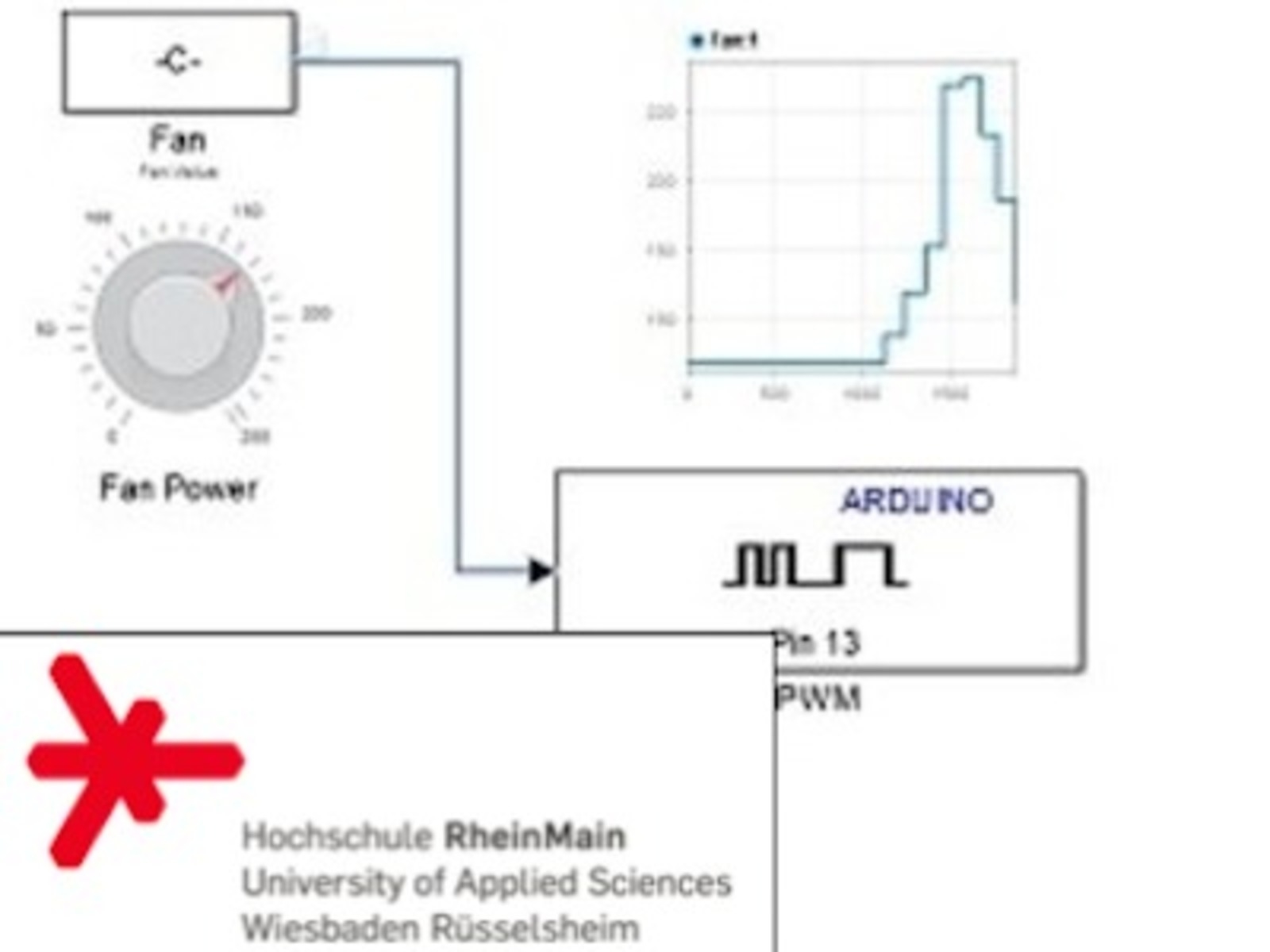
The main objective of this MOOC is to teach the use of Simulink® as a simulation tool for a broad variety of application domains. We will specifically focus on topics of interaction of the simulation models with the real world using Arduino Microcontrollers and Simulink®'s corresponding Arduino Hardware Support Package.
First, we will explain modelling and simulation concepts in general and introduce Simulink®. As a first application, we show how a simplified model of a Water Treatment Plant is implemented using Simulink®. We will then use an Arduino microcontroller to access hardware in the real world. We will go on to introduce control engineering techniques using Simulink® and apply these techniques to drive an example system of a ball floating in an airstream.
What will I learn?
By the end of this course, you will be able to implement simulation models using the tool Simulink®. These models can cover applications in the engineering domain and you know methods and technologies to create simulation models of realistic complexity.
In the engineering domain, microcontrollers are frequently used to control some physical system. Therefore, in this course you will also learn how to use an Arduino microcontroller for this purpose and how programmes for such a microcontroller are implemented in Simulink®. You will specifically learn techniques of control engineering by applying them to a technically simple physical system that is yet difficult to control.
What do I need to know?
This course will be taught on an academic level for undergraduate students. Therefore, knowledge in mathematics and physics of at least secondary education level as well as programming knowledge is a prerequisite.
Having already passed our MOOC "Modelling and Simulation using MATLAB" is helpful but not mandatory.
Course Structure
Chapter 1: My first Simulink® model
Chapter 2: Advanced Simulink® modelling
Chapter 3: Modelling a Water Treatment Plant
Chapter 4: The Arduino microcontroller and the corresponding Simulink® support package
Chapter 5: Control Engineering using Simulink®
Chapter 6: Control Engineering using the Arduino
SOBRE EL CURSO
Cada vez se abre más la brecha entre los Modelos Educativos exitosos del primer mundo y los impulsados por los países emergentes o del tercer mundo. Sin embargo, y pese a que la materia prima fundamental es el razonamiento, se ha exagerado en la proliferación de propuestas en múltiples sentidos, aunado a visiones restringidas de las potencialidades del cerebro humano. Somos firmes en creer que la inteligencia se desarrolla al igual que el conocimiento universal, y que es necesaria una reconstrucción de los enfoques educativos y cognitivos que los sustentan, a fin de promover su crecimiento y fortalecimiento sostenido.
Lamentablemente, su repercusión en la práctica profesional cotidiana demuestra que cada día dependemos más de nuevas propuestas para la solución de problemas, las cuales resultan costosas para ser implantadas en las empresas que los enfrentan. Tal es el caso del Razonamiento o Pensamiento Disruptivo, o el CPS Creative Problem Solving.
Es por ello que consideramos urgente que los Modelos Educativos consideren la necesidad de formar a los alumnos en esta línea, y en el caso de las empresas o instituciones, reflexionen acerca de esta problemática.
Las ventajas competitivas del MIRM, son:
1. Englobar, bajo un único enfoque, las diferentes corrientes de pensamiento, como son: Convergente, Divergente o Paralelo, Crítico, Intuitivo, Disruptivo, etc.
2. Ampliar el enfoque del DHP (Desarrollo de Habilidades del Pensamiento), como herramienta de apoyo fundamental.
3. Aplicar el MIRM como alternativa de solución creativa de los problemas, toda vez que es un Modelo que genera Modelos Estratégicos.
4. Ofrecer, para los que obtengan la certificación de este curso, materiales online editables y reusables en sus áreas profesionales de trabajo, libres de derechos.
EL CURSO ESTÁ ORIENTADO, A
• Empresas, Despachos o Instituciones que requieran herramientas formativas y de aplicación práctica en la Solución Creativa de Problemas.
• Instituciones promotoras de nuevos e innovadores horizontes educativos.
• Investigadores Educativos que buscan esquemas propositivos más eficientes.
• Universidades que consideren factible el reorientar el rumbo de sus esquemas de investigación educativa, impulsando el propio desarrollo de Objetos de Conocimiento (construidos con herramientas de lenguajes de programación)
• Desarrolladores de software interesados en participar en propuestas vía online, aportando recursos abiertos disponibles para uso gratuito universal.
• Maestros y alumnos preocupados por la dispersión agravada de los modelos actuales que siguen privilegiando la memorización y no el razonamiento.
CONOCIMIENTO PREVIO
Es deseable, no indispensable:
• Contar con referencias previas, o haber escuchado, de Modelos y Paradigmas Educativos.
• Saber de la existencia o haber aplicado técnicas diversas de Desarrollo de Habilidades del Pensamiento.
• Ser sensible o afecto al Enfoque Sistémico (Teoría General de Sistemas), Re-Ingeniería, Psicología Cognitiva, y áreas afines.
• Tener deseos de irrumpir con esquemas no convencionales para la solución de problemas.
LOS OBJETIVOS DE APRENDIZAJE
- Desarrollar una visión propia y sustentada de un Moldeo altamente factible, soportado con técnicas aplicables en el ámbito profesional y sujeto a un Ciclo de Mejora Continua.
- Estructurar y encausar una herramienta de trabajo, con enfoques: Epistemológico, Heurístico y Holístico, y orientada a la Solución de Problemas.
- Fortalecer el conocimiento del Paradigma por Competencias Laborales, como visión actual del mundo contemporáneo.
LA ESTRUCTURA DEL CURSO
Capítulos:
1. Bienvenida.
2. Introducción general.
3. Inteligencia adquirida.
4. El DHP como estrategia, no como fin.
5. Estructura atómica del Razonamiento Inferencial.
6. Modelo Integral para El Razonamiento Múltiple.
7. Principios estratégicos y funcionales del MIRM.
8. El MIRM, como estrategia basada en Applets (Objetos de Conocimiento)
9. Instrumentos de evaluación bajo la óptica MIRM.

Course Summary
Over the past decades world hunger has been joined by a second nutrition problem: chronic over nutrition and lack of exercise in industrialized and developing countries. The ensuing overweight and obesity pose a severe health problem. Picking the most relevant examples, this short course will analyze the biochemical basis of the development of diseases associated with the so called metabolic syndrome. Among others, the steps towards the development of type 2 diabetes and atherosclerosis will be discussed.
This course is divided into 4 chapters. In each chapter one particular nutrition-related disease will be discussed on three levels.
What will I learn?
Level 1: Basic understanding of how poor lifestyle impacts on the regulation of physiological processes.
Level 2: Understanding of the major biochemical principles underlying selected examples of nutrition-related diseases.
Level 3: Sound understanding, which experimental evidence supports the current views on the development of certain nutrition-related diseases.
What do I need to know?
Level 1: Basic knowledge in biology
Level 2: Basic knowledge of biochemical principles
Level 3: Advanced knowledge in biochemistry
Course Structure
Chapter 1: Insulin Resistance.
You will learn, how overweight and obesity cause insulin resistance in the different organs.
Chapter 2: Type 2 Diabetes.
You will learn about the current ideas, how reversible insulin resistance irreversibly proceeds to type 2 diabetes and how the late complications of type 2 diabetes develop.
Chapter 3: Dyslipidemias.
You will learn, how lipids are carried in our blood and distributed throughout the body, what controls their levels and how this control is impaired in disease.
Chapter 4: Atherosclerosis.
You will learn, how different risk factors, among others type 2 diabetes, dislipidemia and hypertension, contribute to the development of atherosclerosis and its consequences like stroke and heart attack.
Workload
Approximately 2- hours per week for watching video lectures, taking quizzes and completing homework assignments.

Non-bankers can learn to understand the mathematical models that have made the headlines so many times in recent years. A course for students of economics, business studies, mathematics, physics and computer science.


Kursbeschreibung
Die Deadline für einen wichtigen Auftrag rückt immer näher oder es gilt eine schwierige Pflichtklausur im Studium zu meistern. Eigentlich sollten Sie bereits lernen oder arbeiten, doch jeden Tag schaffen Sie es, sich mit anderen „wichtigen“ Aufgaben wie Putzen oder Internetsurfen zu beschäftigen. Doch die Zeit wird knapper und der Druck immer größer…
Prokrastination oder „Aufschieberitis“ ist ein Alltagsphänomen, das den meisten Menschen bekannt sein dürfte: Unangenehme Tätigkeiten werden lieber erst einmal aufgeschoben, anstatt sie sofort zu erledigen. In acht Wochen vermitteln wir in diesem MOOC die wissenschaftlichen Hintergründe und bieten Unterstützung, das eigene Verhalten zu reflektieren und zu ändern!
Für wen ist dieser Kurs gedacht?
Dieser MOOC richtet sich an Personen, die daran interessiert sind ihre Selbstregulationsfähigkeiten zu verbessern, um sich in Zukunft ein effizienteres Vorgehen in Studium und Beruf zu erarbeiten. Der Kurs zielt nicht nur auf Wissensvermittlung ab, sondern möchte Ihnen auch dabei helfen, Ihr Verhalten zu verändern! Am Ende des Kurses sollten Sie in der Lage sein, diejenigen Strategien in Ihrem Alltag anzuwenden, welche sich für Sie als besonders erfolgsversprechend zeigen.
Was lerne ich in diesem Kurs?
Am Ende des Kurse
- kennen Sie die wichtigsten wissenschaftlichen Hintergründe zum Thema Prokrastination (Modelle & Theorien)
- kennen Sie die Konzepte der Selbstkontrolle und Selbstregulation und können diese voneinander abgrenzen
- sind Sie mit verschiedenen Strategien aus den Bereichen Selbstkontrolle (Planungsfähigkeit, Zielkontrolle, Arbeitsplatzgestaltung, Startkontrolle, Impulskontrolle) und Selbstregulation (Emotionsregulation, Selbstmotivierung, Umgang mit Ablenkungen, Selbstberuhigung und -aktivierung) vertraut und können diese einsetzen
Welche Vorkenntnisse benötige ich?
Keine – Sie sollten aber natürlich schon Probleme mit dem Aufschieben haben und daran etwas ändern wollen! Wenn Sie Fallschirmspringen wollen, besuchen Sie ja auch keinen Kochkurs, oder? ;-) Allerdings sollten Sie eine gewisse Bereitschaft zur Reflexion des eigenen Verhaltens mitbringen, denn nur wenn Sie sich damit auseinandersetzen, werden Sie die Aufschieberitis in den Griff bekommen!
Kurs Struktur
Kapitel 1 Willkommen: Schön, dass Sie mit dabei sind! In der ersten Kurswoche möchten wir Sie mit dem Phänomen der Aufschieberitis vertraut machen. Wir erläutern Ihnen die unterschiedlichen Ausprägungen von Aufschiebeverhalten und geben einen ersten Überblick darüber, was Sie in den kommenden Wochen erwartet. Außerdem haben Sie die Möglichkeit Ihr individuelles Prokrastinationsprofil zu ermitteln.
Kapitel 2 Volition & Motivation: Nach einem ersten Überblick steigen wir nun tiefer in die Theorie zur Prokrastination ein. Welche Modelle, Theorien und Erklärungsansätze gibt es? Ist alles nur eine Frage der Motivation? Außerdem erfahren Sie alles zum Unterschied zwischen Selbstregulation und Selbstkontrolle, denn dieser Logik folgt auch der Aufbau des Trainings.
Kapitel 3 Grundlagen der Selbstkontrolle: Genug mit Theorie, nun geht es in die Praxis und wir beginnen mit den Grundlagen der Selbstkontrolle. Hierbei handelt es sich um grundsätzliche Schritte zur Vorbereitung auf die im nächsten Kapitel folgenden Strategien. Konkret geht es bei den Grundlagen zur Selbstkontrolle um Zeitmanagement und den Umgang mit komplexen Zielen und Aufgaben.
Kapitel 4 Strategien der Selbstkontrolle: Diese Woche steht ganz im Zeichen der Selbstkontrolltechniken. Wir behandeln die Themen Planungsfähigkeit (Gesamtplanung, Tagesplanung, Planung einer Arbeitseinheit), Zielkontrolle (wie behalten Sie das Ziel im Auge), Arbeitsplatzgestaltung, das pünktliche Beginnen sowie die Impulskontrolle.
Kapitel 5 Grundlagen der Selbstregulation: Ebenso wie zuvor bei der Selbstkontrolle wenden wir uns nun zuerst wieder den Grundlagen zu, diesmal jenen der Selbstregulation. Das Stichwort lautet hier "Selbstwahrnehmung", denn bevor wir uns aktiv regulieren, müssen wir zunächst einmal feststellen wie unser aktueller Zustand ist. In diesem Kapitel geht es primär um die Wahrnehmung von Emotionen, Zielen, Motiven und Bedürfnissen.
Kapitel 6 Strategien der Selbstregulation I: Da die Strategien zur Selbstregulation recht umfangreich und etwas komplexer sind, erwarten Sie gleich zwei Kapitel zu diesem Thema. Im ersten Teil erläutern wir Ihnen verschiedene Techniken zur Aufmerksamkeitslenkung bzw. dem Umgang mit Ablenkungen. Außerdem stellen wir Ihnen 7 Strategien zur Selbstmotivierung vor.
Kapitel 7 Strategien der Selbstregulation II: Wie angekündigt nun Teil II mit Strategien zur Emotionsregulation sowie Techniken zu Selbstberuhigung und -aktivierung. Sie erfahren wie Sie mit negativen Emotionen umgehen und was Sie aktiv dagegen tun können wenn Sie entweder zu müde oder zu angespannt für Ihre anstehenden Aufgaben sind. Außerdem möchten wir Ihnen ein paar Tipps zum Umgang mit Erfolg und Misserfolg mit auf den Weg geben.
Kapitel 8 Abschluss: Herzlichen Glückwunsch, Sie haben es geschafft! Schade dass wir uns schon von Ihnen verabschieden müssen. Abschließend haben Sie nun die Möglichkeit, erneut Ihr Prokrastinationsprofil zu erstellen. Nun können Sie anhand Ihrer Werte zu Beginn ermitteln, in welchen Punkten Sie sich verbessert haben oder wo evtl. noch Trainingsbedarf besteht.
Wer 80% der Lehrvideos sowie 80% der Quizzes absolviert, erhält eine kostenfreie Teilnahmebestätigung.
WHAT IS THIS COURSE ABOUT?
Have you ever wondered why 90% of musicians (and artists) don't make a living in the digital era - although they want to?
The answer is simple: they are still stuck in the last century mindset. The truth is, if you want to become a full-time artist doing what you love, you have to structure a business around your art, not just merely hope!
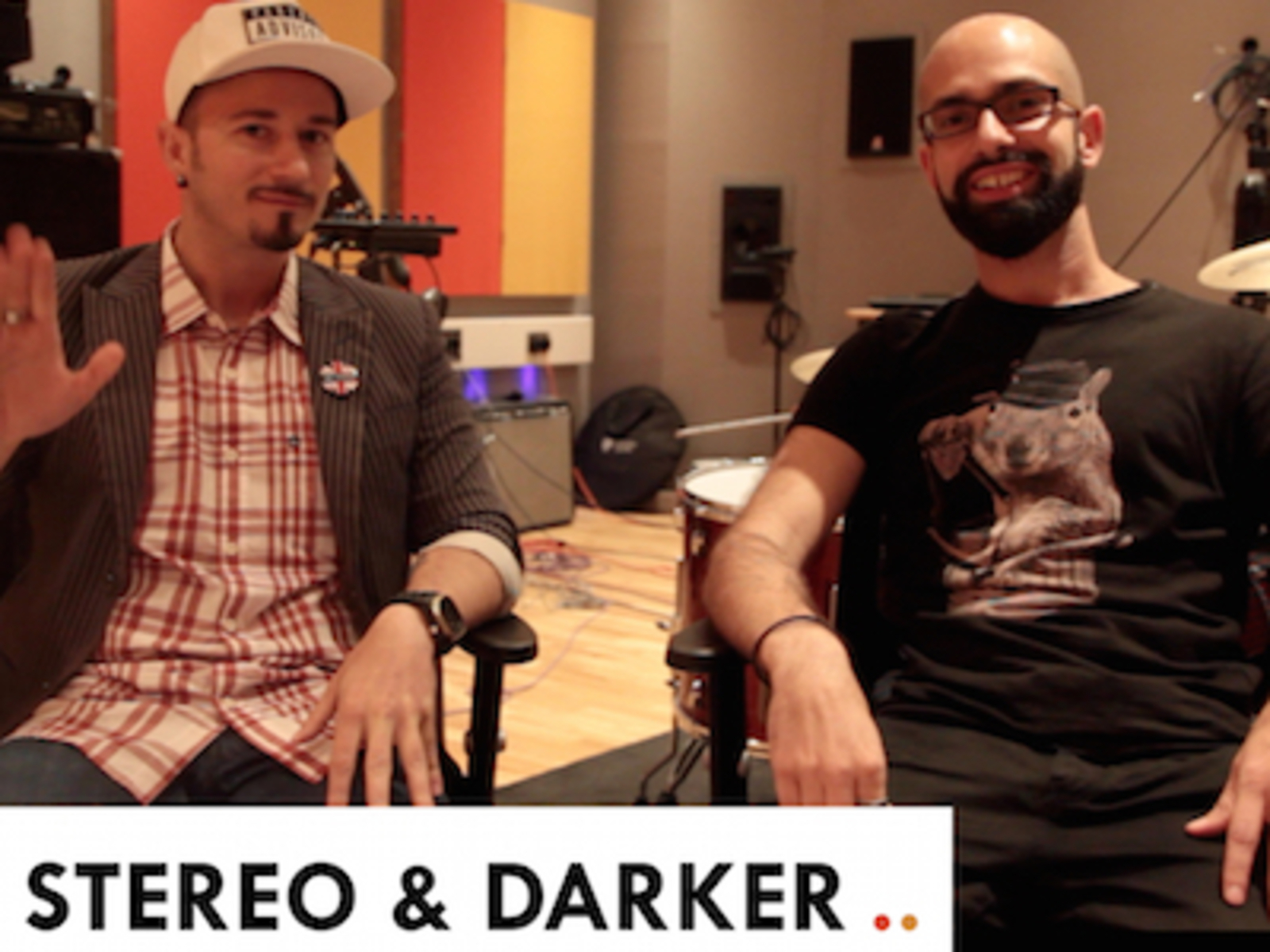
In this practical, 8-week course, two full-time practitioner musicians and academic educators, Tommy Darker and Stereo Mike, will guide you though the process of creating your very own business model, how to market yourself as a startup, how to be agile, motivated and productive, how to develop a work-in-progress brand, and how to adapt to the new mindset.
This is a course for all artists, and 'music' will be used as a case study. You will learn through practical assignments, so that you can implement what you learn in the real world, and get practical results.
This is the first MOOC in the world of its kind. It will be exciting. Shall we start?
WHO IS THIS COURSE FOR?
The course would be of interest to musicians and artists seeking entrepreneurial knowledge, as well as business practitioners working within an artistic context.
The specific target audience for the course includes practitioners in the field of music and arts, with an active interest in developing professional careers and becoming full-time artists.
WHAT DO I NEED TO KNOW?
There is no academic prerequisite necessary in order to be able to engage with and benefit from the course - just bring your appetite to learn.
However, an active musician or arts practitioner will be able to leverage the philosophy, practice and challenges set by directly applying the studied principles to their developing careers.
WHAT WILL I LEARN?
Upon completion of the course, the students should be able to:
1. Apply contemporary entrepreneurial approaches to their musical/artistic careers
2. Identify changing industry trends in order to define relevant opportunities for their practice
3. Balance artistic and business personal development, ensuring longevity
4. Discover scalable business models and recurring revenue streams
5. Produce actionable plans to exploit their art entrepreneurially, through practical assignments
6. Innovate, recognising future trends and technological progress
COURSE STRUCTURE
Week 1: Introduction
Historical Context | The New Ecosystem | Modern Concepts
Week 2 & 3: Business Models
Business Model Structure | Revenue models | Audience
Week 4: Lean Startup
Validated Learning | MVP | Prototyping | Management
Week 5: Agile Philosophy Principles
Productivity & Motivation | Startup Mindset | Communication
Week 6: Presence, Product, Process
Work-in-progress Brand | Demo | The Drip Method
Week 7: Digital Opportunities & Digital Paradigms
Power of Free | Digital-to-analogue | Network
Week 8: Deconstruction
Case Studies | Leadership & Innovation | What's Next?
The course embraces the following aspects:
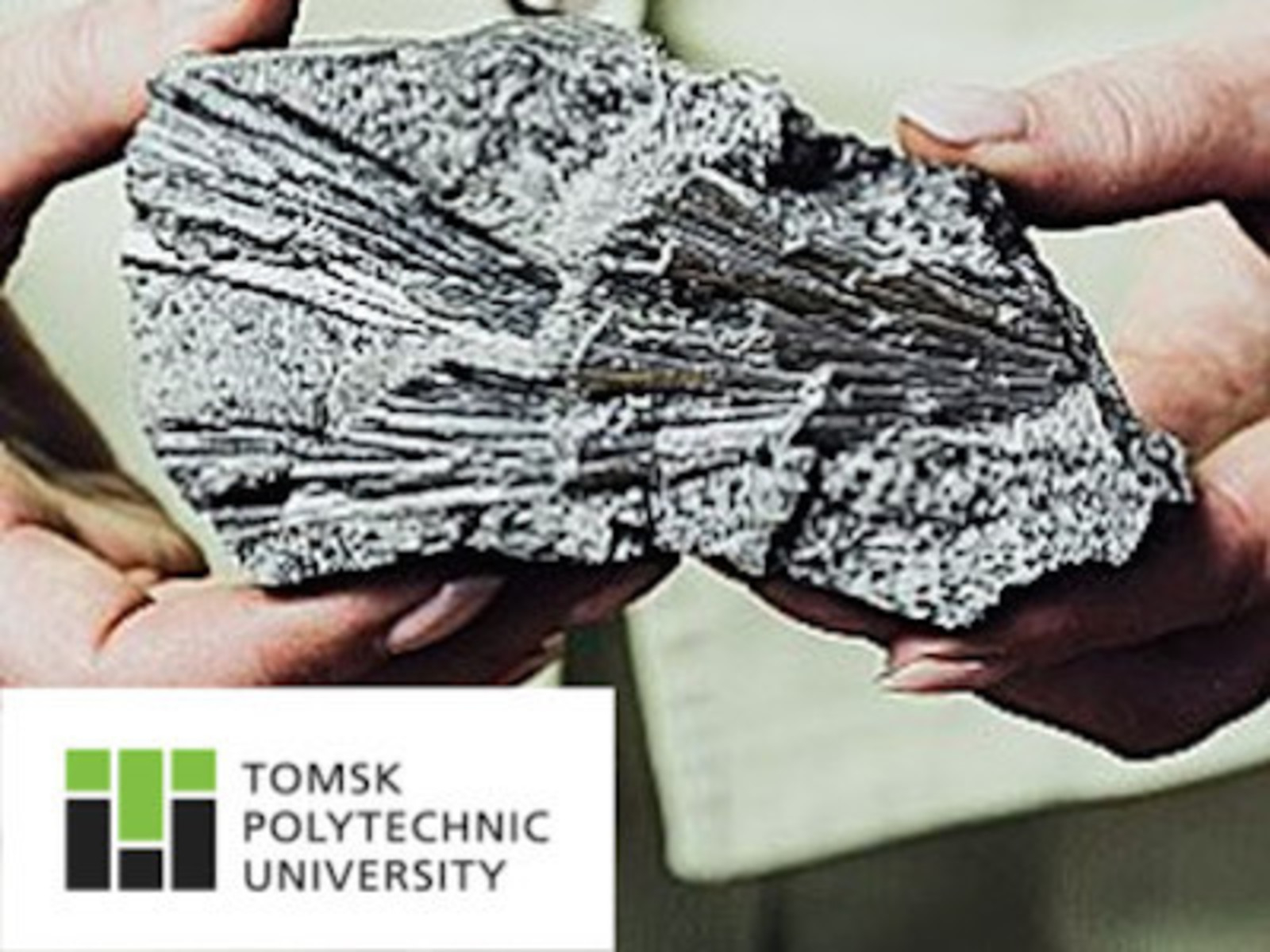
- understanding the key geological concepts, including crystal, mineral and rock;
- applying basic methods to determine the properties of minerals and structure and texture of rocks;
- identifying the composition, formation conditions, characteristic features of naturally-occurring and urban environment stone material and to determine its practical significance;
- identifying rocks and minerals so as to understand their specific application in such areas as building construction, civil engineering, as well as distinguishing ornamental stones or gemstones in the collections;
- obtaining theoretical background to further one's ability to observe and determine the practical value of rocks.
In general, this course provides an overview of some aspects of our world from a geological point of view.
Who should participate in this course?
Everyone is welcome to join us and discover the rock and mineral environment the surrounds us. Particular groups that would be interested in the course topic include:
- Students interested in the world environment - minerals and rocks
- Future applicants in geological specialty
- Undergraduates studying the Earth's crust, including geology, mineralogy and petrology
- Technical specialists and engineers in the field of geological engineering survey
- Naturalists interested in the surrounding world and its rock components
What do I need to know?
No specific skills or prior knowledge, only self-interest, motivation and desire for self-development.
What will I learn?
The aim of the course is to understand and appreciate the surrounding inanimate nature (the Earth surface), consisting of minerals and rocks. This course will also teach you how to identify the practical importance and value of the rocks surrounding you.
By the end of the course, students will be able to:
- distinguish crystals, minerals and rocks;
- identify the most common minerals and rocks;
- know their practical value and their influence on the environment.
Course Structure
Chapter 1: Crystallography and symmetry around us. Morphology of natural geological formations.
Instructor: Associate Prof. Lyudmila Ananieva
- Historical development of geoscience
- Mineralization and mineral chemical composition
- Crystal structure and habit
- Crystal morphology
- Aggregate morphology
Apply basic and specialised knowledge related to the structure and evolution of matter in nature; dependency of shape to internal structure and composition of natural objects (minerals, crystals, rocks)
Chapter 2: Physical properties of minerals
Instructor: Associate Prof. Lyudmila Ananieva
- Optical properties of minerals: color and streak
- Optical properties of minerals: transparency and lustre
- Mechanical properties of minerals: cleavage, jointing, fracture, hardness
- Specific properties of minerals
- Useful physical properties for identifying a mineral
Apply simple methods in identifying the properties of minerals
Chapter 3: Mineral Classification
Instructor: Director of the TPU Mineralogical Museum Tatyana Martynova
- Rock-forming minerals - salic (light in color) - very broad category
- Rock-forming minerals - femic (dark in color) - very broad category
- Mineral salts
- Rare minerals
Know and identify the most common minerals
Chapter 4: Ores. Gems and ornamental stones
Instructor: Director of the TPU Mineralogical Museum Tatyana Martynova
- Noble metals
- Ferrous metals
- Non-Ferrous metals
- Other metals
- Gemstones
- Ornamental stones
Know and identify ore minerals and distinguish ornamental stones and gems
Chapter 5: Igneous rocks
Instructor: Associate Prof. Lyubov Krasnoshchekova
- Formation conditions of igneous rocks ( magma and lava-definitions, igneous crystallisation)
- Morphology and settings of igneous rocks
- Composition, structure and texture of igneous rocks
- Common volcanic (extrusive) rocks
- Common plutonic (intrusive) rocks
Identify and determine the most common igneous (extrusive and intrusive) rocks among other rocks
Chapter 6: Sedimentary rocks
Instructor: Associate Prof. Lyubov Krasnoshchekova
- Composition, structure and texture of sedimentary rocks
- Formation conditions of sedimentary rocks
- Clastic rocks (pebbles, gravel, sand)
- Chemical and biochemical rocks (chalk, coquina, gypsum, salt)
Identify and recognise the most common sedimentary rocks among other rocks.
Chapter 7: Metamorphic rocks
Instructor: Associate Prof. Lyubov Krasnoshchekova
- Formation conditions (genesis) of metamorphic rocks: Types of metamorphism
- Composition, structure and texture of metamorphic rocks
- Common metamorphic rocks (slate, gneiss, marble) and their application
- Cyclic processes of naturally occurring substances
Identify and recognise metamorphic rocks; determine their transformation conditions

Have you ever dreamed about starting your own business? Are you dedicated to sustainability but don't know how to put this passion into practice? Do you see challenges in your community which you want to change? If the answer to one or all of these questions is yes, then this is the course for you!
In this course, you will systematically explore and build your own New Business Model around your own idea. In a systematic manner, we will present you with five building blocks that will help you develop a viable and valuable model. By using the knowhow and experience of your peers in this course, you gain insight into what others are doing and get feedback on your own results. Step by step, you will build and test the model, leading to a mature result than can be put to practice instantly after the course. Enrol and invest in new adventures that will help you to create a lasting impact for yourself and the community around you.
Who is this course for?
This course is open to anyone interested in the subject. Particular groups include:
- Students of management programmes
- People/groups working on the development of a new business model
- Companies wanting to transform their existing business model
What do I need to know?
No prior knowledge is required.
What will I learn?
By the end of the course, you will know:
- the role of business models in a changing economy, against the background of trends and developments.
- understand how the economy and society is changing and how to use this as input for your value proposition.
- how to make making an initial design for your NBM.
- who and what you will need for your NBM and how to design your own NBM.
- how to improve your value proposition, based on three principles of value creation.
- how to develop a community of people who actively participate in your NBM.
- how to distinguish and assess the values your NBM is creating.
If you successfully complete the course, you will have your own NBM.
Course Structure
Chapter 1: Introduction
1.0 Introduction: Part of the first video, welcome to the week, learning objectives and assignments.
1.1 What is sustainability: Understand the notion of sustainability from a organisational and business wise perspective.
1.2 The great transition: Identify the transition from a linear to a circular economy and what this implies.
1.3 Business Models & why do we need new business models?: What is a business model and why a changing economy needs a new generation of business models.
1.4 Living in a changing economy: Identify seven trends and developments of a changing economy
1.5 Let’s talk about your NBM: What are you going to do? At the end of this course you will have your own new business model. Note to self: Isn’t this the right time to start your own community for your NBM?
Chapter 2: WEconomy
2.1 WEconomy: Understand how the economy and society is changing and how to use this as input for your value proposition.
2.2 Bio-based, functional and circular economy: Describe how we can shift from a commodity-based economy to one based on natural materials.Understand how the economy is changing from a linear to a circular model and what this implies when it comes to design. Explain the notion of selling functions instead of products and how this impacts ownership / legal structures.
2.3 Sharing and Collaborative economy: Understand what “asset management” is and how it offers tremendous possibilities for the sustainable economy. Understand how a changing economy requires new concepts of collaboration.
2.4 Self-production (3D) economy: Envision the rise of self-production through 3D print technology.
2.5 Internet of Things + Let’s talk about your NBM: Understand how people and things and things are exponentially connected and what this implies for transition. Write down your value proposition for the first time, upload and ask for feedback.
Chapter 3: New Business Model Design
3.1 Pitching your NBM team: Identify and describe the people with whom you want to develop the initial value proposition.
3.2 Organising your NBM?: Describe what kind of organisational concept you have in mind.
3.3 Resources needed for your NBM? Make an inventory of the things you need to structure your value proposition.
3.4 Case-study: Study several real world examples and analyse how they have shaped their value proposition.
3.5 Let’s talk about your NBM: This week we concentrated on the who, how and what. Write this down for your NBM, upload it and ask for feedback.
Chapter 4: Principles & Value proposition
4.1 What is value creation? Understand the nature of value creation from a co-creation perspective.
4.2 Comparing conventional and new business models: Recognise the difference in value creation between conventional and new business models.
4.3 Principles: Understand how business models are based on principles and what the principles are at play in new business models.
4.4 Reassessing the value proposition: Analyse your initial value proposition in the light of principles of value creation.
4.5 Let’s talk about your NBM: Write down your new value proposition, upload it and ask for feedback.
Chapter 5: Community building
5.1 What is a community?: Identify the key elements that make up a community.
5.2 Communities come in different shapes and sizes: Describe the different character of communities.
5.3 Building a community means building a value network: Create a value network based on diversity, scope and the nature of membership.
5.4 How to build your own community? Structure a community based on role division, principles and membership.
5.5 Let’s talk about your NBM: Start looking for a limited number of people who will help you elaborate the model, either on the internet or in your psychical environment. Ask them for feedback on your value proposition and upload the feedback.
Chapter 6 Assessing value creation
6.1 What is the value created? Understand the nature of values and which role they play in business models.
6.2 How do we assess values: Understanding the difference monetisation and valuation.
6.3 Assessing the value created by your NBM: Understand how valuation and monetisation are embedded in your NBM
6.4 Missed chances: Assess your business model from a non-monetary perspective.
6.5 Let’s talk about your NBM: At the end of this week you will have a complete clover canvas and you will hand this in as a text (100 words).
6.6 Make a video of your NBM: Make a video of your NBM and upload it.
Have you ever dreamed about starting your own business? Are you dedicated to sustainability but don't know how to put this passion into practice? Do you see challenges in your community which you want to change? If the answer to one or all of these questions is yes, then this is the course for you!
In this course, you will systematically explore and build your own New Business Model around your own idea. In a systematic manner, we will present you with five building blocks that will help you develop a viable and valuable model. By using the knowhow and experience of your peers in this course, you gain insight into what others are doing and get feedback on your own results. Step by step, you will build and test the model, leading to a mature result than can be put to practice instantly after the course. Enrol and invest in new adventures that will help you to create a lasting impact for yourself and the community around you.
Who is this course for?
This course is open to anyone interested in the subject. Particular groups include:
- Students of management programmes
- People/groups working on the development of a new business model
- Companies wanting to transform their existing business model
What do I need to know?
No prior knowledge is required.
What will I learn?
By the end of the course, you will know:
- the role of business models in a changing economy, against the background of trends and developments.
- understand how the economy and society is changing and how to use this as input for your value proposition.
- how to make making an initial design for your NBM.
- who and what you will need for your NBM and how to design your own NBM.
- how to improve your value proposition, based on three principles of value creation.
- how to develop a community of people who actively participate in your NBM.
- how to distinguish and assess the values your NBM is creating.
If you successfully complete the course, you will have your own NBM.
Course Structure
Chapter 1: Introduction
1.0 Introduction: Part of the first video, welcome to the week, learning objectives and assignments.
1.1 What is sustainability: Understand the notion of sustainability from a organisational and business wise perspective.
1.2 The great transition: Identify the transition from a linear to a circular economy and what this implies.
1.3 Business Models & why do we need new business models?: What is a business model and why a changing economy needs a new generation of business models.
1.4 Living in a changing economy: Identify seven trends and developments of a changing economy
1.5 Let’s talk about your NBM: What are you going to do? At the end of this course you will have your own new business model. Note to self: Isn’t this the right time to start your own community for your NBM?
Chapter 2: WEconomy
2.1 WEconomy: Understand how the economy and society is changing and how to use this as input for your value proposition.
2.2 Bio-based, functional and circular economy: Describe how we can shift from a commodity-based economy to one based on natural materials.Understand how the economy is changing from a linear to a circular model and what this implies when it comes to design. Explain the notion of selling functions instead of products and how this impacts ownership / legal structures.
2.3 Sharing and Collaborative economy: Understand what “asset management” is and how it offers tremendous possibilities for the sustainable economy. Understand how a changing economy requires new concepts of collaboration.
2.4 Self-production (3D) economy: Envision the rise of self-production through 3D print technology.
2.5 Internet of Things + Let’s talk about your NBM: Understand how people and things and things are exponentially connected and what this implies for transition. Write down your value proposition for the first time, upload and ask for feedback.
Chapter 3: New Business Model Design
3.1 Pitching your NBM team: Identify and describe the people with whom you want to develop the initial value proposition.
3.2 Organising your NBM?: Describe what kind of organisational concept you have in mind.
3.3 Resources needed for your NBM? Make an inventory of the things you need to structure your value proposition.
3.4 Case-study: Study several real world examples and analyse how they have shaped their value proposition.
3.5 Let’s talk about your NBM: This week we concentrated on the who, how and what. Write this down for your NBM, upload it and ask for feedback.
Chapter 4: Principles & Value proposition
4.1 What is value creation? Understand the nature of value creation from a co-creation perspective.
4.2 Comparing conventional and new business models: Recognise the difference in value creation between conventional and new business models.
4.3 Principles: Understand how business models are based on principles and what the principles are at play in new business models.
4.4 Reassessing the value proposition: Analyse your initial value proposition in the light of principles of value creation.
4.5 Let’s talk about your NBM: Write down your new value proposition, upload it and ask for feedback.
Chapter 5: Community building
5.1 What is a community?: Identify the key elements that make up a community.
5.2 Communities come in different shapes and sizes: Describe the different character of communities.
5.3 Building a community means building a value network: Create a value network based on diversity, scope and the nature of membership.
5.4 How to build your own community? Structure a community based on role division, principles and membership.
5.5 Let’s talk about your NBM: Start looking for a limited number of people who will help you elaborate the model, either on the internet or in your psychical environment. Ask them for feedback on your value proposition and upload the feedback.
Chapter 6 Assessing value creation
6.1 What is the value created? Understand the nature of values and which role they play in business models.
6.2 How do we assess values: Understanding the difference monetisation and valuation.
6.3 Assessing the value created by your NBM: Understand how valuation and monetisation are embedded in your NBM
6.4 Missed chances: Assess your business model from a non-monetary perspective.
6.5 Let’s talk about your NBM: At the end of this week you will have a complete clover canvas and you will hand this in as a text (100 words).
6.6 Make a video of your NBM: Make a video of your NBM and upload it.

Los derechos de los trabajadores y trabajadoras son derechos humanos. Las Normas Internacionales del Trabajo están diseñadas para ofrecer niveles mínimos de protección de los cuales debería gozar todo trabajador/a. Sirven como salvaguarda frente a la explotación y las condiciones de trabajo peligrosas. Los derechos fundamentales y la dignidad en el trabajo, reafirmados por los Objetivos de Desarrollo Sostenible de Naciones Unidas, son una precondición para la creación de sociedades inclusivas y sostenibles. Sin embargo, hacer realidad el respeto de los derechos de los trabajadores, sigue siendo la lucha diaria de muchas personas.
Este breve curso online está compuesto por una combinación de clases en vídeo, textos, preguntas para el debate y opciones de autoaprendizaje con el objetivo de brindarte contenidos y competencias prácticas para el uso de las Normas Internacionales del Trabajo en la promoción y defensa de los derechos de los trabajadores y trabajadoras en todo el mundo.
Qué aprenderé
Al finalizar el curso comprenderás el concepto subyacente a las Normas Internacionales del Trabajo, así como el proceso de elaboración de normas de la Organización Internacional del Trabajo (OIT).
Contarás con una visión general sólida sobre el funcionamiento de los mecanismos de control de la OIT y sobre cómo pueden utilizarse para promover y defender los derechos de los trabajadores/as en tu país y a escala internacional. Asimismo tendrás una buena comprensión de los fundamentos de la libertad sindical, la negociación colectiva y el derecho de huelga como elemento clave para hacer cumplir los derechos de los trabajadores.
Estructura del curso
Capítulo 1: Introducción a las Normas Internacionales del Trabajo (NIT)
¿Qué concepto subyace a las Normas internacionales del trabajo? ¿Qué tipo de Normas Internacionales del Trabajo existen y cómo se elaboran? ¿Qué actores participan y cómo se vinculan? Este capítulo ofrece una visión general de las Normas Internacionales del Trabajo y sienta las bases para entender el mecanismo de elaboración de normas de la OIT. A su vez, el capítulo explora el papel de los sindicatos en la elaboración de las Normas Internacionales del Trabajo.
Capítulo 2: Mecanismos de control de las Normas Internacionales del Trabajo (NIT)
Este capítulo pretende ayudarte a entender y emplear los mecanismos de control de la OIT para la protección de los derechos de los y las trabajadores/as. Este proceso complejo se ilustra de forma concisa y práctica, paso a paso. Nuevamente, se presta especial atención al papel que pueden desempeñar los sindicatos a la hora de emplear los mecanismos de control de la OIT de forma efectiva.
Capítulo 3: Libertad sindical, negociación colectiva y derecho a huelga
La libertad sindical y la negociación colectiva son derechos necesarios fundamentales para el trabajo decente. Pero, ¿cuál es el concepto legal de la libertad sindical según el Convenio núm. 87 y por qué es fundamental para la aplicación de las Normas Internacionales del Trabajo? Este capítulo también ofrece una visión general del debate actual sobre el derecho de huelga como elemento fundamental de la libertad sindical.
Listado de colaboradores y presentadores
Jesús García Jiménez
- Especialista en Formación para los Trabajadores en la Oficina de Actividades para los Trabajadores, Centro Internacional de Formación de la OIT (CIF-OIT)
- Presentador de los videos en español de este curso
Víctor Hugo Ricco
- Abogado y Especialista Principal, Oficina de las Actividades para los Trabajadores, OIT
- Presentador de los videos en español de este curso
Jeffrey Vogt
- Director Jurídico, Confederación Sindical Internacional (CSI)
- Principales ámbitos de interés: sindicalismo y normas laborales, libertad sindical, trabajo precario, derecho laboral comparado
- Autor del video sobre el Derecho a Huelga
Beatriz Vacotto
- Especialista jurídica y Coordinadora del equipo de Salarios, Horario de Trabajo, Trabajadores Marítimos y Específicos, Departamento de Normas Internacionales del Trabajo (OIT)
- Principales ámbitos de interés: Apoyo a los sindicatos en cuestiones relacionadas con las Normas internacionales del trabajo y los mecanismos de control de la OIT
- Autora de las presentaciones en video del curso sobre mecanismos de control de la OIT
Prof. Dr. Stefanie Lorenzen
- Profesora de Derecho Laboral y del Empleo en la Escuela de Economía y Derecho de Berlín, Departamento de Empresa y Economía (Alemania)
- Principales ámbitos de interés: legislación laboral, co-determinación, derecho de negociación colectiva, derecho laboral internacional y europeo
- Autora de los videos de Libertad Sindical y Negociación Colectiva de este curso
Prof. Paul Whitehead
- Profesor de Práctica en Estudios Laborales y Relaciones Laborales en la Penn State University (EE.UU.)
- Principales ámbitos de interés: sindicatos, negociación colectiva, derecho laboral, derecho laboral internacional, recursos humanos internacionales, derecho mercantil y programas de pensiones, sanidad y seguridad social
- Autor de los videos sobre elaboración de NIT de este curso
Maité Llanos
- Coordinadora internacional de projectos, Global Labour University
- Tutora de los cursos online de la Global Labour University
Tandiwe Gross
- Especialista asociada y coordinadora internacional de los programas de formación online de Global Labour University, OIT

Les droits des travailleurs sont des droits de l'homme. Les normes internationales du travail visent à prévoir des niveaux minima de protection dont devrait bénéficier chaque travailleur.
Elles servent de garanties contre les conditions de travail dangereuses et relevant de l’exploitation. Réaffirmés par les objectifs des Nations Unies pour le développement durable, les droits fondamentaux et la dignité au travail sont une condition préalable à l'édification de sociétés inclusives et durables. Cependant, traduire le respect des droits des travailleurs dans les faits reste une lutte quotidienne pour beaucoup.
Cette courte formation en ligne combine des cours vidéo, du matériel de lecture, des questions de discussion et des options d'auto-apprentissage. Ces outils vous permettront d’acquérir des connaissances et des compétences pratiques sur l’utilisation des normes internationales du travail afin de promouvoir et de défendre les droits des travailleurs dans le monde entier.
Que vais-je apprendre?
À la fin du cours, vous comprendrez le concept qui sous-tend les normes internationales du travail, ainsi que le processus d’élaboration des normes à l'Organisation internationale du Travail (OIT).
Vous aurez un aperçu clair du fonctionnement des mécanismes de contrôle de l'OIT et de la façon dont vous pouvez vous en servir pour promouvoir et défendre les droits des travailleurs dans votre pays ou au niveau international. Vous parviendrez également à une bonne compréhension des principes fondamentaux de la liberté syndicale et de la négociation collective, ainsi que du droit de grève, élément clé de la réalisation des droits des travailleurs.
Structure du cours
Chapitre 1 : Introduction aux normes internationales du travail (NIT)
Quel est le concept qui sous-tend les normes internationales du travail ? Quels sont les différents types de normes internationales du travail, et comment sont-elles élaborées ? Quels acteurs entrent en jeu, et comment sont-ils liés entre? Ce chapitre offre un aperçu des normes internationales du travail et jette les bases pour comprendre les mécanismes d'établissement des normes à l'OIT. En particulier, nous examinerons de près le rôle des syndicats dans l'établissement des normes internationales du travail.
Chapitre 2 : Contrôle des normes internationales du travail (NIT)
Ce chapitre vise à vous permettre de comprendre et à utiliser les mécanismes de contrôle de l'OIT pour la protection des droits des travailleurs. Ce processus complexe est illustré de manière concise et pratique, et nous le parcourons avec vous, étape par étape. En outre, nous prêtons une attention particulière à ce que les syndicats peuvent faire pour utiliser efficacement les mécanismes de contrôle de l'OIT.
Chapitre 3 : La liberté syndicale, la négociation collective et le droit de grève
La liberté syndicale et la négociation collective sont au cœur du travail décent en tant que droits essentiels à la réalisation d’autres droits. Mais quel est le concept juridique de la liberté syndicale dans le cadre de la Convention n° 87, qu'est-ce qui le rend fondamental dans la mise en œuvre des normes internationales du travail ? Ce chapitre vous offre également un aperçu du débat actuel sur le droit de grève, élément clé de la liberté syndicale.
Contributeurs et orateurs
Beatriz Vacotto
- Spécialiste en droit et coordonnatrice de l'équipe en charge des salaires, de la durée de travail, des questions maritime et des catégories spécifiques de travailleurs, Département des normes internationales du travail, BIT
- Auteur des cours vidéos sur les systèmes de contrôle de l’OIT
- Principaux domaines d'intérêt: Soutien aux syndicats sur les questions relatives aux normes internationales du travail et les mécanismes de contrôle de l'OIT.
Prof. Paul Whitehead
- Professeur en études sociales et relations de travail à Penn State University, États-Unis
- Auteur des cours vidéos sur mécanismes d'établissement des normes à l'OIT
- Principaux domaines d'intérêt : Syndicats, négociation collective, droit du travail et de l'emploi, droit international du travail, ressources humaines internationales, droit commercial et programmes de pensions, de soins de santé et de sécurité sociale
Jeffrey Vogt
- Directeur juridique, Confédération syndicale internationale (CSI)
- Auteur du cours vidéo sur le droit de grève
- Principaux domaines d'intérêt: commerce et normes du travail, liberté syndicale, emploi précaire, droit du travail comparé
Prof. Dr. Stefanie Lorenzen
- Professeur en droit de l'emploi et du travail à l'École d'économie et de droit de Berlin, Département du commerce et de l'économie, Allemagne
- Auteur des cours vidéos sur la liberté syndicale et la négociation collective
- Principaux domaines d'intérêt : droit du travail, co-détermination, droit à la négociation collective, droit international et européen du travail
Mélanie Jeanroy
- Spécialiste pour la protection du travail, Bureau des activités pour les travailleurs, ILO
- Oratrice de la version française de cette formation en ligne
Janet Johnson
- Collaboratrice Externe, Centre international de formation (CIF-OIT)
- Oratrice de la version française de cette formation en ligne
Maité Llanos
- Coordinatrice international de projet, Global Labour University
- Tuteur en ligne de la Global Labour University
Tandiwe Gross
- Expert Associé et coordinatrice des programmes de formation en ligne de la Global Labour University, Bureau des activités pour les travailleurs, OIT
Droit d'auteur sur l'image (ci-dessus) : OIT/Crozet M.
Kursbeschreibung
Der Kurs dient zur Einführung in den wissenschaftlichen Charakter eines Geschichtsstudiums. Als Leitlinien eines Zugangs zur Geschichte dienen grundlegende Kategorien, die das menschliche Handeln und Denken in Raum und Zeit erfassen und beschreiben. Vermittelt werden traditionelle Epocheneinteilungen sowie die methodische Vielfalt des Faches. Die Diskussion von epochalen Brüchen führt in einen kritischen Umgang mit Geschichtsbildern ein. Der Kurs konzentriert sich dabei auf europäische Geschichte, wobei in der Neuzeit exemplarisch die deutsche Geschichte in den Vordergrund rückt.
Was lerne ich in diesem Kurs?
- Unterschied zwischen Geschichte und Geschichtswissenschaft
- Zentrale Kategorien geschichtswissenschaftlicher Zugänge
- Leitlinien des historischen Kontinuums und epochale Brüche
- Einführung in die Breite des historischen Gegenstandsbereichs, in Teildisziplinen und Methoden des Faches
- Allgemeine Kenntnisse von historischen Prozessen von der Antike bis zur Gegenwart
- Selbstständiger, methodisch reflektierter und kritischer Umgang mit Primärquellen und Forschungsmeinungen
Welches Vorwissen brauche ich?
Historische Vorkenntnisse oder propädeutische Grundlagen sind nicht erforderlich. Der Kurs richtet sich an Studierende der Geschichte bzw. an alle, die ein Studium der Geschichtswissenschaft erwägen. Daneben richtet er sich auch an ein breiteres, geschichtsinteressiertes Publikum. Inhalte und Umgang mit Instrumenten der Forschung werden schrittweise erläutert. Zentrale Quellen werden in deutschen Übersetzungen präsentiert. Unverzichtbar: Interesse an Geschichte als Wissenschaft.
Kursstruktur
| Kapitel & Thema |
|---|
| Kapitel 1 |
| Was ist Geschichte? |
| Kapitel 2 |
| Geschichte als Wissenschaft |
| Kapitel 3 |
| Geschichtswissenschaft und Quellen |
| Kapitel 4 |
| Orientierung Alte Geschichte |
| Kapitel 5 |
| Alte Geschichte – Epochenbegriff, Quellen, Themen und Methoden |
| Kapitel 6 |
| Orientierung Mittelalter |
| Kapitel 7 |
| Mittelalter – Quellen, Geschichtsbilder, Weltbilder, Epochenbegriff |
| Kapitel 8 |
| Orientierung Frühe Neuzeit |
| Kapitel 9 |
| Frühe Neuzeit – Epochendiskussion und Alternativbegriffe |
| Kapitel 10 |
| Orientierung Neuere Geschichte |
| Kapitel 11 |
| Neuzeit und Zeitgeschichte – Begriffs‐ und Epochendiskussion, Quellen‐ und Methodenprobleme, Zeitgeschichte als Streitgeschichte |
| Kapitel 12 |
| Landes‐ und Regionalgeschichte – Formen, Funktionen und Themen |
| Kapitel 13 |
| Geschichte und Gegenwart – Nachleben und Rezeption, Funktionen der Geschichte in der Erkenntnis der Gegenwart |

This course is designed as a vocabulary of the main terms used by all of us when talking about local as well as world politics. We often use these terms without a proper awareness of their meanings and connections, a circumstance not exactly helpful for any attempt to understand how politics really works, regardless of our wishful thinking or simplistic morality or easy cynicism.
Now, if we want to go deeper into the workings of politics - the only serious starting point for those who want reform - we must agree to begin with very abstract notions. This includes the general definitions of what politics, conflict, power (incl. force/violence), and what legitimate power mean (Part 1: What is Politics?). On these premises, we will then explain the still main political institution, the state, and peer into the dynamics of war and peace that has dominated the relationships between the states (Part 2: How Does Politics Work?). Since with economic globalisation, which has restricted the room for political action, things are getting much more complicated on the planet, and more challenging outside of it (man-made climate change starts in the atmosphere), classical notions have to be rethought. The very nature of the threats endangering our global commons does not leave the definition of politics (Part 3: World Politics and the Future).
This course does not aim at communicating any 'message' as to how politics ought to be. However, we will obviously try to clarify the main concepts - freedom, equality, justice - concepts we will make use of while talking about values and principles in politics. This is, what is called 'normative political philosophy' and is regarded here as an important chapter of political philosophy, not the whole of it (Part 4: Ethics and Politics).
What will I learn?
At the end of the course, you will have achieved a clearer and less confused awareness of political vocabulary, thus gaining a more complex, more autonomous and more critical understanding of political processes. If you are a student of political science, law, sociology and economics you will gain better tools for catching the overarching sense of processes. This will help you overcome an otherwise fragmented perspective and perspective.
My teaching method aims primarily at defining and discussing concepts, not illustrating authors or providing historical narratives; needless to say, there will be plenty of references to authors, books, events and processes, in particular with regard to the evolution of political modernity.
What do I have to know?
Due to my conceptual approach, to follow this course you do not need a prior knowledge of philosophy or political science, just the degree of general culture needed to pass the final high school exam, be it Abitur, maturità, baccalauréat or 高考(gao kao).
Course Structure
Chapter 1:
Aim and method of the course. General information. Two definitions of politics.
Chapter 2:
Disassembling the classical definition, and its components: Conflict, (Legitimate) Power, Force.
Chapter 3:
Questions about power. A word on political philosophy.
Chapter 4:
The subjective side of politics, legitimacy, political identity and political obligation.
Chapter 5:
Political order, political institutions, models of order: From Aristotle to Hegel.
Chapter 6:
The (modern) state. Basic thoughts on democracy.
Chapter 7:
The states: Power, peace, and war in the anarchical society.
Chapter 8:
Globalisation and global governance.
Chapter 9:
Global challenges and politics after modernity.
Chapter 10:
Liberty and equality.
Chapter 11:
Justice.
Chapter 12:
Ethics and politics in modernity.

Course Summary
The climate change and the shortage of the fossil resources are energy-related topics that lead to discussions about the energy supply of the future: On a local and on a global level, in professional and in private contexts.
Following the catastrophe in Fukushima the awareness for the necessity of discussing increased. In Germany, the reaction resulted in the so-called “Energiewende” – the energy transition.
While English – as lingua franca – cannot solve the problems of energy supply, it can at least aid finding the right words when talking about finding a solution.
Within the wide field of energy, this MOOC focuses on the topics closely related to energy transition. However, it will not give a deep insight into the technical terminology e.g. of a power plant.
Who can participate?
This course is aimed at professionals and students with previous English knowledge, interested in refreshing their language skills and learning the most important vocabulary from the energy world, particularly the topics connected to the energy transition. The course is especially suitable for those who would like to push their international career in the energy sector and hose who would like to brush up their language skills before joining the Energy English further education course at the Center for Technology Enhanced Learning (ZML).
What do I need to know?
Some prerequisite knowledge is required: English level at A2/B1 or above according to the Common European Framework of Reference for Languages (CEFR).
Previous knowledge of the energy business would be helpful, but is not strictly necessary.
What will I learn?
The overall course objective is to acquire a sound basis in the necessary vocabulary for communicating about topics concerning the energy transition. The aim is for students to both understand and be able to use this vocabulary in context. The quantifiable goal is the acquisition of between 20-30 vocabulary words per week.
You will be trained in the passive skills of listening and reading comprehension as well as the active skill of writing when discussing in the forum or completing exercises. After completion of this MOOC the participants shall be supplied with the solid basic vocabulary to follow and participate in discussions on the above mentioned topics in private as well as in professional contexts, to understand texts or videos on energy transition. These discussions could be in a business context e.g. negotiation with an international partner, or with a political background.
Course Structure
The course consists of 6 chapters, which will be issued on a weekly basis. If you are enrolled in the Certificate Track, the first exam session will take place in the 8th course week.
Chapter 1: Introduction
An overview of our current situation (fossil fuel and nuclear powered thermal energy plants), a look at turbines and energy conversion; the concept of moving away from fossil fuels and toward renewable and sustainable energy sources. What is the Energy Transition, and why do we need it? Some big-picture ideas: public policy, implementation targets, energy security.
Chapter 2: Renewable Energy
Introduction to the mature renewable technologies that are currently on the market: wind, solar, hydro, biomass, geothermal.
Chapter 3: Transmission and Distribution
How does power get from where it is generated, to where it is consumed? An examination of our current infrastructure (the power grid) and the importance and challenges of keeping the grid balanced. Introduction to the next generation of infrastructure: smart grid technology - what it is, and the fundamentals of how it works.
Chapter 4: Storage
How can we integrate renewables into the existing energy infrastructure? The current system is demand-oriented; renewables are inherently supply-driven. One key way to bridge this gap is by using energy storage. This is an overview of the most promising technologies currently available (pumped-storage hydro, batteries, compressed air, thermal energy storage, power-to-gas methane synthesis).
Chapter 5: Efficiency and Usage
The two pillars of the Energy Transition are sustainable energy and energy efficiency. Without efficiency, energy demand continues to grow unchecked and the Transition will fail. This unit focuses particularly on energy use/consumption in buildings, and the enormous role human behaviour plays in efficiency and the reduction of energy demand.
Chapter 6: Future of Energy
Research in sustainable energy and energy efficiency continues to advance - what are some potential untapped sources of energy? What are the effects the technologies of today will have on the future? How can renewable energy improve energy access and energy equality in a world of ever-growing energy demand?

E' possibile studiare l'intero corso in pochi giorni: il test iniziale di ogni capitolo vi permette di capire su quali argomenti concentrarvi. L'intero corso sarà attivato nello stesso momento, e tutti i materiali saranno disponibili da subito. In questo modo gli iscritti potranno studiare seguendo il loro ritmo e focalizzare l'impegno per rafforzare i propri punti deboli.
Inoltre, per chi si registra al corso durante il periodo di apertura, tutti i materiali resteranno disponibili per ulteriori 6 mesi dopo la chiusura del corso stesso.
Riassunto del corso
Il corso consiste in un ripasso delle nozioni di Matematica di base viste nelle Scuole Superiori: insiemi, funzioni, grafici, numeri reali, equazioni e disequazioni, elementi di geometria piana, polinomi, funzioni esponenziali e logaritmi, trigonometria.
Obiettivi formativi
Fornire la preparazione per seguire con tranquillità i corsi di matematica al primo anno di Università.
Conoscenze richieste
L’algebra e la geometria di base delle scuole superiori.
Struttura del corso
L'intero corso sarà attivato nello stesso momento, e tutti i materiali saranno disponibili da subito. In questo modo gli iscritti potranno studiare seguendo il loro ritmo e focalizzare l'impegno per rafforzare i propri punti deboli.
All'inizio di ogni capitolo, ci sarà in quiz per la valutazione del proprio livello. In questo modo è possibile vedere da subito quali sono le proprie lacune e decidere se seguire tutte (o in parte) le video lezioni seguenti.
Capitoli:
Nozioni di base. Insiemi, prodotto cartesiano. Funzioni.
Geometria analitica del piano. Coordinate cartesiane. Grafici di funzioni e simmetrie. La retta. Il cerchio.
Polinomi. Monomi, polinomi, divisione tra polinomi, frazioni di polinomi.
Numeri reali. Numeri reali, valore assoluto, radici di numeri positivi.
Equazioni. Equazioni di primo e secondo grado, equazioni di ordine superiore a 2.
Sistemi di equazioni. Sistemi lineari. Sistemi di primo e secondo grado. Interpretazione grafica.
Disequazioni. Disequazioni di I grado. La regola del prodotto dei segni. Disequazioni di secondo grado. Disequazioni varie (fratte, con modulo/radici).
Esponenziali e logaritmi. Esponenziali. Logaritmi. Applicazione: equazioni e disequazioni con logaritmi/esponenziali.
Trigonometria 1. Le funzioni trigonometriche. Formule di addizione e sottrazione. Formule di prostaferesi.
Trigonometria 2. Funzioni trigonometriche inverse. Equazioni e disequazioni trigonometriche.
Università degli Studi di Padova
Fondata nel 1222, l'Università degli Studi di Padova è una delle più antiche e più prestigiose istituzioni accademiche europee. È un'università multidisciplinare che cerca di fornire ai suoi studenti sia un efficace training professionale, sia un solido background culturale. Un titolo di studio acquisito all'Università di Padova è un obiettivo ambizioso, riconosciuto e ricercato sia da studenti sia dal mondo delle imprese.
Se volete sapere di più sull'Univeristà di Padova, visitate il sito web all'indirizzo: http://www.unipd.it
Dipartimento di Matematica
Il Dipartimento di Matematica (DM) è il principale riferimento dell'Ateneo per la matematica sia sul piano della ricerca che su quello della didattica, e ospita al suo interno un gruppo di informatica numericamente limitato, ma di grande valore scientifico. La ricerca spazia in tutti gli ambiti della matematica, della matematica applicata e dell’informatica, proseguendo un'illustre tradizione testimoniata dalla considerazione della comunità scientifica internazionale e recentemente confermata dall’esito della prima Valutazione della Qualità della Ricerca (VQR).
Grazie all’impegno di 63 professori di area matematica, 11 di area informatica e 32 ricercatori, è il dipartimento di riferimento per i Corsi di Laurea di primo e secondo livello in Matematica ed in Informatica; inoltre coordina e parzialmente impartisce gli insegnamenti di matematica in più di 30 Corsi di Studio dell’Ateneo, nei quali la matematica costituisce uno strumento di base nonché una parte fondamentale della formazione scientifica.
Un compito importante del DM è anche la formazione alla ricerca dei giovani. Il DM persegue questo obiettivo ospitando il Corso di Dottorato in Scienze Matematiche e collaborando al Curriculum in Computer Science for societal challenges and innovation del Corso di Dottorato in Brain, Mind and Computer Science.
Maggiori informazioni su sito web http://www.math.unipd.it

Prototyping is a skill every designer should master because it's the most effective, fast and often cheapest way to make your ideas tangible and tested. In this course, you'll learn to think through and make your design a better experience for your users by sketching, experimenting, creating and testing.
In this six week course, you will be working on a prototype for a concept you’ll develop in the first weeks involving a mobile device. You will explore different types of prototyping, from paper prototypes to a digital prototype and eventually even a physical prototype.
In a world where we have to deal with new technologies on a daily basis, the prototyping process will help you understand the user and the way he or she interacts with these new and existing technologies. Understanding and executing this process will make your design stronger and more valuable to the end user.
What will I learn?
By the end of the course, you know how to incorporate prototyping interaction in your design process. This will not only make your design process more effective, it will also help you gain new insights about the user and the way he or she interacts with your product or service.
What do I need to know?
No prior knowledge is required, but some practical experience in UX design, interaction design and design principles is recommended since the course is covering prototyping for user experience for mobile devices but also physical prototyping. For this you might need a physical prototyping tool (e.g. a Makey Makey, an Arduino or a Touchboard) prior to, or during the course, if you want fully participate in the course exercises.
Course Structure
1. Start it: defining the design challenge & generating an idea
In this chapter, we will explain what design challenge you will be working on for the next six weeks.
Topics: introduction to prototyping interaction, research, idea generation and experience prototyping
Workshop: storyboarding
2. Sketch it: visualizing & paper prototyping
Visualise your idea by sketching and paper prototyping.
Topics: sketching interfaces and paper prototyping
Workshop: paper prototyping
3. Fake it: digital prototyping & tools
Use digital prototyping tools to make your prototype interactive.
Topics: digital prototyping, tools, transitions & gestures, connectivity
Workshop: digital tools
4. Test it: testing with digital prototypes
Testing you digital prototype and iterate on your design.
Topics: user centred design, usability testing
Workshop: testing
5. Make it: physical prototyping
Make a physical object or a maquette, anything that will help you translate your idea from your screen to the physical world.
Topic: model making, rapid prototyping
Workshop: modeling
6. Activate it: making it interactive
Experimenting with your design and test it using your physical prototype.
Topics: Internet of things, hacking stuff, interactive toolkits
Workshop: interactive tools

Wild, wild web: Is the Internet a lawless no man’s land? Based on the recent public debate on data protection and massive privacy infringements, this course will explore the connection between cyber security and human rights.

Did you know that three quarters of EU policies affect our everyday lives in our regions and cities? Did you know that regional and local governments in Europe manage two thirds of all public investments? Be it the economy, social affairs, territorial cohesion, education, youth or culture, energy, environment, transport, immigration – local government in Europe matters.
The importance of the regional and local dimension has continued to increase in Europe. Among the EU institutions in Brussels, the European Committee of the Regions stands up for the rights of citizens, ensuring that the local perspective is heard and giving communities a voice in Europe.
This introductory course aims to explain how the European Union works and what the European regions' place is within it. Join us to (re)define the role of regions in European policy making!
Who is this course for?
This course is for everybody interested in the EU and its regional affairs, particularly for officials of regional and local administrations involved in EU affairs and for teachers, students, and local journalists.
What do I need to know?
Recommended background: basic knowledge of European Union
What will I learn?
In this course you will learn about how the EU institutions function, how they work together and how this impacts policies and activities at the regional and local level.
Course Structure
Chapter 1: 19-23 October 2015: EU institutions and legislation
Live debate: Friday 23 October, 2015, 13:00-14:00
This chapter focuses on the European Union and its legal foundations, institutions and legislation. How did we come to the EU of today? What are the EU institutions and how do they work? Moreover it explains the basics of the EU's legislative process and the guiding principles of EU law.
With Professor Alberto Alemanno, HEC University, Paris
Chapter 2: 26-30 October 2015: The role of regions and cities in EU affairs
Live debate: Friday 30 October, 2015, 13:00-14:00
The level of decentralisation varies among EU Member States, but regardless of this, the EU matters to all regions and cities and vice versa. This chapter looks into the different levels of government in the EU and their cooperation and influence of regions and cities on EU policies. What are the trends in the development of regions and cities' roles in the EU’s political system? What does multilevel governance mean? What are the upcoming challenges for regions and cities and their “constitutional role” in the EU?
With Markku Markkula, President of the Committee of the Regions; Professor Michel Huysseune, Vrije Universiteit Brussel, Brussels; and Hella Dunger-Löper, State Secretary, Representative of the Land of Berlin to the Federal Government
Chapter 3: 2-6 November 2015: EU Cohesion Policy and Structural and Investment Funds
Live debate: Friday 6 November, 2015, 13:00-14:00
This chapter describes the development and current implementation of EU Cohesion Policy and the European Structural and Investment Funds in 2014-2020. Representing one third of the EU budget, EU Cohesion Policy and the European Structural and Investment Funds are an important source of funding regional and local projects, with management often at the sub-national level. What is the key rationale of EU Cohesion Policy? How has it developed over time? What will be the future of EU Cohesion Policy?
With Iskra Mihaylova, Chair of the Committee for Regional Development, European Parliament; Walter Deffaa, Director General for Regional and Urban Policy, European Commission; and Professor John Bachtler, European Policies Research Centre, University of Strathclyde, Glasgow
Chapter 4: 9-13 November 2015: EU Research and innovation policy and the regions
Live debate: Friday 13 November, 2015, 13:00-14:00
This chapter discusses the implementation of innovation policies and smart specialisation strategies, a priority for all member states and their regions. These strategies will help to tap into their regional innovation potential, thanks to EU support.
With Professor Dominique Foray, École Polytechnique Fédérale de Lausanne, Switzerland; Katja Reppel, DG Regional and Urban Policy, European Commission; and Manuel Palazuelos Martinez, Joint Research Centre, European Commission
Chapter 5: 16-20 November 2015: Environment, energy and sustainable development policies
Live debate: Friday 20 November, 2015, 13:00-14:00
Regions and cities are of key importance when it comes to implementing the EU’s environment legislation and its sustainable development targets. At the same time, regions and cities are unevenly affected by the effects of climate change and the challenges and possibilities of the Energy Union. This chapter focuses on the Paris Protocol: climate change, energy policy and the role of regions and cities: Which are the biggest challenges of the EU's policy on climate change? What role can the regions and cities play with regards to EU climate and energy policy?
With Jos Delbeke, Director General for Climate Action, European Commission
Chapter 6: 23-27 November 2015: Free movement and migration
Live debate: Friday 27 November, 2015, 13:00-14:00
Migration and the integration of migrant populations are of key political importance at the local level. The objective of this this chapter is to discuss the rationale, legislation and major challenges of related EU policies and the way in which regions and cities are involved in it. What is the role of regions and cities in addressing migration and how can the EU support them? Does increasing international migration require the reform of the welfare state and labour market institutions and if so, how would the EU be involved in it?
With Peter Scholten, Associate Professor Public Policy & Politics, Erasmus University Rotterdam
Chapter 7: 30 November-04 December 2015: EU competition policy and state aids
Live debate: Friday 4 December, 2015, 13:00-14:00
This chapter is an introduction to the main principles and sources of EU competition policy and state aid legislation. What is the scope, volume and impact of (regional) state aids in the EU? What links the regional state aids and EU Structural and Investment Funds?
With Fiona Wishlade, University of Strathclyde, Glasgow
Chapter 8: 7-11 December 2015: The EU budget 2014-2020 and its programmes
Live debate: Friday 11 December, 2015, 13:00-14:00
The objective of this chapter is to highlight the historical development and legal foundations of the EU budget, the way its revenue and expenditure is composed, how different EU programmes are managed and the key issues with regards to its future. Which are the main actors in setting up, implementing and controlling the EU budget? What are the main challenges when it comes to its implementation, in particular for (sub-) national authorities?
With Stefan Lehner, Director at DG Budget, European Commission and Jorge Nunez Ferrer, Associate Research Fellow, Centre of European Policy Studies
© European Union, 2015
Reproduction is authorised, provided the source is acknowledged, save where otherwise stated.
Where prior permission must be obtained for the reproduction or use of textual and multimedia information (sound, images, software, etc.), such permission shall cancel the above-mentioned general permission and shall clearly indicate any restrictions on use.
Add to calendar

Trusted paper writing service WriteMyPaper.Today will write the papers of any difficulty.