

Courses tagged with "Algebra II" (34)

Professor Eavan Boland provides an introduction to poetry through the works, and the life stories, of ten women.

Professor Eavan Boland provides an introduction to poetry through the works, and the life stories, of ten women.

This course is a workshop for students with some experience in writing essays, nonfiction prose. Our focus will be negotiating and representing identities grounded in gender, race, class, nationality, sexuality, and other categories of identity, either our own or others', in prose that is expository, exploratory, investigative, persuasive, lyrical, or incantatory. We will read nonfiction prose works by a wide array of writers who have used language to negotiate and represent aspects of identity and the ways the different determinants of identity intersect, compete, and cooperate.

Build your earth science vocabulary and learn about cycles of matter and types of sedimentary rocks through the Education Portal course Earth Science 101: Earth Science. Our series of video lessons and accompanying self-assessment quizzes can help you boost your scientific knowledge ahead of the Excelsior Earth Science exam . This course was designed by experienced educators and examines both science basics, like experimental design and systems of measurement, and more advanced topics, such as analysis of rock deformation and theories of continental drift.

Digging Deeper: Making Manuscripts introduces you to the study of early text technologies, focusing especially on the medieval book and other written objects.

Digging Deeper: The Form and Function of Manuscripts introduces you to the ways medieval manuscripts are interpreted, conserved, and disseminated in the digital age.

Digging Deeper: Making Manuscripts introduces you to the study of early text technologies, focusing especially on the medieval book and other written objects.

Digging Deeper: The Form and Function of Manuscripts introduces you to the ways medieval manuscripts are interpreted, conserved, and disseminated in the digital age.

No matter what career you pursue, you must be able to communicate effectively and clearly if you want to be successful. This course will enhance your ability to do so by sharpening your critical thinking and writing skills. We will begin with a unit designed to change the way in which you think about writing. First, you will learn to think of writing not as a solitary act but as a conversation between yourself and an audience. In this light, writing becomes a dynamic, interactive, and creative rather than a rote practice. You will also begin to value writing as a process an admittedly difficult one rather than a product. You will come to see that writing is an act of discovery rather than a recitation of prefabricated ideas. Because this course is designed specifically for students in a university setting, the second unit will focus on academic writing. We will learn how to respond to an assignment or test question by using the “PWR-Writing” or “Power-Writing” Method (PWR: Pre-write…
The ability to research topics and incorporate information from your sources into your work is an important skill both in college and on the job. This course will reinforce the concepts you practiced in English Composition I by introducing you to basic research concepts and techniques. It will also give you a chance to put these new concepts and techniques to work as you develop a final research paper. We will begin by looking at how to build research into an effective writing process. First, you will learn to think of researching not as a requirement for getting a good grade on a paper but as a valuable tool that can make your writing more powerful and convincing. You will learn how to build research into your writing process so that you can add persuasive power to your finished work. Through rigorous practice of the fundamental techniques, you will come to see that, like writing itself, research is an act of discovery rather than a search for prefabricated ideas. The intent of this course is t…
Great managers are made, not born. Learn about the qualities and skills of great managers in this Business 101 course. Instructor Sherri Hartzell holds both an MBA and Ed.D., so she's an excellent choice to teach you about principles of management.
Start by learning about the different levels of management in organizations and then dive into how good managers lead to great employees. Students of business, budding entrepreneurs and independent online learners alike can benefit from these short, engaging video lessons and interactive online quizzes. Business 101: Principles of Management can prepare you to earn real, widely transferable college credit by taking the Principles of Management CLEP exam or the Excelsior Principles of Management exam .
Great managers are made, not born. Learn about the qualities and skills of great managers in this Business 101 course. Instructor Sherri Hartzell holds both an MBA and Ed.D., so she's an excellent choice to teach you about principles of management.
Start by learning about the different levels of management in organizations and then dive into how good managers lead to great employees. Students of business, budding entrepreneurs and independent online learners alike can benefit from these short, engaging video lessons and interactive online quizzes. Business 101: Principles of Management can prepare you to earn real, widely transferable college credit by taking the Principles of Management CLEP exam or the Excelsior Principles of Management exam .
Great managers are made, not born. Learn about the qualities and skills of great managers in this Business 101 course. Instructor Sherri Hartzell holds both an MBA and Ed.D., so she's an excellent choice to teach you about principles of management.
Start by learning about the different levels of management in organizations and then dive into how good managers lead to great employees. Students of business, budding entrepreneurs and independent online learners alike can benefit from these short, engaging video lessons and interactive online quizzes. Business 101: Principles of Management can prepare you to earn real, widely transferable college credit by taking the Principles of Management CLEP exam or the Excelsior Principles of Management exam .
Great managers are made, not born. Learn about the qualities and skills of great managers in this Business 101 course. Instructor Sherri Hartzell holds both an MBA and Ed.D., so she's an excellent choice to teach you about principles of management.
Start by learning about the different levels of management in organizations and then dive into how good managers lead to great employees. Students of business, budding entrepreneurs and independent online learners alike can benefit from these short, engaging video lessons and interactive online quizzes. Business 101: Principles of Management can prepare you to earn real, widely transferable college credit by taking the Principles of Management CLEP exam or the Excelsior Principles of Management exam .

This course is designed to introduce students to the writing, reading, and thinking skills necessary for success at the college level. Upon completing this course, students will be able to: A. Compose essays demonstrating proficiency in developing and organizing ideas, using language effectively, and writing in standard edited English. B. Find, evaluate, and use sources appropriately. C. Demonstrate continued use and development of effective writing strategies in upper division courses. To achieve these outcomes, students will focus on writing as a recursive process that includes prewriting, drafting, editing, and revising. Emphasis will be placed on personal, reflective, and expository writing. Students will develop critical reading skills and use course readings to analyze specific writing techniques and strategies that can be used to improve their own writing. Students will also identify at least five personal grammatical, mechanical, and stylistic errors that recur in their work and find resources that assist them in resolving these problems. Licensed under a Creative Commons Attribution 3.0 License Written by Daryl Smith O'Hare Edited and designed by Susan C. Hines

This course for learners of English looks at British culture and examines English in use to help you improve your language skills.
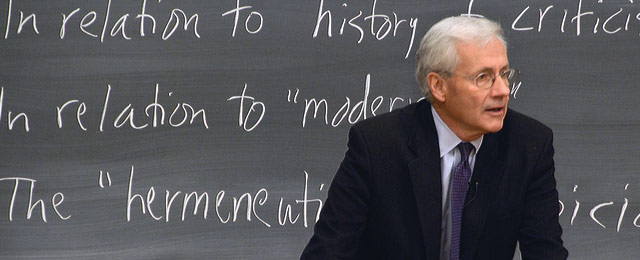
This is a survey of the main trends in twentieth-century literary theory. Lectures will provide background for the readings and explicate them where appropriate, while attempting to develop a coherent overall context that incorporates philosophical and social perspectives on the recurrent questions: what is literature, how is it produced, how can it be understood, and what is its purpose?

A journey through the literature of English country houses from the time of Thomas More to Oscar Wilde

This class is a study of Milton's poetry, with attention paid to his literary sources, his contemporaries, his controversial prose, and his decisive influence on the course of English poetry. Throughout the course, Professor Rogers explores the advantages and limitations of a diverse range of interpretive techniques and theoretical concerns in Milton scholarship and criticism. Lectures include close readings of lyric and epic poetry, prose, and letters; biographical inquiries; examinations of historical and political contexts; and engagement with critical debates.
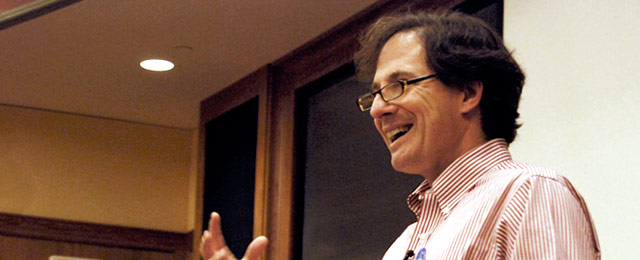
This course covers the body of modern poetry, its characteristic techniques, concerns, and major practitioners. The authors discussed range from Yeats, Eliot, and Pound, to Stevens, Moore, Bishop, and Frost with additional lectures on the poetry of World War One, Imagism, and the Harlem Renaissance. Diverse methods of literary criticism are employed, such as historical, biographical, and gender criticism.
Add to calendar

Trusted paper writing service WriteMyPaper.Today will write the papers of any difficulty.