

Courses tagged with "Biology" (333)

Whether you are an outstanding or a struggling student, "Learning How to Learn" will give you powerful mental tools that will help you learn more effectively in tough-to-master subjects. You will discover practical, immediately useful insights that will help you to more deeply master your studies.

Quel est le secret d’une entreprise qui réussit mieux qu’une autre ? Comment faire les bons choix stratégiques ? Ce cours proposera des réponses à ces questions au travers de nombreuses études de cas. Il vous fournira des outils et méthodes d’analyse indispensables pour comprendre les atouts ainsi que l’environnement concurrentiel des entreprises.
Il s’agit d’une approche originale qui s’adresse à chacun, qu’il soit directeur, cadre, entrepreneur, étudiant ou tout simplement désireux de savoir comment prendre des décisions réfléchies et cohérentes tout en poursuivant un objectif à long terme.
Ce cours est construit comme un voyage en 6 escales au pays « stratégie ». Tout comme le stratège, le voyageur doit décider, prévoir et planifier son itinéraire en demeurant flexible. Il doit tenir un cap et connaître sa destination, car comme le disait Sénèque : « il n’est pas de vent favorable à qui ne connaît pas son port ».

La finance est omniprésente et les décisions financières nous concernent tous. Tout individu est un jour ou l’autre amené à épargner ou emprunter. La sélection des projets d’investissements et leur financement sont des questions cruciales pour les entrepreneurs ou managers. D’une manière plus large, les décisions prises par le monde politique en matières financières influencent directement ou indirectement le quotidien des citoyens. Les récentes crises financières ont pu nous montrer à quel point il peut être primordial de comprendre les fondamentaux de la finance. Sans un minimum d’éducation financière, il est difficile d’appréhender le fonctionnement du monde dans lequel nous évoluons. Ce cours introductif vous propose un cadre conceptuel et des outils pour vous aider à prendre des décisions financières judicieuses, avec un focus particulier sur les opérations financières courantes.
Au terme de ce cours, vous serez capable de :
- Décrire les principes fondamentaux du raisonnement financier : absence d’opportunités d’arbitrage dans un marché concurrentiel, intégration de la dimension temporelle et du risque dans la décision financière ;
- Calculer des valeurs actuelles ou futures, de flux ou de séquence de flux ;
- Appliquer les techniques de l’évaluation actuarielle aux opérations financières courantes (de type épargne ou emprunt) et aux principaux actifs financiers (actions et obligations) ;
- Utiliser les différents outils de sélection d’investissement pour des projets en entreprise ;
- Analyser la problématique de la décision d’investissement, en tenant compte du lien entre rendement attendu et risque ;
- Déterminer le taux de rendement qu’une entreprise doit utiliser lorsqu’elle doit prendre une décision d’investissement et utiliser ce taux pour calculer la valeur générée par un projet ;
- Suivre des cours de finance plus avancés (finance d’entreprise, gestion de portefeuille, marchés financiers, finance internationale, produits dérivés, etc.).

Hoy en día, más del 80 por ciento de la población en América Latina y el Caribe vive en zonas urbanas, y para el 2050 será casi el 90 por ciento. Esta creciente urbanización plantea desafíos importantes para los más de 15 mil municipios que existen en la región, exigiendo a los mismos hacer frente a las demandas de nuevos empleos, servicios urbanos, escuelas, transporte, viviendas y seguridad de forma consciente y planificada. Estas ciudades quieren avanzar hacia el desarrollo sostenible, buscando la manera de crecer económicamente, de forma inclusiva y respetando el medioambiente. ¿Pero cómo se avanza hacia el sueño de la sostenibilidad? ¿Cómo conseguimos crear actividad económica sin contaminar el aire y los ríos? ¿Cómo podemos crear riqueza y que los recursos lleguen a todas las personas? ¿Cómo hacer ciudades más seguras y participativas?
Para reflexionar sobre estas y otras preguntas, el BID ha creado un curso que busca fortalecer en los participantes las capacidades para gestionar el desarrollo sostenible de las ciudades, a través del dominio conceptual, procedimental y actitudinal de las principales áreas de competencia de la ciudad y de la herramienta de la Iniciativa de Ciudades Emergentes y Sostenibles del BID, permitiéndoles desarrollar habilidades y construir estrategias innovadoras y multisectoriales para dar respuesta a los desafíos de la sostenibilidad.
La preparación de este curso fue financiada por el Fondo de Fortalecimiento de la Capacidad Institucional (ICSF), gracias al aporte del Gobierno de la República Popular de China.

Entre 1950 e 2010, a taxa de urbanização da América Latina passou de 41% a 79%. Caso esta tendência se mantenha, a taxa de urbanização em 2030 será de cerca de 90%, fazendo da região a mais urbanizada do planeta.
Essa tendência consolida a cidade como o centro do desenvolvimento econômico e humano da região. A cidade está criando trabalho, está inovando, está repensando seus sistemas de saúde e educação, transporte, está fazendo frente às mudanças do clima, está abrindo espaços para o debate e a socialização. Para que esse dinamismo possa traduzir-se em um fenômeno exitoso, a cidade deve aprender a planejar seu presente pensando em seu futuro, buscando o equilíbrio entre crescimento econômico, a inclusão social e o respeito ao meio ambiente. É, portanto, responsabilidade das cidades melhorar a qualidade de vida das gerações presentes sem comprometer o bem estar das gerações futuras.
Com o objetivo de responder a este desafio, o BID criou um curso que busca fortalecer os conhecimentos e capacidades dos participantes em gerir o desenvolvimento sustentável de suas cidades. E para isso, o curso parte da premissa que a sustentabilidade das cidades só será alcançada por meio de uma perspectiva integrada e intersetorial; uma perspectiva integral, onde se trabalhe de maneira conjunta os desafios econômicos, fiscais, urbanos, ambientais, institucionais e de governabilidade das cidades junto com uma perspectiva intersetorial, onde as diferentes áreas e níveis de governo se coordenem e que se articulem com o setor privado e com a sociedade civil.
Com o objetivo de entender melhor essa perspectiva, o curso analisa a situação, os desafios setoriais e intersetoriais que as cidades encontram na gestão das principais áreas de sua competência: finanças subnacionais, desenvolvimento produtivo, planejamento urbano, transporte, segurança cidadã, água, ar etc. Desta forma, com o objetivo de abordar o planejamento do desenvolvimento sustentável das cidades médias latino americanas, o curso apresenta a “Iniciativa Cidades Emergentes e Sustentáveis”, uma ferramenta de gestão que permite dar sentido ao trabalho analítico das dimensões/desafios de forma integrada.
Assim como na América Latina e no Caribe, o Brasil possui grandes desafios ambientais, urbanos e fiscais para a sustentabilidade de suas cidades. Dentre eles se destacam os altos índices de violência - 25,8 mortes violentas por 100 mil habitantes segundo o Fórum Brasileiro de Segurança Pública; a desigualdade urbana, uma vez que o país é o 4º mais desigual da América Latina e Caribe; e a vulnerabilidade diante de desastres naturais, onde se calcula, por exemplo, que a reconstrução das cidades cariocas devastadas pelas enchentes e pelos deslizamentos de 2011 custou 1,3% do PIB do estado do Rio de Janeiro; ou ainda, degradação ambiental, com um índice de 63% de esgoto sendo lançado nos corpos hídricos sem nenhum tratamento, segundo o MCidades.
Além de fornecer conceitos e uma visão abrangente da situação do Brasil em relação à sustentabilidade das cidades, neste curso serão abordados alguns desafios dos municípios, bem como exemplos práticos de como esses problemas estão sendo enfrentados.

Free online course: 83 videos, 17 comprehensive problem-solving exercises. Digital text sold separately.

If your goal is a career on a broker-dealer’s M&A desk, this is the course for you! This course will dive deeper into advanced M&A topics.
We’ll look at the list of synergies developed by the Investment Bank and buyer and learn about the various sources to finance M&A.
We’ll also look at the steps involved in the sale process, understand the meaning of “First Offer”, and learn how to disclose an acquisition. We’ll wrap up this course with a look at the various types of takeover defenses.
This course is part of New York Institute of Finance’s popular Mergers & Acquisitions Professional Certificate program.

Ready to start your career in M&A? If you’ve gained a clear, comprehensive understanding of M&A concepts and theories, your next step is to complete the M&A Certification Exam from the New York Institute of Finance.
To earn your Professional Certificate in Mergers & Acquisitions from NYIF, you must pass this exam.
The exam is 20 questions, timed at one hour. To qualify for the certificate, learners must receive a grade of at least 70% or better.
Prerequisite to sit for this exam is to earn a Verified Certificate in all 5 M&A courses from NYIF:

Ready to start your career in M&A? If you’ve gained a clear, comprehensive understanding of M&A concepts and theories, your next step is to complete the M&A Certification Exam from the New York Institute of Finance.
To earn your Professional Certificate in Mergers & Acquisitions from NYIF, you must pass this exam.
The exam is 20 questions, timed at one hour. To qualify for the certificate, learners must receive a grade of at least 70% or better.
While anyone may sit for the exam, we recommended that you first complete the courses in the certificate program:

Offering an intensive introduction to the complex world of M&A, this course will provide an invaluable foundation in strategy, regulation, finding a deal, corporate valuation, and more.
You will learn about buyer strategies, how M&A can increase business value, and how to start the acquisition process, as well as identify successful acquisitions.
Taught by instructors with decades of experience on Wall Street, this M&A course will equip analysts and associates with the skills they need to rise to employment in the M&A field. Additionally, directors and managers who have transitioned, or hope to transition, to M&A from other areas such as equities or fixed income can use this course to eliminate skill gaps.
This course is part of the New York Institute of Finance’s popular Mergers & Acquisitions Professional Certificate program.

One of the primary functions of a broker-dealer’s M&A desk is advisory services – consulting clients as they seek to grow through M&A.
In this course, you will learn to use the Free Cash Flow metric to evaluate acquisition opportunities. You will learn about the components of Free Cash Flow and its relationship with market value. You will also learn about the process of capital budgeting and guidelines to follow.
This course is part of the New York Institute of Finance’s popular Mergers & Acquisitions Professional Certificate program.

Learn exactly how and why different M&A deals come together, and how to determine the ideal capital structure for every deal in which you participate.
In this course, we will look at the various corporate documents involved in the M&A process and understand the purpose of the engagement letter. We’ll look at the three legal structures of M&A and understand the difference between triangular and reverse triangular structures. We’ll also learn the difference between stock and asset purchase, learn what tax-free deals are and how there are accomplished.
The course will conclude with an understanding of accounting rules and the categories of advanced structuring.
This course is part of the New York Institute of Finance’s popular Mergers & Acquisitions Professional Certificate program.

In this macroeconomics course, you will learn to predict macroeconomic variables such as inflation, growth or consumption, and to create statistical models in economics and use them to predict responses to economic policy.
You will learn from hands-on demonstrations of model-building, forecasting and policy analysis, using data sets from a wide variety of countries. Demonstrations and applications will be conducted using EViews—a popular software for estimating and simulating forecasting models on Windows. Free, temporary licenses for EViews will be made available for the duration of the course.
Macroeconometric Forecasting is offered by the IMF with financial support from the Government of Belgium.

The macroeconomy is the sum of all our productive efforts, spending, and income. Economic outcomes are the result of our complex interactions with other people, businesses, the government, as well as with people and businesses globally. In this economics course, you will learn the basic stylized framework that economists use to think about, account for, measure and explain these complex interactions and outcomes.
In the first half of the course, we consider how households decide how much to work and how to spend and save money. We will also look at how businesses make economic decisions such as how many workers to hire and how many machines and buildings to use to produce their products.
In the second half of the course, we consider how different policies can potentially enhance or distort market outcomes by offsetting, alleviating, or amplifying these inefficiencies. Our focus will be on five aspects of economic policy:
- labor market policies and unemployment
- R&D and innovation policies
- fiscal policies and taxation
- monetary policy and inflation
- free-trade policies
This course satisfies the Social-Behavioral Sciences (SB) general studies requirement at Arizona State University. This course may satisfy a general education requirement at other institutions; however, it is strongly encouraged that you consult with your institution of choice to determine how these credits will be applied to their degree requirements prior to transferring the credit.
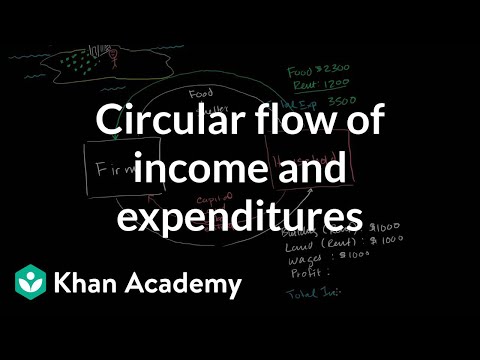
Topics covered in a traditional college level introductory macroeconomics course. Circular Flow of Income and Expenditures. Parsing Gross Domestic Product. More on Final and Intermediate GDP Contributions. Investment and Consumption. Income and Expenditure Views of GDP. Components of GDP. Examples of Accounting for GDP. Real GDP and Nominal GDP. GDP Deflator. Example Calculating Real GDP with a Deflator. Introduction to Inflation. Actual CPI-U Basket of Goods. Inflation Data. Moderate Inflation in a Good Economy. Stagflation. Real and Nominal Return. Calculating Real Return in Last Year Dollars. Relation Between Nominal and Real Returns and Inflation. Deflation. Velocity of Money Rather than Quantity Driving Prices. Deflation Despite Increases in Money Supply. Deflationary Spiral. Hyperinflation. Unemployment Rate Primer. Phillips Curve. Interest as Rent for Money. Money Supply and Demand Impacting Interest Rates. The Business Cycle. Aggregate Demand. Shifts in Aggregate Demand. Long-Run Aggregate Supply. Short Run Aggregate Supply. Demand-Pull Inflation under Johnson. Real GDP driving Price. Cost Push Inflation. Monetary and Fiscal Policy. Tax Lever of Fiscal Policy. Breakdown of Gas Prices. Short-Run Oil Prices. Keynesian Economics. Risks of Keynesian Thinking. Overview of Fractional Reserve Banking. Weaknesses of Fractional Reserve Lending. Full Reserve Banking. Money Supply- M0 M1 and M2. Simple Fractional Reserve Accounting part 1. Simple Fractional Reserve Accounting (part 2). MPC and Multiplier. Mathy Version of MPC and Multiplier (optional). Consumption Function Basics. Generalized Linear Consumption Function. Consumption Function with Income Dependent Taxes. Keynesian Cross. Details on Shifting Aggregate Planned Expenditures. Keynesian Cross and the Multiplier. Investment and Real Interest Rates. Connecting the Keynesian Cross to the IS-Curve. Loanable Funds Interpretation of IS Curve. LM part of the IS-LM model. Government Spending and the IS-LM model. Balance of Payments- Current Account. Balance of Payments- Capital Account. Why Current and Capital Accounts Net Out. Accumulating Foreign Currency Reserves. Using Reserves to Stabilize Currency. Speculative Attack on a Currency. Financial Crisis in Thailand Caused by Speculative Attack. Math Mechanics of Thai Banking Crisis.

Learn about different voting methods and fair division algorithms, and explore the problems that arise when a group of people need to make a decision.

This course introduces different ways of managing finances within an organisation with the aim of enhancing business performance.
It will allow you to develop your knowledge and understanding of how to make financing and investment decisions and help you to understand:
- How organisations finance their operations
- How to plan and control cash flows
- How to make the best use of working capital
- The principles of making capital investment decisions
Completion of this course will also prepare you for the ACCA ‘Management Accounting’ exam (FMA/F2), which leads to a Diploma in Accounting and Business.
To check availability of this course in your country please click here.
This course does not offer an edX certificate.
Those learners who would like to earn an award will have the opportunity to register with ACCA as a student, take computer based exams and gain the ACCA Diploma in Accounting and Business.
You can find your nearest ACCA exam centre on the ACCA website.

Across organizations, managers are expected to have sound knowledge of finance and accounting. As part of their job, managers use large volumes of information produced by accounting systems to make business decisions every day.
This business and management course will show you how accounting information is relevant to managers, and how it can be processed and analyzed for effective managerial decision-making. By examining accounting information that is extensively used across three key managerial functions of planning, decision-making and controlling, the course equips non-finance managers with basic accounting and finance skills. This course also discusses activity based costing, which provides insight on the cost structure of products and services.
What sets this course apart is the practicing manager-centric approach that is a part of each week of the course. Whether you are a student or a practicing manager, this course will allow you to easily follow all topics and directly apply concepts in practice.

Gain the skills to manage your personal finances: managing budgets, debts, investments, property purchase, pensions and insurance.

This course provides an introduction to the concepts of time and money management along with career and life planning. This course is specifically aimed at new and incoming college students. This is not an MBA prep course.
Add to calendar

Trusted paper writing service WriteMyPaper.Today will write the papers of any difficulty.