

Courses tagged with "Biology" (333)

This course explores markets with frictions. The goal is to sharpen our economic reasoning, add a few twists that you are unlikely to have seen in other courses, and apply the methods to interesting phenomena. This should improve the way you think analytically about the economy, and help address interesting issues that come up in the real world.

Logistics and supply chain structures can be found in virtually any system. A supply chain is a complex environment with a multitude of forces and variables with various degrees of dependence. Unforeseen events are frequent and in order to achieve a competitive supply chain, constant supervision is needed.
In this business and management course, you will learn methods that are used to master control of supply chains, including how to forecast demand, how to determine the best order quantity for procurement, how to plan capacity and production and much more."
Many of the topics in the course will be illustrated using real companies and real logistics professionals as logistics is not a theoretical subject – it exists all around us – everywhere.
This MOOC is based on a widely popular university course that will give you a working knowledge on supply chain operations that can be applied in your organisation. By the end of this course, you will be able to better control and master your organisation’s system.
Regardless of your industry or organisation type, the concepts and methods from this course will help you become a logistics and supply chain professional. You will never look at a hotel breakfast buffet, a loading bay, a warehouse, a factory, an emergency room or even at a fast food restaurant the same way again…

Mathematical Methods for Quantitative Finance covers topics from calculus and linear algebra that are fundamental for the study of mathematical finance. Students successfully completing this course will be mathematically well prepared to study quantitative finance at the graduate level.

Travel with our team to India and Kenya to see first-hand how rigorous health research is conducted in the field. This eight-week course will focus on the fundamentals of field-based health research with an emphasis on measuring health outcomes in low resource settings. The course will involve real world examples from on-going research studies in India and Kenya, combined with exercises to provide practical insights about study design, measurement of health outcomes and data collection, as well as the common challenges and constraints in implementing health surveys in the field. Through a series of integrated learning modules, the course will focus on topics such as:
- Measuring individual and population health
- Selecting health indicators
- Measurement tools and selection
- Questionnaire development
- Ethical issues
Case Studies and exercises will be drawn from research conducted by J-PAL affiliated professors.
JPAL350x is designed for people from a variety of backgrounds including those who are new to health research as well as managers and researchers from international development organizations, foundations, governments, and non-governmental organizations around the world.

This economics and finance course is a survey of risk measures and risk measurement practices applied to individual securities and portfolios. Students will also study risk reports of publicly traded financial institutions.
Upon completion of this course, participants will receive a certificate bearing the New York Institute of Finance (NYIF) name. A NYIF certificate is a valuable addition to your credentials, proving that you have acquired the work-ready skills that employers value.
For those who wish to learn more, students can enroll in the remaining four courses to earn the complete Risk Management Professional Certificate, backed by the New York Institute of Finance’s 93-year history.

This course is designed to introduce students to basic microeconomic theory at a relatively rapid pace without the use of complicated mathematics. The focus will be on fundamental economic principles that can be used by managers to think about business problems, including those that arise from coordinating workers and managers inside firms and from dealing with outside market forces and government policies.
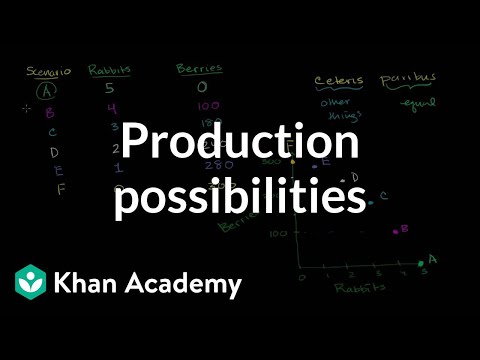
Topics covered in a traditional college level introductory microeconomics course. Production Possibilities Frontier. Opportunity Cost. Increasing Opportunity Cost. Allocative Efficiency and Marginal Benefit. Economic Growth through Investment. Comparative Advantage Specialization and Gains from Trade. Comparative Advantage and Absolute Advantage. Law of Demand. Price of Related Products and Demand. Changes in Income, Population, or Preferences. Normal and Inferior Goods. Inferior Goods Clarification. Law of Supply. Factors Affecting Supply. Market Equilibrium. Changes in Market Equilibrium. Price Elasticity of Demand. More on Elasticity of Demand. Perfect Inelasticity and Perfect Elasticity of Demand. Constant Unit Elasticity. Total Revenue and Elasticity. More on Total Revenue and Elasticity. Cross Elasticity of Demand. Elasticity of Supply. Elasticity and Strange Percent Changes. Demand Curve as Marginal Benefit Curve. Consumer Surplus Introduction. Total Consumer Surplus as Area. Producer Surplus. Rent Control and Deadweight Loss. Minimum Wage and Price Floors. Taxation and Dead Weight Loss. Percentage Tax on Hamburgers. Taxes and Perfectly Inelastic Demand. Taxes and Perfectly Elastic Demand. Marginal Utility. Equalizing Marginal Utility per Dollar Spent. Deriving Demand Curve from Tweaking Marginal Utility per Dollar. Budget Line. Optimal Point on Budget Line. Types of Indifference Curves. Economic Profit vs Accounting Profit. Depreciation and Opportunity Cost of Capital. Fixed, Variable, and Marginal Cost.. Visualizing Average Costs and Marginal Costs as Slope. Marginal Cost and Average Total Cost. Marginal Revenue and Marginal Cost. Marginal Revenue Below Average Total Cost. Long Term Supply Curve and Economic Profit. Perfect Competition. Monopoly Basics. Review of Revenue and Cost Graphs for a Monopoly. Monopolist Optimizing Price (part 1)- Total Revenue.. Monopolist Optimizing Price (part 2)- Marginal Revenue. Monopolist Optimizing Price (part 3)- Dead Weight Loss.avi. Optional Calculus Proof to Show that MR has Twice Slope of Demand. Oligopolies and Monopolistic Competition. Monopolistic Competition and Economic Profit. Oligopolies, Duopolies, Collusion, and Cartels. Prisoners' Dilemma and Nash Equilibrium. More on Nash Equilibrium. Why Parties to Cartels Cheat. Game Theory of Cheating Firms. Negative Externalities. Taxes for Factoring in Negative Externalities. Positive Externalities. Tragedy of the Commons. First Degree Price Discrimination. A Firm's Marginal Product Revenue Curve. How Many People to Hire Given the MPR curve. Adding Demand Curves.

This course is part of the MITx MicroMasters program in Data, Economics, and Development Policy (DEDP). To audit this course, click “Enroll Now” in the green button at the top of this page.
To enroll in the MicroMasters track or to learn more about this program and how it integrates with MIT’s new blended Master’s degree, go to MITx’s MicroMasters portal.
What is produced in an economy? How is it produced? Who gets the product? Microeconomics seeks to answer these fundamental questions about markets.
In this course, we’ll introduce you to microeconomic theory, together with some empirical results and policy implications. You’ll analyze mathematical models that describe the real-world behavior of consumers and firms, and you’ll see how prices make the world go ‘round.
You’ll join the ranks of business executives, policymakers, entrepreneurs, and global leaders who rely on the insights they derive from a working knowledge of microeconomics. Nobel memorial prize-winner Paul Samuelson invented the modern microeconomics curriculum at MIT. Now is your chance to learn the field from the intellectual tradition he began.
Topics include:
- Consumer theory
- Supply and demand
- Market equilibrium
- Producer theory
- Monopoly
- Oligopoly
- Capital markets
- Welfare economics
- Public goods
- Externalities

Why is Coursera offering this course free of charge? Why is the divorce rate so high? Why do we have so much pollution? Would legalizing marijuana lead to a reduction in crime? Why is a college education a smart investment, or is it? Why would a draft only damage the army? In the last 50 years economists have tackled some of the most interesting and important questions for humanity!

In this class, you will learn how to think with models and use them to make sense of the complex world around us.

在本课程中,你将了解如何运用模型进行思考、理解我们生活的这个复杂世界。
The course builds on my Introduction to Financial Accounting course, which you should complete first. In this course, you will learn how to read, understand, and analyze most of the information provided by companies in their financial statements. These skills will help you make more informed decisions using financial information.

This course begins with an overview of the mortgage backed securities market. We’ll learn about the characteristics of mortgage-backed securities and identify the factors that cause U.S. mortgage-backed securities to be considered a different category of fixed income securities compared to asset-backed securities.
We’ll learn about the U.S. mortgage agencies and be able to distinguish among them regarding their legal status, nature of the guarantees they offer and types of mortgages they securitize. We’ll look at the basic features of agency pass-through securities and collateralized mortgage obligations (CMOs) and how their structural differences impact cash flows received by investors. We’ll also get familiarized with mortgage-related terminology such as non-recourse debt, underwater mortgages and short sales as well as their implications for mortgage loans and their consequences for the risk and expected returns to investors in mortgage-backed securities and learn about the main aspects involved in the creation of an agency pass-through security.
We’ll learn about mortgage cash flows and prepayments and also learn how the interaction between prepayment risk and reinvestment risk adversely impacts holders of pass-through securities in both rising and falling interest rate environments. We’ll learn how to distinguish between rate of return and the different yields associated with mortgage-backed securities and get introduced to the commonly used prepayment benchmarks for expressing prepayment speeds. We’ll wrap up this course with an understanding of bond math, spreads used in assessing the risk and relative value, option-adjusted spread and collateralized mortgage obligations.
This course is part 1 of the New York Institute of Finance’s Mortgage Backed Securities (MBS) Professional Certificate program.

In this course we’ll learn the key features of the most common types of tranches in agency CMOs:
- Z (accrual) bond tranches
- PAC (planned amortization class) tranches
- TAC (targeted amortization class) tranches
We’ll cover the primary differences between non-agency and agency CMOs and identify the main types of internal credit enhancements commonly used in non-agency CMOs. We’ll also learn how to contrast credit risk, prepayment risk and the typical amount of credit enhancements for different types of collateral, especially prime jumbo and subprime mortgage securitizations.
Next, we’ll look at the structure and purpose for creating Giants (FHLMC), Megas (FNMA) and Platinum securities (GNMA) and understand what we mean by reverse mortgages. We’ll review the structural similarities and differences of commercial mortgage-backed securities (CMBS) with both agency and non-agency CMOs and look at the common features of the structured payouts on CMBS including IO strips and super-senior tranches.
This course also describes types of agency multi-family securitizations, the various ways of structuring the collateral pool and the payouts to investors and the characteristics of TBA (to be announced) trading and specified (spec) trading. We’ll review the factors that cause the prices of specified trades and TBA trades to differ, and the forward pricing of TBA trades based on (cost of) carry considerations, structure of a dollar roll, and the factors that determine the attractiveness of dollar rolls to investors holding MBS. We’ll wrap up this course with an understanding of ARMs (Adjustable Rate Mortgages) and Hybrids (Hybrid Adjustable Rate Mortgages).
This course is part 2 of the New York Institute of Finance’s Mortgage Backed Securities (MBS) Professional Certificate program. This course will begin with a review of the first course in this program, Mortgage Backed Securities (MBS): Part I.

Ready to earn a professional certificate and stand out in your field?
If you’ve gained a clear, comprehensive understanding of the concepts and theories, your next step is to complete the Mortgage Backed Securities Professional Certificate Examination from the New York Institute of Finance.
The exam comprises 70 questions, timed at two hours. To qualify for the certificate, learners must receive a grade of at least 70% or better.
Prerequisite for this exam:
Earn a Verified Certificate in both parts of the Mortgage Backed Securities program from NYIF:

Networked Life will explore recent scientific efforts to explain social, economic and technological structures -- and the way these structures interact -- on many different scales, from the behavior of individuals or small groups to that of complex networks such as the Internet and the global economy.

This course serves as an introduction to the basic principles that govern all aspects of our networked lives. We will learn about companies like Google and technologies like the Internet in a way that requires no mathematics beyond basic algebra.

The course invites you to examine the interconnectedness of modern life through an exploration of fundamental questions about how our social, economic, and technological worlds are connected. Students will explore game theory, the structure of the Internet, social contagion, the spread of social power and popularity, and information cascades.
This MOOC is based on an interdisciplinary Cornell University course entitled Networks, taught by professors David Easley, Jon Kleinberg, and Éva Tardos. That course was also the basis for the book, Networks, Crowds, and Markets: Reasoning About a Highly Connected World. This course is designed at the introductory undergraduate level without formal prerequisites.

A course driven by 20 practical questions about wireless, web, and the Internet, about how products from companies like Apple, Google, Facebook, Netflix, Amazon, Ericsson, HP, Skype and AT&T work. In this offering, we will cover 7 of the 20 questions, and you will have the opportunity to personalize your own learning experience by choosing which of the versions suits you best.

Examine the critical role that business plays in society, and learn about the exciting new models of business that are changing the way that companies create value.
Add to calendar

Trusted paper writing service WriteMyPaper.Today will write the papers of any difficulty.