

Courses tagged with "Calculus I" (279)
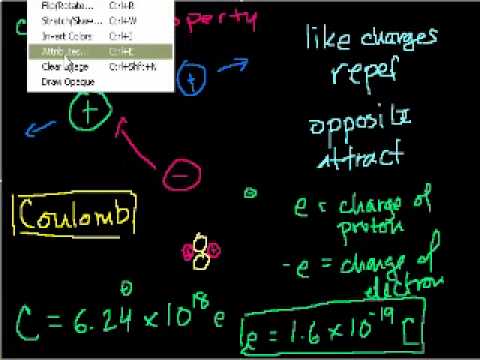
Electrostatics (part 1): Introduction to Charge and Coulomb's Law. Electrostatics (part 2). Proof (Advanced): Field from infinite plate (part 1). Proof (Advanced): Field from infinite plate (part 2). Electric Potential Energy. Electric Potential Energy (part 2-- involves calculus). Voltage. Capacitance. Circuits (part 1). Circuits (part 2). Circuits (part 3). Circuits (part 4). Cross product 1. Cross Product 2. Cross Product and Torque. Introduction to Magnetism. Magnetism 2. Magnetism 3. Magnetism 4. Magnetism 5. Magnetism 6: Magnetic field due to current. Magnetism 7. Magnetism 8. Magnetism 9: Electric Motors. Magnetism 10: Electric Motors. Magnetism 11: Electric Motors. Magnetism 12: Induced Current in a Wire. The dot product. Dot vs. Cross Product. Calculating dot and cross products with unit vector notation. Electrostatics (part 1): Introduction to Charge and Coulomb's Law. Electrostatics (part 2). Proof (Advanced): Field from infinite plate (part 1). Proof (Advanced): Field from infinite plate (part 2). Electric Potential Energy. Electric Potential Energy (part 2-- involves calculus). Voltage. Capacitance. Circuits (part 1). Circuits (part 2). Circuits (part 3). Circuits (part 4). Cross product 1. Cross Product 2. Cross Product and Torque. Introduction to Magnetism. Magnetism 2. Magnetism 3. Magnetism 4. Magnetism 5. Magnetism 6: Magnetic field due to current. Magnetism 7. Magnetism 8. Magnetism 9: Electric Motors. Magnetism 10: Electric Motors. Magnetism 11: Electric Motors. Magnetism 12: Induced Current in a Wire. The dot product. Dot vs. Cross Product. Calculating dot and cross products with unit vector notation.
Fluids (part 1). Fluids (part 2). Fluids (part 3). Fluids (part 4). Fluids (part 5). Fluids (part 6). Fluids (part 7). Fluids (part 8). Fluids (part 9). Fluids (part 10). Fluids (part 11). Fluids (part 12). Fluids (part 1). Fluids (part 2). Fluids (part 3). Fluids (part 4). Fluids (part 5). Fluids (part 6). Fluids (part 7). Fluids (part 8). Fluids (part 9). Fluids (part 10). Fluids (part 11). Fluids (part 12).
This tutorial is the meat of much of classical physics. We think about what a force is and how Newton changed the world's (and possibly your) view of how reality works. Newton's First Law of Motion. Newton's First Law of Motion Concepts. Newton's First Law of Motion. Newton's First Law. Newton's Second Law of Motion. Newton's Third Law of Motion. Newton's Third Law of Motion. All of Newton's Laws of Motion. Normal Force and Contact Force. Normal Force in an Elevator. Balanced and Unbalanced Forces. Unbalanced Forces and Motion. Slow Sock on Lubricon VI. Normal Forces on Lubricon VI. Inclined Plane Force Components. Ice Accelerating Down an Incline. Force of Friction Keeping the Block Stationary. Correction to Force of Friction Keeping the Block Stationary. Force of Friction Keeping Velocity Constant. Intuition on Static and Kinetic Friction Comparisons. Static and Kinetic Friction Example. Introduction to Tension. Introduction to Tension (Part 2). Tension in an accelerating system and pie in the face. Newton's First Law of Motion. Newton's First Law of Motion Concepts. Newton's First Law of Motion. Newton's First Law. Newton's Second Law of Motion. Newton's Third Law of Motion. Newton's Third Law of Motion. All of Newton's Laws of Motion. Normal Force and Contact Force. Normal Force in an Elevator. Balanced and Unbalanced Forces. Unbalanced Forces and Motion. Slow Sock on Lubricon VI. Normal Forces on Lubricon VI. Inclined Plane Force Components. Ice Accelerating Down an Incline. Force of Friction Keeping the Block Stationary. Correction to Force of Friction Keeping the Block Stationary. Force of Friction Keeping Velocity Constant. Intuition on Static and Kinetic Friction Comparisons. Static and Kinetic Friction Example. Introduction to Tension. Introduction to Tension (Part 2). Tension in an accelerating system and pie in the face.

Classical gravity. How masses attract each other (according to Newton). Introduction to Gravity. Mass and Weight Clarification. Gravity for Astronauts in Orbit. Would a Brick or Feather Fall Faster. Acceleration Due to Gravity at the Space Station. Space Station Speed in Orbit. Introduction to Newton's Law of Gravitation. Gravitation (part 2). Introduction to Gravity. Mass and Weight Clarification. Gravity for Astronauts in Orbit. Would a Brick or Feather Fall Faster. Acceleration Due to Gravity at the Space Station. Space Station Speed in Orbit. Introduction to Newton's Law of Gravitation. Gravitation (part 2).

Linear momentum. Conservation of momentum. Elastic collisions. Introduction to Momentum. Momentum: Ice skater throws a ball. 2-dimensional momentum problem. 2-dimensional momentum problem (part 2). Introduction to Momentum. Momentum: Ice skater throws a ball. 2-dimensional momentum problem. 2-dimensional momentum problem (part 2).
Relationship between angular velocity and speed. Why Distance is Area under Velocity-Time Line. Introduction to Vectors and Scalars. Calculating Average Velocity or Speed. Solving for Time. Displacement from Time and Velocity Example. Acceleration. Balanced and Unbalanced Forces. Unbalanced Forces and Motion. Newton's First Law of Motion. Newton's First Law of Motion Concepts. Newton's First Law of Motion. Newton's Second Law of Motion. Newton's Third Law of Motion. Airbus A380 Take-off Time. Airbus A380 Take-off Distance. Average Velocity for Constant Acceleration. Acceleration of Aircraft Carrier Takeoff. Race Cars with Constant Speed Around Curve. Introduction to Gravity. Mass and Weight Clarification. Gravity for Astronauts in Orbit. Would a Brick or Feather Fall Faster. Deriving Displacement as a Function of Time, Acceleration and Initial Velocity. Plotting Projectile Displacement, Acceleration, and Velocity. Projectile Height Given Time. Deriving Max Projectile Displacement Given Time. Impact Velocity From Given Height. Visualizing Vectors in 2 Dimensions. Projectile at an Angle. Different Way to Determine Time in Air. Launching and Landing on Different Elevations. Total Displacement for Projectile. Total Final Velocity for Projectile. Correction to Total Final Velocity for Projectile. Projectile on an Incline. Unit Vectors and Engineering Notation. Clearing the Green Monster at Fenway. Green Monster at Fenway Part 2. Optimal angle for a projectile part 1. Optimal angle for a projectile part 2 - Hangtime. Optimal angle for a projectile part 3 - Horizontal distance as a function of angle (and speed). Optimal angle for a projectile part 4 Finding the optimal angle and distance with a bit of calculus. Slow Sock on Lubricon VI. Normal Forces on Lubricon VI. Normal Force and Contact Force. Normal Force in an Elevator. Inclined Plane Force Components. Ice Accelerating Down an Incline. Force of Friction Keeping the Block Stationary. Correction to Force of Friction Keeping the Block Stationary. Force of Friction Keeping Velocity Constant. Intuition on Static and Kinetic Friction Comparisons. Static and Kinetic Friction Example. Introduction to Tension. Introduction to Tension (Part 2). Tension in an accelerating system and pie in the face. Introduction to Momentum. Momentum: Ice skater throws a ball. 2-dimensional momentum problem. 2-dimensional momentum problem (part 2). Introduction to work and energy. Work and Energy (part 2). Conservation of Energy. Work/Energy problem with Friction. Introduction to mechanical advantage. Mechanical Advantage (part 2). Mechanical Advantage (part 3). Center of Mass. Introduction to Torque. Moments. Moments (part 2). Unit Vector Notation. Unit Vector Notation (part 2). Projectile Motion with Ordered Set Notation. Projectile motion (part 1). Projectile motion (part 2). Projectile motion (part 3). Projectile motion (part 4). Projectile motion (part 5). Centripetal Force and Acceleration Intuition. Visual Understanding of Centripetal Acceleration Formula. Calculus proof of centripetal acceleration formula. Loop De Loop Question. Loop De Loop Answer part 1. Loop De Loop Answer part 2. Acceleration Due to Gravity at the Space Station. Space Station Speed in Orbit. Conservation of angular momentum. Introduction to Newton's Law of Gravitation. Gravitation (part 2). Viewing g as the value of Earth's Gravitational Field Near the Surface. Intro to springs and Hooke's Law. Potential energy stored in a spring. Spring potential energy example (mistake in math). Introduction to Harmonic Motion. Harmonic Motion Part 2 (calculus). Harmonic Motion Part 3 (no calculus).
Thinking about making things rotate. Center of mass, torque, moments and angular velocity. Center of Mass. Introduction to Torque. Moments. Moments (part 2). Relationship between angular velocity and speed. Conservation of angular momentum. Center of Mass. Introduction to Torque. Moments. Moments (part 2). Relationship between angular velocity and speed. Conservation of angular momentum.
In this tutorial we begin to explore ideas of velocity and acceleration. We do exciting things like throw things off of cliffs (far safer on paper than in real life) and see how high a ball will fly in the air. Introduction to Vectors and Scalars. Calculating Average Velocity or Speed. Solving for Time. Displacement from Time and Velocity Example. Acceleration. Airbus A380 Take-off Time. Airbus A380 Take-off Distance. Why Distance is Area under Velocity-Time Line. Average Velocity for Constant Acceleration. Acceleration of Aircraft Carrier Takeoff. Deriving Displacement as a Function of Time, Acceleration and Initial Velocity. Plotting Projectile Displacement, Acceleration, and Velocity. Projectile Height Given Time. Deriving Max Projectile Displacement Given Time. Impact Velocity From Given Height. Viewing g as the value of Earth's Gravitational Field Near the Surface. Projectile motion (part 1). Projectile motion (part 2). Projectile motion (part 3). Projectile motion (part 4). Projectile motion (part 5). Introduction to Vectors and Scalars. Calculating Average Velocity or Speed. Solving for Time. Displacement from Time and Velocity Example. Acceleration. Airbus A380 Take-off Time. Airbus A380 Take-off Distance. Why Distance is Area under Velocity-Time Line. Average Velocity for Constant Acceleration. Acceleration of Aircraft Carrier Takeoff. Deriving Displacement as a Function of Time, Acceleration and Initial Velocity. Plotting Projectile Displacement, Acceleration, and Velocity. Projectile Height Given Time. Deriving Max Projectile Displacement Given Time. Impact Velocity From Given Height. Viewing g as the value of Earth's Gravitational Field Near the Surface. Projectile motion (part 1). Projectile motion (part 2). Projectile motion (part 3). Projectile motion (part 4). Projectile motion (part 5).
Pendulums. Slinkies. You when you have to use the bathroom but it is occupied. These all go back and forth over and over and over again. This tutorial explores this type of motion. Introduction to Harmonic Motion. Harmonic Motion Part 2 (calculus). Harmonic Motion Part 3 (no calculus). Introduction to Harmonic Motion. Harmonic Motion Part 2 (calculus). Harmonic Motion Part 3 (no calculus).

Thermodynamics (part 1). Thermodynamics (part 2). Thermodynamics (part 3). Thermodynamics (part 4). Thermodynamics (part 5). Macrostates and Microstates. Quasistatic and Reversible Processes. First Law of Thermodynamics/ Internal Energy. More on Internal Energy. Work from Expansion. PV-diagrams and Expansion Work. Proof: U=(3/2)PV or U=(3/2)nRT. Work Done by Isothermic Process. Carnot Cycle and Carnot Engine. Proof: Volume Ratios in a Carnot Cycle. Proof: S (or Entropy) is a valid state variable. Thermodynamic Entropy Definition Clarification. Reconciling Thermodynamic and State Definitions of Entropy. Entropy Intuition. Maxwell's Demon. More on Entropy. Efficiency of a Carnot Engine. Carnot Efficiency 2: Reversing the Cycle. Carnot Efficiency 3: Proving that it is the most efficient. Enthalpy. Heat of Formation. Hess's Law and Reaction Enthalpy Change. Gibbs Free Energy and Spontaneity. Gibbs Free Energy Example. More rigorous Gibbs Free Energy/ Spontaneity Relationship. A look at a seductive but wrong Gibbs/Spontaneity Proof. Stoichiometry Example Problem 1. Stoichiometry Example Problem 2. Limiting Reactant Example Problem 1. Empirical and Molecular Formulas from Stoichiometry. Example of Finding Reactant Empirical Formula. Stoichiometry of a Reaction in Solution. Another Stoichiometry Example in a Solution. Molecular and Empirical Forumlas from Percent Composition. Hess's Law Example. Thermodynamics (part 1). Thermodynamics (part 2). Thermodynamics (part 3). Thermodynamics (part 4). Thermodynamics (part 5). Macrostates and Microstates. Quasistatic and Reversible Processes. First Law of Thermodynamics/ Internal Energy. More on Internal Energy. Work from Expansion. PV-diagrams and Expansion Work. Proof: U=(3/2)PV or U=(3/2)nRT. Work Done by Isothermic Process. Carnot Cycle and Carnot Engine. Proof: Volume Ratios in a Carnot Cycle. Proof: S (or Entropy) is a valid state variable. Thermodynamic Entropy Definition Clarification. Reconciling Thermodynamic and State Definitions of Entropy. Entropy Intuition. Maxwell's Demon. More on Entropy. Efficiency of a Carnot Engine. Carnot Efficiency 2: Reversing the Cycle. Carnot Efficiency 3: Proving that it is the most efficient. Enthalpy. Heat of Formation. Hess's Law and Reaction Enthalpy Change. Gibbs Free Energy and Spontaneity. Gibbs Free Energy Example. More rigorous Gibbs Free Energy/ Spontaneity Relationship. A look at a seductive but wrong Gibbs/Spontaneity Proof. Stoichiometry Example Problem 1. Stoichiometry Example Problem 2. Limiting Reactant Example Problem 1. Empirical and Molecular Formulas from Stoichiometry. Example of Finding Reactant Empirical Formula. Stoichiometry of a Reaction in Solution. Another Stoichiometry Example in a Solution. Molecular and Empirical Forumlas from Percent Composition. Hess's Law Example.
You understand velocity and acceleration well in one-dimension. Now we can explore scenarios that are even more fun. With a little bit of trigonometry (you might want to review your basic trig, especially what sin and cos are), we can think about whether a baseball can clear the "green monster" at Fenway Park. Visualizing Vectors in 2 Dimensions. Projectile at an Angle. Different Way to Determine Time in Air. Launching and Landing on Different Elevations. Total Displacement for Projectile. Total Final Velocity for Projectile. Correction to Total Final Velocity for Projectile. Projectile on an Incline. Unit Vectors and Engineering Notation. Clearing the Green Monster at Fenway. Green Monster at Fenway Part 2. Unit Vector Notation. Unit Vector Notation (part 2). Projectile Motion with Ordered Set Notation. Optimal angle for a projectile part 1. Optimal angle for a projectile part 2 - Hangtime. Optimal angle for a projectile part 3 - Horizontal distance as a function of angle (and speed). Optimal angle for a projectile part 4 Finding the optimal angle and distance with a bit of calculus. Race Cars with Constant Speed Around Curve. Centripetal Force and Acceleration Intuition. Visual Understanding of Centripetal Acceleration Formula. Calculus proof of centripetal acceleration formula. Loop De Loop Question. Loop De Loop Answer part 1. Loop De Loop Answer part 2. Visualizing Vectors in 2 Dimensions. Projectile at an Angle. Different Way to Determine Time in Air. Launching and Landing on Different Elevations. Total Displacement for Projectile. Total Final Velocity for Projectile. Correction to Total Final Velocity for Projectile. Projectile on an Incline. Unit Vectors and Engineering Notation. Clearing the Green Monster at Fenway. Green Monster at Fenway Part 2. Unit Vector Notation. Unit Vector Notation (part 2). Projectile Motion with Ordered Set Notation. Optimal angle for a projectile part 1. Optimal angle for a projectile part 2 - Hangtime. Optimal angle for a projectile part 3 - Horizontal distance as a function of angle (and speed). Optimal angle for a projectile part 4 Finding the optimal angle and distance with a bit of calculus. Race Cars with Constant Speed Around Curve. Centripetal Force and Acceleration Intuition. Visual Understanding of Centripetal Acceleration Formula. Calculus proof of centripetal acceleration formula. Loop De Loop Question. Loop De Loop Answer part 1. Loop De Loop Answer part 2.

Introduction to Waves. Amplitude, Period, Frequency and Wavelength of Periodic Waves. Introduction to the Doppler Effect. Doppler effect formula when source is moving away. When the source and the wave move at the same velocity. Mach Numbers. Specular and Diffuse Reflection. Specular and Diffuse Reflection 2. Refraction and Snell's Law. Refraction in Water. Snell's Law Example 1. Snell's Law Example 2. Total Internal Reflection. Virtual Image. Parabolic Mirrors and Real Images. Parabolic Mirrors 2. Convex Parabolic Mirrors. Convex Lenses. Convex Lens Examples. Doppler effect formula for observed frequency. Concave Lenses. Object Image and Focal Distance Relationship (Proof of Formula). Object Image Height and Distance Relationship. Introduction to Waves. Amplitude, Period, Frequency and Wavelength of Periodic Waves. Introduction to the Doppler Effect. Doppler effect formula when source is moving away. When the source and the wave move at the same velocity. Mach Numbers. Specular and Diffuse Reflection. Specular and Diffuse Reflection 2. Refraction and Snell's Law. Refraction in Water. Snell's Law Example 1. Snell's Law Example 2. Total Internal Reflection. Virtual Image. Parabolic Mirrors and Real Images. Parabolic Mirrors 2. Convex Parabolic Mirrors. Convex Lenses. Convex Lens Examples. Doppler effect formula for observed frequency. Concave Lenses. Object Image and Focal Distance Relationship (Proof of Formula). Object Image Height and Distance Relationship.
Work and energy. Potential energy. Kinetic energy. Mechanical advantage. Springs and Hooke's law. Introduction to work and energy. Work and Energy (part 2). Conservation of Energy. Work/Energy problem with Friction. Introduction to mechanical advantage. Mechanical Advantage (part 2). Mechanical Advantage (part 3). Intro to springs and Hooke's Law. Potential energy stored in a spring. Spring potential energy example (mistake in math). Introduction to work and energy. Work and Energy (part 2). Conservation of Energy. Work/Energy problem with Friction. Introduction to mechanical advantage. Mechanical Advantage (part 2). Mechanical Advantage (part 3). Intro to springs and Hooke's Law. Potential energy stored in a spring. Spring potential energy example (mistake in math).

Le cours présente les cellules solaires à base de silicium, depuis la physique des semiconducteurs cristallins jusqu’au fonctionnement des modules photovoltaïques. Les semiconducteurs désordonnés utilisés dans les cellules en couche mince sont également traités. Les aspects socio-économiques et environnementaux du photovoltaïque sont abordés.

This course will provide you with a basic knowledge of plasma physics and of its applications, which will enable you to understand some of the most important phenomena in space and astrophysics, how plasmas can be used in industry, and how we can achieve fusion on earth to contribute solving the problem of energy in sustainable development. In the first part, we will introduce the plasma state and describe the models, from single particles to fluid, which can be applied to study its dynamics. In the second part, we will illustrate and discuss examples of plasmas in space and in astrophysics, and discuss plasma applications in industry and medicine. The third part will be dedicated to fusion energy, from the design and technology of a fusion reactor, to plasma confinement configurations for fusion, and, finally, to confining, heating, controlling and extracting energy from a burning plasma.

This physics course, taught by world-renowned experts in the field, will provide you with an overview of applications in plasma physics. From the study of far distant astrophysical objects over diverse applications in industry, to the ultimate goal of sustainable electricity generation from nuclear fusion.
In the first part of this course, you will learn how nuclear fusion powers our Sun and the stars in the Universe. You will explore the cyclic variation of the Sun’s activity, how plasma flows can generate large-scale magnetic fields, and how these fields can reconnect to release large amounts of energy, manifested for instance by violent eruptions on the Sun.
The second part of this course discusses the key role plasma applications play today in industry and medicine. After a brief survey of the field, you will study in detail how plasmas are generated and sustained in strong electric fields and how this knowledge can be used to avoid undesired occurrence of plasmas in the form of electrical arcs. You will then, in detail, study the transition region between plasma and material surface, called the sheath, and you will learn why its properties are indispensable for the manufacturing of today’s integrated circuits.
Finally, in the third and most extensive part of this course, you will familiarize yourself with the different approaches to fusion energy, the current status, and the necessary steps from present-day experimental devices towards a fusion reactor providing electricity to the grid.
After deriving the general conditions for net energy gain from fusion, we will focus on magnetic confinement fusion. You will learn about the key ingredients of a magnetic fusion reactor, how to confine, heat, and control fusion plasmas at temperatures of 100 million degrees Kelvin, explore the relevant transport mechanisms, and explore the challenges of plasma wall interactions and structural materials.
To enjoy this course on plasma applications, it is recommended to first familiarize yourself with the plasma physics basics taught in Plasma Physics: Introduction.
Plasma, the fourth state of matter, is by far the most abundant form of known matter in the universe. Its behavior is very different from the other states of matter we are usually familiar with. To understand it, a rigorous formalism is required. This is essential not only to explain important astrophysical phenomena, but also to optimize many industrial and medical applications and for achieving fusion energy on Earth.
This physics course, taught by world-renowned experts of the field, gives you the opportunity to acquire a basic knowledge of plasma physics. A rigorous introduction to the plasma state will be followed by a description of the models, from single particle, to kinetic and fluid, which can be applied to study its dynamics. You will learn about the waves that can exist in a plasma and how to mathematically describe them, how a plasma can be controlled by magnetic fields, and how its complex and fascinating behavior is simulated using today’s most powerful supercomputers.
This course is the first of two courses introducing plasma physics and its applications. After completing this course, you will have the prerequisites to enjoy Plasma Physics: Applications, which deals with plasma applications in astrophysics, industry, and nuclear fusion.
This course is designed for high school students preparing to take the AP* Physics 1 Exam. * AP Physics 1 is a registered trademark of the College Board, which was not involved in the production of, and does not endorse, this product.

Get ready to ace your AP Physics 1 exam in this interactive prep course! Whether you are preparing for an upcoming exam or looking for a more challenging Physics course to add to your current curriculum, this is a great place to start. This challenging course is designed to help high school students prepare for the AP Physics 1 test, and covers all of the material for the test supported by videos, simulations, and online labs.
Topics include motion, forces, gravitation, energy and momentum, rotation, harmonic motion, and an introduction to electric charge and basic circuits. Each module ends with an assessment, with questions similar in style to those on the AP test, and the course wraps up with a mock AP test.
You may choose to take this course simultaneously with a high school AP course, or on its own to help you prepare for the AP exam.
Learn more about our High School and AP* Exam Preparation Courses
Advanced Placement® and AP® are trademarks registered and/or owned by the College Board, which was not involved in the production of, and does not endorse, these offerings.

This course will address introductory electricity and magnetism topics (using calculus) from a standpoint of continually asking ‘how do we know’, addressing this using experimental evidence, conceptual logic, derivation, and application of equations. Students will be exposed to how these topics relate to research at Georgetown University. Teachers taking this course will be exposed to the pedagogical choices made and resources for use in their own classrooms..
Learn more about our High School and AP* Exam Preparation Courses
* Advanced Placement and AP are registered trademarks of the College Board, which was not involved in the production of, and does not endorse, these offerings.
Add to calendar

Trusted paper writing service WriteMyPaper.Today will write the papers of any difficulty.