

Courses tagged with "History+of+Math" (108)

There is something out there in space, something invisible we have a hard time to understand. But we can be certain of one thing: It played a major role in the formation of our and any other galaxy!
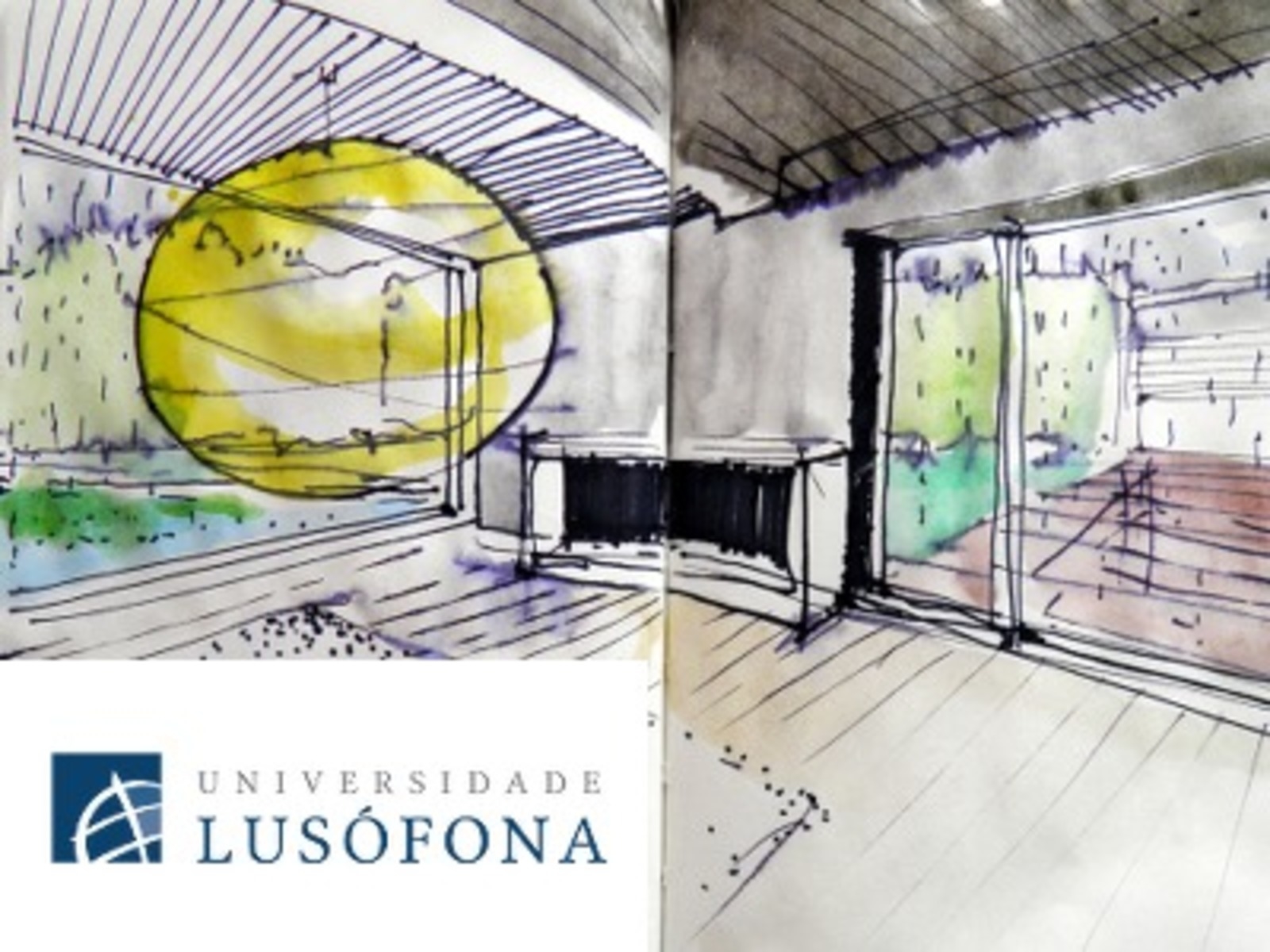
A formação em desenho consiste numa das matérias mais aliciantes da capacidade expressiva do ser humano. O deslumbramento sobre uma linguagem completa de técnica, de perceções sensoriais e persistência.
Ao longo do presente curso os alunos encontrarão alguns dos princípios sugeridos para a iniciação a um diário gráfico pessoal, numa linguagem a conquistar em cada desafio proposto.
Os desenhos são livremente registados em processo analógico de forma livre mas alicerçados a conteúdos subsequentes, somando competências ao longo dos diferentes exercícios.
Mais do que saber desenhar virtuosamente, procura-se dar a conhecer a confiança de desenhar livremente, sem pré conceitos e caminhando para um registo individual, único.
Objetivos de aprendizagem
O curso tem por objetivo principal o ensino de técnicas de composição aplicadas ao desenho. Serão exploradas diferentes abordagens de desenho com a aplicação de diferentes técnicas e materiais.
Como material de suporte serão usados cadernos para Diário Gráfico de formato A4 e A5. Serão exploradas técnicas alternativas de desenho para Diário Gráfico como por exemplo o uso de café e lápis e canetas aguareláveis. Serão exploradas técnicas bidimensionais e tridimensionais, a criação de volume e o uso de perspetiva.
O curso segue uma metodologia baseada no experimentar fazer. O modelo pedagógico do curso foi definido com o intuito de derrubar as barreiras iniciais ao desenho e os medos associados ao “gostava mas não sei”. Os diferentes exercícios apresentados em vídeo em tempo real de produção do desenho permitem uma maior compreensão do desenho enquanto aplicação de técnicas aprendíveis e não como fruto de um “dom” que só poucos têm. Desafiamos todos os que gostariam de desenhar a participar neste curso.
Requisitos
O curso de Desenho para Diário Gráfico não tem pré-requisitos. Partimos do princípio que todas as pessoas podem aprender a desenhar se assim o quiserem. Deste modo, o curso destina-se a todos os interessados em aprender as técnicas e regras mais comuns aplicadas ao desenho para diários gráficos.
Alunos têm ainda a possibilidade de comprar o Statement of Participation (no valor de 29€). Aqueles que comprarem o Statement of Participation, devem completar no mínimo 80% do curso (exercícios, vídeos e quizzes) para poderem fazer download do Statement of Participation.
Estrutura do curso
A matéria divide-se metodologicamente em quatro partes:
- Introdução;
- Codificação do Campo visual;
- Codificação expressiva;
- e aplicabilidade em desenho de exterior.
Os desafios são compostos por uma contextualização em vídeo e por materiais didáticos complementares.

Design your own world. Are you ready? This MOOC is a journey into contemporary design through 101 exercises. Learn by doing and transform your everyday life into 101 projects.

Design 1o1 “Redux”
Are you ready?
The Design 1o1 saga is finally back with its special “redux” edition!
A special edition in which we go one step beyond! In fact, in this journey, Stefano Mirti and Anne-Sophie Gauvin are handing over more responsibilities to their students. Our former teachers will keep on producing the course contents (and correct the exams together with the course instructors), while the rest (the scary part) will be run by the Design 1o1 community.
“Design 1o1 Redux” is an introduction to design through 101 exercises. A six-month journey divided into 3 courses “online” here on iversity (Part 1, Part 2 and Part 3), one final exhibition / graduation party and an “offline” workshop for which we will go one step beyond.
In short:
Part 1: “Myself” (Nov 2 to Dec 27)
Part 2: “My House” (Jan 04 to Feb 28)
Part 3: “My World” (Feb 29 to Apr 24)
Exhibition / Graduation: In Croatia (Apr 23-24)
Winter camp: In Croatia (Apr 25 to May 1)
Ready for take off?
Here go with the first part of the course: “Myself”.
Design 1o1 Redux Part 1: Myself
Starting from our very own selves, we will collectively observe, translate and communicate many things, in a series of different ways and projects.
As Protagoras once said, “Man is the measure of all things”. It is the main reason we focus on “ourselves” in this first part of Design 1o1 Redux.
To do so, we will work with all kinds of cool apps for phones and tablets (do you have a smartphone or tablet?). We will also share our works with the others on Instagram, using special hashtags.
Indeed, we will explore a new way to learn a new design.
:-)
Course Structure
Our various activities will be divided into 8 weeks:
Week 1: My Body
Week 2: My Mind
Week 3: My Time
Week 4: My Diary
Week 5: My Food
Week 6: My Clothes
Week 7: My Exam
Week 8: My Break
What will I learn?
You will learn to develop some basic design attitudes for better understanding the mechanics of today’s world.
One step at a time, you will learn that “design” is foremost a language.
A language shared, talked and discussed by designers from all over the world.
How does the world look through the special lenses of "design"?
Along the way, you will learn about a considerably high number of things. Starting from your very own selves.
Prior Knowledge
In terms of prior knowledge, there is nothing required.
If you have a lot of prior knowledge, it might make the learning process more difficult, but don’t worry, no one is perfect. If we talk about contemporary “#design”, we are all absolute beginners!
However, in terms of technical equipment, this course is easier to follow via a smartphone or tablet. Of course, you can follow us via a desktop computer... but this is not how we intended the whole thing to be.
:-)
Workload
Between 4 and 7 hours a week.
Everyday, from Monday to Friday, for a total of 6 weeks, you will receive a package via email. Each package will contain a 15-second video to watch (to get you in the proper mood), and a pdf-letter introducing the daily brief (or “homework”) and a series of objects, characters and happenings intertwined with the narrative of the course (to go deeper in the subject at hand).
You will work on your assignment…
Then, once completed, you will upload it to your Instagram account (for the rest of us to see).
Easy as a kiss.
Questions or Comments?
You can write to Ms. Lola (our so-called secretary, but actually the real boss of this whole venture) at: design101.info@gmail.com.
Now, please understand that Ms. Lola is very busy. You might get higher chances of getting a quick and complete answer via Instagram, Facebook, Twitter. Come and let us show you around!
:-)
The Design 1o1 Community
This course is run by the Design 1o1 community.
You can learn more about who we are and what we do here.
All course contents are used for educational purposes.
The written content is by IdLab, and the visual content is assembled by IdLab.
The Design 1o1 Redux is a project by IdLab for Abadir Academy of Fine Arts.
Design 1o1 “Redux”
“Design 1o1 Redux” is an introduction to design through 101 exercises. A six-month journey divided into 3 courses “online” here on iversity (Part 1, Part 2 and Part 3), one final exhibition / graduation party and an “offline” workshop in which we will go one step beyond.
In short:
Part 1: “Myself” (Nov 2 to Dec 27)
Part 2: “My House” (Jan 4 to Feb 28)
Part 3: “My World” (Feb 29 to Apr 24)
Exhibition / Graduation: In Croatia (Apr 23-24)
Winter camp: In Croatia (Apr 25 to May 1)
:-)
Here we proceed with “Part 2: My House”.
Design 1o1 Redux Part 2: My House
Spaces, furniture, objects, memories... Our houses are composed of fascinating elements. In this part of the Design 1o1 Redux, we will rethink these components in order to design our own “homes”, the places where we live (or, “where the heart is” as Pliny the Elder would say).
Can we trap time into space? How to frame the ordinary? These are some of the many things we will explore!
To do so, we will work with all kinds of cool apps for phones and tablets (do you have a smartphone or tablet?). We will also share our works with the others on Instagram, using special hashtags.
Course Structure
Our various activities will be divided into 8 weeks:
Week 1: My Room
Week 2: My Kitchen
Week 3: My Garden
Week 4: My Guests
Week 5: My Basement
Week 6: My Show
Week 7: My Exam
Week 8: My Break
What will I learn?
You will learn to develop some basic design attitudes for better understanding the mechanics of today’s world.
One step at a time, you will learn that “design” is foremost a language.
A language shared, talked and discussed by designers from all over the world.
How does the world look through the special lenses of "design"?
Along the way, you will learn about a considerably high number of things. Starting from your very own self.
Prior Knowledge
In terms of prior knowledge, there is nothing required.
If you have a lot of prior knowledge, it might make the learning process more difficult, but don’t worry, no one is perfect. If we talk about contemporary “#design”, we are all absolute beginners!
However, in terms of technical equipment, this course is easier to follow via a smartphone or tablet. Of course, you can follow us via a desktop computer... but this is not how we intended the whole thing to be.
:-)
Workload
Between 4 and 7 hours a week.
Everyday, from Monday to Friday, for a total of 6 weeks, you will receive a package via email. Each package will contain a 15-second video to watch (to get you in the proper mood), and a pdf-letter introducing the daily brief (or “homework”) and a series of objects, characters and happenings intertwined with the narrative of the course (to go deeper in the subject at hand).
You will work on your assignment…
Then, once completed, you will upload it to your Instagram account (for the rest of us to see).
Easy as a kiss.
Questions or Comments?
You can write to Ms. Lola (our so-called secretary, but actually the real boss of this whole venture) at: design101.info@gmail.com.
Now, please understand that Ms. Lola is very busy. You might get higher chances of getting a quick and complete answer via Instagram, Facebook, Twitter. Come and let us show you around!
:-)
The Design 1o1 Community
This course is run by the Design 1o1 community.
You can learn more about who we are and what we do here.
All course contents are used for educational purposes.
The written content is by IdLab, and the visual content is assembled by IdLab.
The Design 1o1 Redux is a project by IdLab for Abadir Academy of Fine Arts.

Design 1o1 “Redux”
“Design 1o1 Redux” is an introduction to design through 101 exercises. A six-month journey divided into 3 courses “online” here on iversity (Part 1, Part 2 and Part 3), one final exhibition / graduation party and an “offline” workshop in which we will go one step beyond.
In short:
Part 1: “Myself” (Nov 2 to Dec 27)
Part 2: “My House” (Jan 4 to Feb 28)
Part 3: “My World” (Feb 29 to Apr 24)
Exhibition / Graduation: In Croatia (Apr 23-24)
Winter camp: In Croatia (Apr 25 to May 1)
:-)
And now, Part 3: My World...
Design 1o1 Redux Part 3: My World
Johan Cruyff, a very famous footballer (and fantastic designer), once said:
“I never practice tricks. I play very simply.
That's what it's all about. Playing simple football is the hardest thing.”
If we think about it, design is everything.
It can be football, but it can also be an object, a building, a game… our lives, our worlds!
In this part of the Design 1o1 Redux, we will go out and “get busy” designing our very own worlds. Something for which we will need to master a high level of simplicity.
We will work with all kinds of cool apps for phones and tablets (do you have a smartphone or tablet?). We will also share our works with the others on Instagram, using special hashtags.
:-)
Course Structure
Our various activities will be divided into 8 weeks:
Week 1: My Neighborhood
Week 2: My Town
Week 3: My Trips
Week 4: My Nature
Week 5: My Shelter
Week 6: My Thing
Week 7: My Exam
Week 8: My Break
What will I learn?
You will learn to develop some basic design attitudes for better understanding the mechanics of today’s world.
One step at a time, you will learn that “design” is foremost a language.
A language shared, talked and discussed by designers from all over the world.
How does the world look through the special lenses of "design"?
Along the way, you will learn about a considerably high number of things. Starting from your very own self.
Prior Knowledge
In terms of prior knowledge, there is nothing required.
If you have a lot of prior knowledge, it might make the learning process more difficult, but don’t worry, no one is perfect. If we talk about contemporary “#design”, we are all absolute beginners!
However, in terms of technical equipment, this course is easier to follow via a smartphone or tablet. Of course, you can follow us via a desktop computer... but this is not how we intended the whole thing to be.
:-)
Workload
Between 4 and 7 hours a week.
Everyday, from Monday to Friday, for a total of 6 weeks, you will receive a package via email. Each package contains a 15-second video to watch (to get you in the proper mood), and a pdf-letter introducing the daily brief (or “homework”) and a series of objects, characters and happenings intertwined with the narrative of the course (to go deeper in the subject at hand).
You will work on your assignment…
Then, once completed, you will upload it to your Instagram account (for the rest of us to see).
Easy as a kiss.
Questions or Comments?
You can write to Ms. Lola (our so-called secretary, but actually the real boss of this whole venture) at: design101.info@gmail.com.
Now, please understand that Ms. Lola is very busy. You might get higher chances of getting a quick and complete answer via Instagram, Facebook, Twitter. Come and let us show you around!
:-)
The Design 1o1 Community
This course is run by the Design 1o1 Community.
You can learn more about who we are and what we do here.
All course contents are used for educational purposes.
The written content is by IdLab, and the visual content is assembled by IdLab.
The Design 1o1 Redux is a project by IdLab for Abadir Academy of Fine Arts.

Whether you are a student, a designer or an entrepreneur, join this course and develop your creativity methods and innovation attitude while exploring the human-centred design-approach.
Welcome to the Macromedia University Design Thinking MOOC.
The Macromedia University MOOC Design Thinking is about understanding and implementing the methodology of Design Thinking. You will learn how Design Thinking uses creative, human centered techniques as a strategic approach to stimulate innovation. At MHMK, Macromedia University of Applied Sciences, we believe that human needs and experience should drive innovation – not technology. Being a school whose graduates will engage in designing the digital landscape surrounding us, we like to share our conviction of a good, decent and ethical way of creating tomorrows products and services.
Sign up now!
What to Expect
The Macromedia MOOC Design Thinking links theoretical frames with practice. You will look into fundamentals like historical and theoretical aspects of design, design models and design systems. You will gain deeper insights into the Design Thinking methodology and the human-centered design approach. You will learn how to apply teamwork and communications skills, and you will hear about creativity methods and visualization tools in the context of strategic design. And last but not least, the Macromedia MOOC Design Thinking will teach you how to evaluate ideas and concepts and why an innovation attitude and intercultural communication competence is crucial for a successful implementation.
Week by week we invite you to meet academics, professionals and students, who are using Design Thinking in the creative industries as well as in management in order to solve problems of great complexity. Each week is divided into three or four lectures/chapters. Each lecture is divided in several lessons/units, which are usually not longer than 5 mInutes. The lessons are made of video material, slides, additional reading material and tasks.
Expect to view approx. 80 minutes of lectures per week which sums up to altogether 5 hours per week incl. self-study time.
Course Structure
Course Structure:
WEEK ONE - 15 April - 21 April 2015:
• Design Thinking MOOC introduction (Prof. Oliver Szasz)
• Prologue Week One (Prof. Oliver Szasz)
• Design Today (Prof. Tanja Schmitt-Fumian)
• Design Models and Design Theory (Prof. Juergen Faust)
• Design as a Discipline (Silvio Barta)
• Design Systems (Prof. Juergen Faust)
WEEK TWO - 21 April - 28 April 2015:
• Prologue Week Two (Prof. Oliver Szasz)
• Human Centered Design and Research Methods (Astrid Thomaser)
• Design Thinking Process (Thomas Stegmann)
• Experience Design (Prof. Oliver Szasz)
• Problem Space Definition and Wicked Problems (Prof. Oliver T. Hellriegel)
WEEK THREE - 28 April - 05 May 2015:
• Prologue Week Three (Prof. Oliver Szasz)
• Creativity and Ideation (Johann Knott & Bret Sheridan)
• Strategic and Concept Design (Prof. Lars Grau)
• Multidisciplinary Teams and Communications Skills (Gary York)
• Storytelling (Prof. van Wyngaarden)
WEEK FOUR - 05 May - 12 May 2015:
• Prologue Week Four (Prof. Oliver Szasz)
• Prototyping and Testing (Paul Neervoort)
• Business and Innovation (Prof. Dr. Alyosh Agarwal)
• Intercultural Communication (Prof. Dr. Barbara Stelzner)
• Design Thinking MOOC Wrap-Up (Prof. Oliver Szasz)
Email Contact for Course Related Questions:
Why this MOOC is interdisciplinary
Originating in the Design Department of MHMK, Macromedia University of Applied Sciences in Munich, the Macromedia MOOC Design Thinking is emphasizing the rewarding link between management and creativity. To us, managing creativity means drawing on various findings and multidiscliplinary methods, yet guiding them through standardized and verifiable management procedures. Besides Design and Art history, the background of our MOOC team therefore ranges from business, psychology and human resource to transmedia, visualization, narration, and journalism, for instance. We will thus be able to discuss Design Thinking from various perspectives.
Learning Outcomes
Our MOOC will help you answer the following questions:
1. What is Design Thinking? Which benefits may I expect when implementing it as a management strategy?
2. How can innovation be systematically triggered ?
How can I implement Design Thinking into my own projects? 3. Talking about the potential of Design Thinking – what kind of best practices are there ?
4. What kind of team do I need to in order to initialize a Design Thinking process?
Prior Knowledge
No prior knowledge of Design Thinking is needed in order to attend the MOOC. Interest in creative techniques, innovation and management is welcome. - You don't know what human centered design, strategic design or participatory innovation culture is? - Great, you'll learn it here. - You are a business development specialist? - Great, we hope to inspire you. Please feel free to help us inspire others by sharing interesting links, events and projects on our Facebook page.

> Click here if you wish to subscribe to the news and update service of Macromedia University
We would be happy to keep you posted!

> Click here to link to the Fan Page on Facebook:
Become a friend and follow the conversation!

How can architecture help people in times of urgent need caused by natural disasters? In this course, we will design resilient schools that could serve as community centers and shelters for the victims of the devastating typhoon Haiyan in the Philippines.
Why do you need Digital Marketing?
With budgets for digital marketing constantly growing, organisations are facing a major skills shortage. The need for individuals who understand business combined with technical knowledge in Digital Marketing has never been greater. This course is based on European case studies showing current digital and social media marketing practices across Europe. Europe is one of the largest regions for digital and social marketing used but there are many local preferences and this course will help you to navigate these complexities. This course combines practical skills and theoretical knowledge with the goal of teaching you the skills to improve digital and social media marketing in organisations.
Who is this course for?
This course is aimed at two audiences:
- Organisations who want to establish and improve their digital and social media marketing footprint.
- Everyone interested in digital and social media marketing who might consider studying or working in the field.
What do I need to know?
Basic computer knowledge and skills are necessary and a business background would be advantageous but is not essential.
Learning Objectives
- Introduce current and core practices of Digital and Social Media Marketing that will allow learners to analyse, plan, execute and evaluate a digital marketing strategy.
- Introduce core tools currently used in Digital and Social Media Marketing that will allow learners to analyse, plan, execute and evaluate a digital marketing strategy.
- Develop an understanding of Search Engine Optimisation (SEO), Social Media Optimisation, Affiliate and other relevant communication channels for engagement of digital communities.
Course Structure
1. Why is Digital and Social Media Marketing important today and in the future?
1.1. Introduction to strategic planning
1.2 SWOT analysis
1.3. Developing SMART objectives for strategy and campaigns
1.4. Digital Business Maturity Model
1.5. The consumer journey to online purchase
1.6. Introduction to core concepts of digital and social media marketing
1.7. Introduction to online branding
2. Understanding the different nature of digital channels based on geographic, demographic and digital fit for a campaign
2.1 Search Engines - differences in countries - based on the case study examples
2.2 Social Media platforms differences in countries and how to they can be used
2.3 Email marketing and how it can be used
2.4 Affiliate marketing and how it can be used
2.5 Mobile marketing and how it could be used
2.6 Paid channels overview - search and social
2.7 Communities focused engagement
3. Buyer persona development
3.1 The importance of understanding who the target audience is and how search and social help to develop this understanding
3.2 Planning integration of search and social media
3.3 Keyword research for buyer persona
3.4 Social media channels for buyer persona
3.5 Develop keyword plan for a campaign
3.6 PPC keyword vs organic keyword plan
3.7 Develop social media editorial calendar
4. How campaigns fit into a wider implementation of the overall organisation strategy
4.1 Example company campaign plan
4.2 Key elements of campaign management - Gantt chart
4.3 Risk management
4.4 Digital project management tools and techniques
4.5 Project plan monitoring and review
4.6 Marketing automation
4.7 PPC campaign planning
5. Choosing the right digital profiles for the right audience
5.1 Facebook
5.2 YouTube
5.3 Twitter
5.4 LinkedIn
5.5 PPC optimisation
5.6 What makes content to go Viral?
5.7 How to create content viral?
6. The importance of ongoing monitoring and learning from your engagement
6.1 Understanding of Social Capital and its importance case study
6.2 Accessing data in Google Analytics
6.3 Accessing data from Facebook
6.4 Accessing data from Twitter
6.5 Using spreadsheets to analyse and populate reports
6.6 Learning from digital results
6.7 PPC report

What is the course about? What are Digital Arts? Questions to the digital.
Digital Arts focus on art that engages with, uses and is impacted by the digital. This course doesn’t focus on technology but presents it as a tool to facilitate ideas, placing emphasis upon its creative and artistic use. The program encourages students to explore the possibilities and potential of technologies within an art context. It offers the opportunity to develop a project from proposal to final exhibition. You will be asked to research content, materials and methods. Written work and practical work in the course combine as an investigation of the relationship to the subject and contemporary practice.
Let's understand Digital Arts together by exploring the topics above as well as experiencing interviews and art works from well-known artists.
Main theme of the art seminar: '90 minutes of life'
What is life? (Philosophically, artistically and conceptually)
Artistic work will be analysed from the perspective of motivation and the outcome of the work.
What message does the work communicate?
What kind of shapes or forms can you find?
What is the medium of the work?
What will you learn?
Throughout the course, you will learn the following:
• The work and concepts of contemporary photographic and video artists.
• To understand and articulate how meaning of images is visually communicated.
• The “language” of creative expression and how this can improve your own artistic work.
• The ability to identify and explain the basic visual and conceptual elements that are common to all works of art.
• The key contemporary photographic narratives.
YOU will learn to have direct access to the voice of the artist. The work of contemporary artists provides not only new art and ideas to introduce but also new approaches for making art.
Who should take this course?
If photography, video making, sound & theory based on art is your passion, then you fit perfectly to the course.
Using computers, visual artists can manipulate all forms of artefacts, whether video, photographic images, sound clips or text, to create exciting new experiences for audiences.
What do I need to know?
You do not need to be prepared. You need to be excited! Let the course experience lead you to more creative ideas.
At the end of the course, what will I make?
Create a cohesive body of exhibition-quality work that collectively explores the concept of the course “W_h_a_t_ i_s _l_i_f_e” and be able to explain the significance of subject, form, presentation and meaning your work.
Course structure
Chapter 1: (2 November - 8 November)
This chapter is an introduction to video art, performance art and photography. The starting point is: what is life? The motivation of creativity.
We are investigating each medium from its beginning through history to the present day, dissecting it to its components. What is the main motivation for artists? What message does the work communicate? What kind of shapes or forms can you find? What is the medium of the work?
Homework:
Art example in Second Life (virtual world), Video art presentation
Chapter 2: (9 November - 15 November)
What is life? Life and beauty: The work and concepts of contemporary photographic and video artists.
Starting from a philosophical viewpoint we examine the approaches on life, beauty and art illustrating our argument with various examples.
Homework:
Artistic work will be analysed from the perspective of motivation and the outcome of the work. What message does the work communicate? What kind of shapes or forms can you find? What is the medium of the work?
Chapter 3: (16 November - 22 November)
What is life? Life and death: To understand and articulate how meaning of images is visually communicated.
In this chapter we look into life, death and trauma. These moments in everybody’s life give cause to artists to delve into the core of human existence and wonder about the human condition.
Homework:
Artistic work will be analysed from the perspective of motivation and the outcome of the work.
What message does the work communicate? What kind of shapes or forms can you find? What is the medium of the work?
Chapter 4: (23 November - 29 November)
What is life? Life and documentation: The “language” of creative expression and how this can improve your own artistic work.
The boundaries of artistic expression are not confined in the studio or art gallery. Artists document life performed in its natural state and how people interact with their environment.
Homework:
Video presentation - Artistic work will be analysed from the perspective of motivation and the outcome of the work. What message does the work communicate? What kind of shapes or forms can you find? What is the medium of the work?
Chapter 5: (30 November - 6 December)
What is life? Life and Eros: The ability to identify and explain the basic visual and conceptual elements that are common to all works of art.
Many say that love is the motivating force of life. In worldwide mythology love and lust are responsible for cosmogonic events such as the birth of heroes and the beginning of wars among other circumstances. Art inspired by mythology, cinema or real (or virtual) life is a staple theme motivating artists since antiquity.
Homework:
Artistic work will be analysed from the perspective of motivation and the outcome of the work. What message does the work communicate? What kind of shapes or forms can you find? What is the medium of the work?
Chapter 6: (7 December - 13 December)
What is life? Life and memory: The key contemporary photographic and video-film narratives.
Memories are a key component of who we are. Its subjective and fragmentary nature forms our personality. It is a matter of philosophical debate since ancient times. Through art we record and preserve and try to dominate its fleeting state.
Homework:
(Plus exercises) Artistic work will be analyzed from the perspective of motivation and the outcome of the work.
What message does the work communicate? What kind of shapes or forms can you find? What is the medium of the work?
Chapter 7: (14 December - 20 December)
What is life? Celebrating life: An understanding of the history of video art and the impact of video on contemporary culture.
In this chapter, we recap on what we have discussed in the previous chapters. Life isn’t just one thing. It is beauty and death, love and memories. Here we celebrate the multifaceted thing that is life.
XMAS BREAK
Final chapter 8: Final show
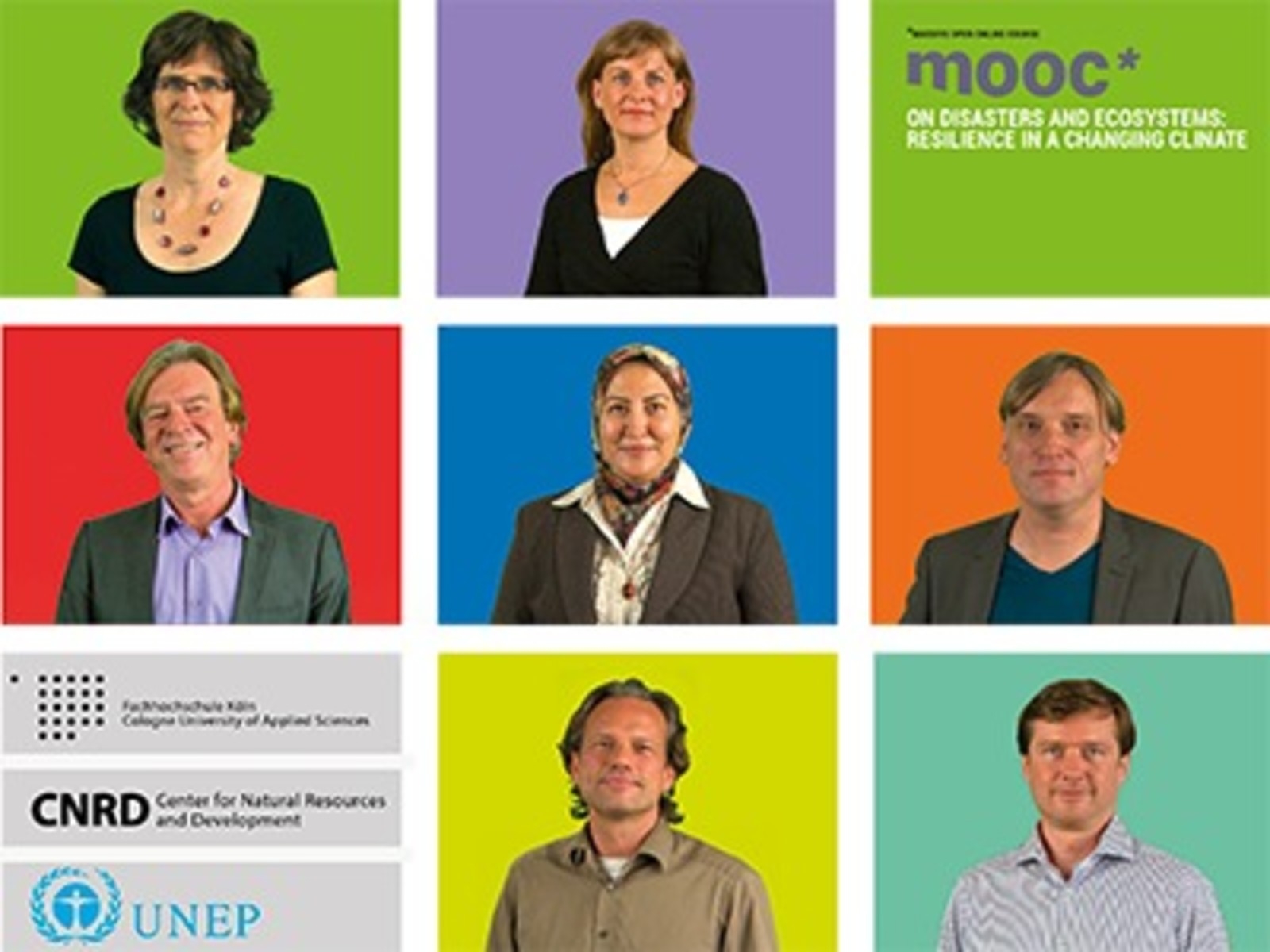
offered by the United Nations Environment Programme

and the Cologne University of Applied Science

Course Summary
This MOOC enhances knowledge and skills for tackling complex issues such as resilience and transformation, sustainable development, ecosystem management, disaster risk reduction, climate change adaptation and how they can be operationalized. It will benefit disaster managers and practitioners, climate change adaptation professionals, development planners, project implementers and policy makers. The course will be delivered through a series of lectures and case studies, quizzes, peer-reviewed exercises, along with additional study materials provided to the students. Lectures will be available through videos as well as online documents and will be geared for students who may not have access to high speed internet so they can follow the course. Students will be provided the opportunity to enhance their critical thinking through real life and fictitious problem solving exercises. Each week will feature an international expert who will be available to respond to questions and interact with students.
What will I learn?
After completion of the course, the participant will be able to:
- Define basic concepts of disasters, disaster risk reduction, climate change adaptation and resilience.
- Recognize key linkages between ecosystems, disaster risk reduction and climate change adaptation.
- Recognize the linkages and overlaps between ecosystem based disaster risk reduction and ecosystem based adaptation.
- Identify various ecosystem based tools in reducing disaster risk and climate change adaptation.
- Identify key international agreements, organizations and initiatives related to disaster risk reduction, and climate change adaptation.
- Apply concepts and tools of ecosystem-based disaster risk reduction (Eco-DRR) and ecosystem based adaptation (EbA).
- Evaluate costs and benefits of different type of measures for reducing disaster risks.
- Design your own ecosystem-based project for increasing resilience and reducing climate risks.
What do I need to know?
There are no prerequisites, just some willingness to learn about this innovative topic! It is however true that it will help if you have heard about disasters and climate change before starting.
Course Structure
The course is structured in two parts:
The leadership track, which is tailored for busy professionals or students curious about the topic. The leadership track will run three weeks.
The expert track is for professionals and students who seek more in-depth learning and skill development in applying ecosystem-based tools for disaster risk reduction and adaptation. The expert track will run 12 weeks with 3 weeks for the final assignment, peer review process and course wrap-up. Each unit has several quizzes, a concise background document for further reading, a discussion forum, supplementary videos with interviews with international experts and short documentary videos from around the world. In addition, world leaders were interviewed for our MOOC.
Course Outline and Schedule
Chapter 1. Leadership track – introduction (Week 1. Jan 12-18)
Unit 1. Disasters and Ecosystems: Resilience in a Changing Climate - why take this course?
Unit 2. Introduction to disasters, risk reduction and climate change
Chapter 2. Leadership track – linking disasters, climate change and ecosystems, Part 1 (Week 2. Jan 19-25)
Unit 3. Links between disasters, disaster risk reduction, adaptation and key international actors
Unit 4. Principles and challenges of ecosystem-based disaster risk reduction (Eco-DRR) and adaptation (EbA)
Chapter 3. Leadership track – disaster management, resilience and ecosystems (Week 3. Jan 26- Feb 1)
Unit 5. Ecosystem management contributions pre- and post-disasters
Unit 6. Managing resilience and transformation
Chapter 4. Expert track – linking disasters, climate change and ecosystems, Part 2 (Weeks 4&5. Feb 2-15)
Unit 7. Linking ecosystems and humans to disasters
Unit 8. Principles of systems thinking and using natural systems for disaster risk reduction
Unit 9. Putting Ecosystem-based disaster risk reduction (Eco-DRR) into practice
Chapter 5. Putting theory into practice (Weeks 5 & 6. Feb 16-22)
Unit 10. Linkages between Eco-DRR and EbA
Unit 11. Putting Ecosystem-based adaptation into practice & peer review assignment
Chapter 6. Ecosystem-based tools for disaster risk reduction – introduction (Week 7. Feb 23-Mar 1)
Unit 12. Incorporating ecosystems in risk assessments
Unit 13. Ecosystems and spatial tools for risk reduction
Chapter 7. Most common Eco-DRR tools (Week 8. Mar 2-8)
Unit 14. Principles of spatial planning and community-based tools for Eco-DRR
Chapter 8. Most common Eco-DRR tools (Week 9. Mar 9-15)
Unit 15. Sustainable land and water management tools for Eco-DRR
Unit 16. Ecological engineering for disaster risk reduction and climate change adaptation
Chapter 9. Economics, valuation and policy issues (Week 10. Mar 16-22)
Unit 17. Economic tools for Eco-DRR
Unit 18. Principles of mainstreaming ecosystem based disaster risk reduction into national policies, strategies, plans and projects
Chapter 10. Resilience and transformation & final assignment (Weeks 11 -13. Mar 23-April 12)
Unit 19. Approaches for operationalizing resilience
Unit 20. Problem solving assignment – peer review of assignments
Unit 21. Course wrap-up and forum discussions
Who is teaching this course?
Instructors include international faculty members from Germany, Egypt, Austria and Switzerland, supported by a line-up of expert guest lecturers and exclusive interviews with world leaders in the field of climate change, disaster risk reduction and environment:
• Dr. Achim Steiner (Executive Director of UNEP)
• Ms. Margareta Wahlström (Special Representative of the Secretary-General of the United Nations for Disaster Risk Reduction)
• Dr. Rajendra Pachauri (Chancellor of TERI University)
• Ms. Julia Marton-Lefèvre (Director General of the International Union for the Conservation of Nature 2007-2015
Some FAQs
How much time do I need to put in taking the MOOC?
In total, we estimate that a total of 40-50 hours is needed to complete the MOOC (taking both the Leadership and Expert Tracks), which will also depend on your background and English fluency. The MOOC is roughly equivalent to a 1 –week in-class training course. This estimate is based on completing the video lectures, guest video lectures, reading materials and exercises.
Do I have to be online at specific times?
No. While new modules will be released sequentially on specific dates, you need not come online simultaneously. The lectures are not webcast real-time and you can choose the time you wish to watch them. However, there will be some deadlines for assignments and peer-to-peer reviews.
Will there be exams involved?
The Leadership track has quizzes so you can self-check your knowledge level as you go. This is, however, not a precondition for progressing to the next module. And you may, however, choose to revisit a module if you feel you did do not perform satisfactorily in a module. The Expert track has two short peer-reviewed assignments and one final peer-reviewed exercise where you will be designing your own project! The peer reviewed exercises will provide an environment for interaction between course participants. You are welcome to use any other communication tool to facilitate group assignments.
What are the interactive features in this MOOC?
Iversity has a community discussion forum that will be followed by course instructors and a roster of international “Experts of the week”. The Iversity platform offers all participants the chance to give feedback on the MOOC itself but also to start discussions on any topic related to the MOOC. During the enrolment stage of the MOOC, you will be asked to fill out some basic information about yourself and be invited to actively participate in the community discussion forum. You can also post notices on the MOOC “meeting point” or to join discussions that others have started. There will thus be ample opportunity to connect with other participants for information exchanges
In cooperation with the Global Universities Partnership on Environment and Sustainability

and the Center for Natural Resources and Development

Contributions by eye on earth

Supported by the Federal Ministry for Economic Cooperation and Development

exceed - Excellence Centers for Exchange and Development

and the DAAD - German Academic Exchange Service

Over the past decade, young people around the globe has faced very different but great challenges: unemployment, skills gap, vocational trainings, outdated educational formats, school-to-work transition etc. Consequently, "empowerment" has become the buzzword in business, evaluation and youth development. Because of its wide use, the word "empowerment" has many different meanings to people. “Discover Yourself: Build a Career and Make an Impact” is an interactive MOOC that will empower youth through a holistic approach on four different skills sets and dimensions:
Chapter 1: Personal Development: What do you love doing?
Chapter 2: Professional Development: What do you do well?
Chapter 3: Community Development: What is the community around you?
Chapter 4: Sustainable Development: What the world needs?
Empowerment is defined as a way to provide tips and opportunities for youth to develop the competencies they need to become successful contributing members of their communities.
The MOOC is part of a youth-strategic partnership project titled “Cease Cowering: Youth Empower Action Here!” (CC: YEAH) supported by the programme Erasmus +. The project is based on partnership between the Association for Education Mladiinfo International from Macedonia, Mladiinfo Slovensko (Slovakia), The Global Experience (Germany) and Iversity (Germany). As a part of the project, the course content was developed, the video shooting was organized in Bratislava, Slovakia and a special brochure containing the materials from the course was produced. The expected project results can be summed up as following:
- Development of an innovative approach in the process of self-learning based on Open Education Resources;
- Enlarged awareness on required skills and competences needed for youth career development;
- Increased soft, entrepreneurial and digital skills of youth through non-formal online education opportunities;
- Created a strategic approach and mutual action on youth development among involved partner organizations.
Who is this course for?
Discover Yourself: Build a Career and Make an Impact will be an inclusive, free and open course for all vision-driven, knowledge-hungry and goal-oriented young individuals. We aim to attract young people aged 18 to 30, from all around the globe who are eager to work on themselves and to grow both personally and professionally. The idea is to provide those interested youth with concrete skills and tools to boost their potentials as well as to bring relevant information to them that will encourage them to undertake concrete activities in the communities where they live. In the same time, we are also targeting youngsters who have fewer opportunities and face economic, social, educational or geographical difficulties and through the MOOC we want to bring them closer to the world of opportunities.
What will I learn?
The whole course content will be organized around 4 chapters devoted on: personal, professional, community and sustainable development.
At the end of the course, you will be able to:
Personal development chapter:
- Discover what your interests, values and personal characteristics are;
- Identify exactly what you want and what you do not want to do.
Professional development chapter:
- Understand the drivers behind your career preferences and choices;
- Learn how to recognize your talents and interests and how to match them with your concrete professional career;
- Identify the skills which you can offer as well as learn about your current skills gaps.
Community development chapter:
- Demonstrate knowledge and ability to create a plan to help you improve your soft skills;
- Recognize opportunities for your career enhancement both within and beyond your current status;
- Summarize your achievements and skills in appropriate formats for future employers or academic institutions.
Sustainable development chapter:
- Extend and make most effective use of your professional network both on- and off-line
- Learn what the world career trends are;
- Discover how your career choice can influence the world challenges.
What do I need to know?
This is an introductory course. Previous knowledge is not required. The course is designed for people interested in building up a career and make an impact.
Course Structure
Chapter 1: Personal Development
Our journey to self-discovery will start from the personal development. In the first chapter, we will give you the overview of your personality and how it could influence your career choice. In the three chapter units, you will identify what the personal values you appreciate the most are and how these values are influencing your choices. Also, you will be guided to discover your personality type and will have a chance to test yourself and find out which personality type you belong to and how you can connect it to your potential career.
Chapter 2: Professional Development
Once you have discovered who actually you really are and what you love doing, it is time to see what kind of career will fit your personality and interests. Your professional self is under huge pressure lately, right? So many trends, reports and statistics show new, undiscovered ways of working and imagining your job of the future. But nothing will ever make sense unless you get to know your professional self and make choices based on your skills, needs and capacities. In this chapter you will be able to walk the thin line between self-discovery and self-creation, while articulating your experience and skills into a successful career plan.
Chapter 3: Community Development
In the Community Development chapter, we will help you discover what and how the empowered YOU can do for your community, for your peers, for your neightbours. In this chapter, we will show you the ways how you can make an impact: as an individual, as part of non formal group, and as a member of an organization. At the end of the chapter, you will be able to identify a project idea, draft a basic proposal and find a suitable programme where you can apply for a project grant for your idea. But first and foremost, you will be inspired to take the community in your hands and move the things forward!
Chapter 4: Sustainable Development
In the last chapter we will take a step back. What is the big picture? What are the challenges in the world today? We will speak about Sustainable Development Goals and discover ways how you can expand your circle of influence. We will finish the course with three elements of sustainable development - the economic, social and environmental. We want to motivate you to take personal social responsibility for your surrounding and for the whole world.
At the end of the course, the students will be able to draft a personal development plan that will present their pathway to their personal, professional, community and sustainable development.
DNA stores our genetic information and many diseases are caused by changes in its sequences. We will first learn about the basics of DNA and then find out how it allows for the development of diagnostic and therapeutic strategies.

Kursbeschreibung
In der Veranstaltung "Einführung in das Rechnungswesen" erlernst du die kaufmännische Sprache des Unternehmens. Damit kannst du Finanzberichte lesen, verstehen und interpretieren. Du kannst Entscheidungen kostenrechnerisch vorbereiten, Produkte bewerten und Kostenabweichungen analysieren. Damit kannst du unternehmerisch sowohl in die Vergangenheit als auch in die Zukunft schauen. Der Inhalt der Vorlesung umfasst den kompletten Stoff einer umfassenden Einführung in das Rechnungswesen (internes und externes Rechnungswesen), wie er an vielen Universitäten und Hochschulen in Deutschland gelehrt wird.
Planspiel
Als besonderes Feature gibt es zu der Veranstaltung das Rechnungswesen-MOOC Planspiel der Firma Simucate. Das Planspiel bietet eine interaktive Möglichkeit, die Studieninhalte gleich praktisch anzuwenden und so besser zu verstehen. Das Planspiel ist in allen Klausurpaketen enthalten. Alternativ kann es im Audit Track während des Kurses für 19 Euro hinzu gebucht werden.
Was lerne ich in diesem Kurs
Nach erfolgreichem Kursabschluss beherrschst du die Grundlagen des betriebswirtschaftlichen Rechnungswesens als kaufmännische Sprache von Unternehmen. Du kennst dich in Grundfragen der Buchführung ebenso aus wie auf dem Gebiet des internen Rechnungswesens. Du kannst Finanzberichte aufstellen, die doppelte Buchführung durchführen und Kosten mithilfe des internen Rechnungswesens dokumentierten, planen und überwachen. Damit bist du in der Lage, Entscheidungen wirtschaftlich fundiert zu analysieren.
Welche Vorkenntnisse benötige ich?
Die Teilnahme ist ohne spezielle Vorkenntnisse möglich.
Kursstruktur
Der Kurs besteht aus 7 Module von jeweils 2 Wochen:
Modul 1: Einführung und Abbildung von Eigenkapitalveränderungen
Modul 2: Doppelte Buchführung und Verbuchung von Geschäftsvorfällen
Modul 3: Buchungen am Ende des Abrechnungszeitraums und Abschlussarbeiten
Modul 4: Einführung in das interne Rechnungswesen
Modul 5: Kostenträgerrechnung
Modul 6: Kostenstellen- und Kostenartenrechnung
Modul 7: Unternehmenssteuerung, Planungsrechnungen und Kostenabweichungen
Kombi-Paket
Besuche diesen Kurs in Verbindung mit dem RWTH-MOOC "Einführung in die Betriebswirtschaftslehre" von Prof. Frank Piller. Gemeinsam bieten beide Kurse eine ausgezeichnete Einführung in die BWL und übermitteln dir das notwendige Handlungswissen und Vokabular, um im Studium oder Beruf mitreden zu können. Als besonderes Highlight bieten wir hierfür Kombinationspakete im Schüler-Track und ECTS-Track an, mit denen du Zertifikate für beide Kurse zu einem vergünstigten Preis inkl. des Planspiels erhältst.
Kurszusammenfassung
Der Kurs führt ein in die Fragestellungen der modernen Arbeitspsychologie. Er vermittelt das Grundwissen und die wichtigsten Konzepte und Interventionsmethoden der Arbeitspsychologie. Am Anfang steht die Klärung der wichtigsten Begriffe: Was ist Psychologie bzw. Arbeitspsychologie? Was unterscheidet bedingungs- von personenbezogenen Ansätzen? Welche Menschenbilder, Bilder der Arbeit, Organisationsmetaphern und Technikverständnisse liegen der Arbeitspsychologie zu Grunde? Es folgt die Erläuterung vier grundlegender Paradigmen der Arbeitsgestaltung und des Betriebsmanagements. In den folgenden Kapiteln werden Einzelthemen wie Zielvereinbarung und Mitarbeitergespräche, Arbeit und Gesundheit - speziell Ermüdung, Stress und Bewältigung, Burnout, Arbeitszufriedenheit und Arbeitsmotivation, Arbeitsgruppen und Gruppenarbeit erklärt. Der Kurs schliesst ab mit einem Kapitel zur Methodik der Analyse, Bewertung und Gestaltung von Arbeit.
Lernziele
Die Teilnehmenden entwickeln ein Grundverständnis für Fragestellungen und Herangehensweisen der Psychologie, speziell im Bereich der Arbeits- und Berufstätigkeit in Organisationen.
Die Teilnehmenden lernen grundlegende Konzepte und Theorieansätze der Psychologie kennen und sie lernen, diese für konkrete praktische Frage- und Problemstellungen zu nutzen.
Die Teilnehmenden lernen die Forschungsmethoden und Ergebnisse wichtiger empirischer Studien sowie die psychologischen Schlussfolgerungen daraus kennen.
Die Studierenden lernen grundlegende Ansätze und Methoden/Verfahren der Arbeitsanalyse und der Arbeitsgestaltung kennen und für Anwendungen in ihrem eigenen Arbeitsbereich nutzbar zu machen.
Die Studierenden lernen die wichtigsten Wirkungszusammenhänge zwischen Arbeit und Gesundheit/ Wohlbefinden sowie damit verbundene Präventionsansätze kennen.
Die Studierenden lernen, anhand ihres erworbenen Wissens ihre eigene Arbeits- und Lebenssituation zu reflektieren und wissensbasiert zu optimieren.
Kursübersicht
Einführung in die Arbeitspsychologie
1. Einleitung, Grundlegende Konzepte der Arbeitspsychologie, Was ist Arbeitspsychologie?
2. Vier Paradigmen der Arbeitsgestaltung und des Betriebsmanagements 1: Taylorismus, Human Relations (Hawthorne)
3. Vier Paradigmen der Arbeitsgestaltung und des Betriebsmanagements 2: Job Enlargement und Job Enrichment (Herzberg), der soziotechnische Systemansatz
4. Arbeitstätigkeit und Arbeitshandeln
5. Die Wirkung von Arbeit auf den Menschen 1: Belastung, Beanspruchung und Beanspruchungsfolgen
6. Die Wirkung von Arbeit auf den Menschen 2: Stress, Burnout
7. Arbeitszufriedenheit und Arbeitsmotivation
8. Arbeitsgruppen und Gruppenarbeit
9. Management und Führung aus arbeitspsychologischer Sicht
10. Psychologische Konzepte und Verfahren der Arbeitsanalyse und Arbeitsgestaltung
Was muss ich wissen?
Voraussetzung für die Teilnahme sind ein Grundverständnis von und Interesse an psychologischen Fragestellungen. Der Kurs richtet sich an Studienanfänger aber auch Führungskräfte sowie Mitarbeitende in Personalabteilungen, die in der Praxis mit arbeitspsychologischen Fragestellungen konfrontiert sind.

Kursbeschreibung
Dieser Kurs gibt einen Überblick über grundlegende Modelle, Theorien und Prinzipien der Betriebswirtschaftslehre. Er basiert auf einer mehrfach ausgezeichneten äquivalenten Lehrveranstaltung an der RWTH Aachen und wurde bislang von über 10.000 Studierenden erfolgreich in Aachen absolviert. Der Kurs beginnt mit den Fragen, warum es Unternehmen gibt und was der Kern unternehmerischer Wertschöpfung ist. Anschließend wird analysiert, welche Alternativen und Theorien es zur Organisation von Unternehmen gibt. Ein Schwerpunkt auf die neue Institutionenökonomie erlaubt dabei einen Einblick in einen der Ansätze, der das moderne Management entscheidend geprägt hat. In den letzten beiden Teilen werden Prinzipien der operativen und der strategischen Planung sowie Wettbewerbsstrategien behandelt. Anhand ausgewählter Konzepte lernen die Teilnehmenden die wichtigsten Ansätze des strategischen Managements kennen.
Planspiel
Als besonderes Feature gibt es zu der Veranstaltung das BWL-MOOC Planspiel der Firma Simucate. Das Planspiel: Es bietet Ihnen eine interaktive Möglichkeit, die Studieninhalte gleich praktisch anzuwenden und so besser zu verstehen. Das Planspiel ist in allen Klausurpaketen enthalten. Zusätzlich kann es während des Kurses für 19 Euro hinzu gebucht werden. Sollten Sie sich dazu entscheiden, den ECTS-Track zu belegen ist das Planspiel für Sie bereits inklusive. Die Ergebnisse des Planspiels fließen dann zu 20% in die Endnote der Veranstaltung mit ein.
Was lerne ich in diesem Kurs?
- Du kennst grundlegende Denkweisen der Betriebswirtschaftslehre.
- Du kannst wesentliche Fachbegriffe ebenso wie grundlegende Konzepte auf aktuelle Fragestellungen übertragen.
- Du kannst einen Bezug zwischen den theoretisch vermittelten Kursinhalten und der unternehmerischen Praxis herstellen.
- Du bekommst eine kritisch-reflektierte Herangehensweise an wirtschaftliche Fragestellungen.
- Du bekommst einen Rahmen für weitere vertiefende Vorlesungen im Bereich BWL.
Welche Vorkenntnisse benötige ich?
Die Teilnahme ist ohne spezielle Vorkenntnisse möglich. Mathematik auf mind. Oberstufenniveau ist für Modul 5 erforderlich.
Kursstruktur
Dieser Kurs besteht aus 7 Modulen von jeweils 2 Wochen:
Modul 1: Grundzüge und Funktionen der Unternehmung
Videos ab 02. Nov, interaktive Vorlesung in Aachen am 02. Nov 2015
Modul 2: Organisationstheorien: Der Weg zum Taylorismus und dessen Überwindung
Videos ab 16. Nov, interaktive Vorlesung in Aachen am 16. Nov 2015
Modul 3: Gestaltung der Organisationsstruktur
Videos ab 30. Nov, interaktive Vorlesung in Aachen am 30. Nov 2015
Modul 4: Neue Institutionenökonomik
Videos ab 14. Dez, interaktive Vorlesung in Aachen am 14. Dez 2015
Modul 5: Operative Planung
Videos ab 11. Jan, interaktive Vorlesung in Aachen am 11. Jan 2016
Modul 6: Strategische Planung & Wettbewerbsstrategie
Videos ab 25. Jan, interaktive Vorlesung in Aachen am 25. Jan 2015

Ganz gleich in welcher Wissenschaftsdisziplin, Statistik ist das Schweizer Armeemesser für die Behandlung von vielen Zahlen – um daraus wenige Zahlen zu machen. Das klingt unspektakulär, hat aber schon so manchen Studierenden der Human-, Wirtschafts- und Naturwissenschaften an den Rand der Verzweiflung geführt. Dabei ist Statistik überall, in den alltäglichsten Situationen und den komplexesten Forschungsfragen.
In dieser Einführung kümmern wir uns um das Fundament der Statistik, die Wahrscheinlichkeitstheorie. Das klingt schlimm, ist es aber nicht. Wir erfahren etwas über die männliche Sicht weiblichen Intellekts, antike Cassettenhüllen, gezinkte Würfel, Milchreis, Hochrisiko-Sportfeste und vieles mehr, das uns den Einstieg in die Welt der Wahrscheinlichkeit so leicht macht als sei die Statistik auf eine strenge Diät gegangen.
Kursüberblick
Der Kurs beschäftigt sich mit Inhalten rund um das Gebiet der Wahrscheinlichkeitsrechnung. Ausgehend von verschiedene Definitionen für Wahrscheinlichkeit widmen wir uns schnell den praxisnäheren Fragen, die mit Wahrscheinlichkeitsrechnung beantwortet werden können. Wir erfahren den Unterschied zwischen Häufigkeit und Wahrscheinlichkeit, lernen den Satz von Bayes kennen und danach direkt Bernoullis Zufallsexperimente. Diese bringen uns zu den diskreten Wahrscheinlichkeitsverteilungen, von denen wir die Binomialverteilung, die Poissonverteilung und die Hypergeometrische Verteilung näher kennenlernen werden. Danach kümmern wir uns um stetige Wahrscheinlichkeitsverteilungen und deren wichtigsten Vertreter, die Normalverteilung. Links liegen lassen wir während des ganzen Kurses die von Vielen gefürchtete Kombinatorik, die wir nur an zwei Stellen wirklich benötigen.
Lernergebnisse
Am Ende des Kurses wirst Du die grundlegenden formalen Elemente der Wahrscheinlichkeit kennen. Du wirst verstanden haben, was sich Pierre Simon Laplace und Nikolaj Kolmogoroff unter dem Begriff Wahrscheinlichkeit vorgestellt haben. Du wirst mit bedingten Wahrscheinlichkeiten und dem Satz von Bayes umgehen können. Und schließlich wirst Du Dich in vielen Wahrscheinlichkeitsverteilungen zurechtfinden wie der Binomialverteilung, der Poissonverteilung, der hypergeometrischen Verteilung und der Normalverteilung.
Vorkenntnisse
Alles, was Du zum Genuss der Wahrscheinlichkeitstheorie brauchst, lernst Du hier. Du brauchst keine besonderen Vorkenntnisse, denn mehr als Plus, Minus, Mal und Geteilt wird hier kaum gerechnet. Versprochen! Also schau vorbei und lern mit uns die Statistik von einer ganz neuen Seite kennen.
FAQ
Für grundsätzliche Fragen findest du hier die FAQs.

Are you an international student or graduate planning to embark on a career in Germany? That’s great! Germany is among the most attractive destinations for international young professionals. An abundance of opportunities awaits a well-prepared candidate, and ceasing yours is much easier if you know the ins and outs of the German job market and work culture.
This MOOC enhances some key skills that you will need for a successful transition from studies to employment. In the seven-week course, you will learn about the German job market, career identities and strategies, job application skills, workplace competences and the psychology of employability. You will also create your personal career development plan to give you immediate guidance for your next steps.
Ready to change your backpack into a briefcase? Enrol on our employability skills MOOC today!
Who should take this course?
The primary audience of this course is international postgraduate level students of engineering or business, but all students may benefit from the learning.
What do I need to know and what will I learn?
No prior knowledge is required.
After completing the MOOC, you will be familiar with many crucial employability skills in particular in the German context. Thus, you will be more prepared when applying for jobs and able to turn a job opportunity into career success in Germany.
Course Structure
Chapter 1 - Introduction. In the first chapter, you will meet the instructors, gain an overview of the course. You will also learn what employability means and how higher education develops it. After the first week, we will also offer a free webinar about getting your career started as a foreign graduate in Germany.
Chapter 2 - Career identity. Your career identity means the understanding of self on the labour market. This is determined by various factors such as your competences, motivations and values. In this chapter, you will learn how understanding and reflecting such factors can form a coherent career identity and help you toward greater self-confidence.
Chapter 3 - Job application skills. This chapter will give you an overview of the German job market and a variety of skills in identifying job opportunities, writing your application documents and carrying out an effective job application process. You will also gain free CV and cover letter templates in English and German.
Chapter 4 - Workplace Analysis. Daily work within an organisation is different in every country. The contents of this chapter guide you in analysing the structures and interpersonal aspects of your workplace in order to make integration easier and improve your performance early on.
Chapter 5 - Psychology of Employability. Employability is often linked to the psychology of self. How well you tackle workplace challenges and develop professionally significantly depends on your attitudes, efficacy beliefs and self-confidence. This chapter will discuss the meaning of these concepts to your personal employability.
Chapter 6 - Career development project. The course also involves a career development project assignment. If you sign up for the certificate track, completing the assignment is a passing criterion; otherwise completing it is voluntary but useful. Chapter 6 will focus on supporting the project by providing advice and answering learner questions.
Chapter 7 - Evaluation and goodbye. Our course is now over and it is time to look back at how we did. At this point, your feedback would be very much appreciated and helpful in improving the course. The certificate track students will receive a personal review appointment by one of the team members at this point.
Add to calendar

Trusted paper writing service WriteMyPaper.Today will write the papers of any difficulty.