

Courses tagged with "Nutrition" (6413)

In this class, you will learn how to think with models and use them to make sense of the complex world around us.

在本课程中,你将了解如何运用模型进行思考、理解我们生活的这个复杂世界。

ESD.864 Modeling and Assessment for Policy explores how scientific information and quantitative models can be used to inform policy decision-making. Students will develop an understanding of quantitative modeling techniques and their role in the policy process through case studies and interactive activities. The course addresses issues such as analysis of scientific assessment processes, uses of integrated assessment models, public perception of quantitative information, methods for dealing with uncertainties, and design choices in building policy-relevant models. Examples used in this class focus on models and information used in earth system governance.

ESD.864 Modeling and Assessment for Policy explores how scientific information and quantitative models can be used to inform policy decision-making. Students will develop an understanding of quantitative modeling techniques and their role in the policy process through case studies and interactive activities. The course addresses issues such as analysis of scientific assessment processes, uses of integrated assessment models, public perception of quantitative information, methods for dealing with uncertainties, and design choices in building policy-relevant models. Examples used in this class focus on models and information used in earth system governance.

This course models multi-domain engineering systems at a level of detail suitable for design and control system implementation. Topics include network representation, state-space models; multi-port energy storage and dissipation, Legendre transforms; nonlinear mechanics, transformation theory, Lagrangian and Hamiltonian forms; and control-relevant properties. Application examples may include electro-mechanical transducers, mechanisms, electronics, fluid and thermal systems, compressible flow, chemical processes, diffusion, and wave transmission.

Bringing together insights from physics, chemistry, biology, earth and atmospheric sciences -- and even some economics -- this course is geared to curious enthusiasts, allowing them to work with real climate data and simulations of the earth’s changing climate.
This eight-week class takes a quantitative approach to the science of global warming and will enable students to understand the greenhouse effect, the planet's carbon cycle, and how burning fossil fuel affects that cycle; and to evaluate the potential severity of humans’ impact on Earth’s climate.
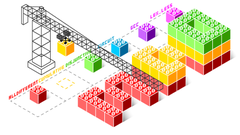
Learn a new way to approach problem solving by stating the problem and letting powerful constraint solving software do the rest. This class teaches you the art of encoding complex discrete optimization problems in the MiniZinc modeling language and then shows you how to effortlessly solve them by leveraging state-of-the-art open-source constraint solving software.

This course is the first of a two term sequence in modeling, analysis and control of dynamic systems. The various topics covered are as follows: mechanical translation, uniaxial rotation, electrical circuits and their coupling via levers, gears and electro-mechanical devices, analytical and computational solution of linear differential equations, state-determined systems, Laplace transforms, transfer functions, frequency response, Bode plots, vibrations, modal analysis, open- and closed-loop control, instability, time-domain controller design, and introduction to frequency-domain control design techniques. Case studies of engineering applications are also covered.

This course provides an introduction to the study of environmental phenomena that exhibit both organized structure and wide variability—i.e., complexity. Through focused study of a variety of physical, biological, and chemical problems in conjunction with theoretical models, we learn a series of lessons with wide applicability to understanding the structure and organization of the natural world. Students also learn how to construct minimal mathematical, physical, and computational models that provide informative answers to precise questions.
This course is appropriate for advanced undergraduates. Beginning graduate students are encouraged to register for 12.586 (graduate version of 12.086). Students taking the graduate version complete different assignments.
This course provides an introduction to the study of environmental phenomena that exhibit both organized structure and wide variability—i.e., complexity. Through focused study of a variety of physical, biological, and chemical problems in conjunction with theoretical models, we learn a series of lessons with wide applicability to understanding the structure and organization of the natural world. Students also learn how to construct minimal mathematical, physical, and computational models that provide informative answers to precise questions.
This course is appropriate for advanced undergraduates. Beginning graduate students are encouraged to register for 12.586 (graduate version of 12.086). Students taking the graduate version complete different assignments.

This course explores the theory and practice of scientific modeling in the context of auditory and speech biophysics. Based on seminar-style discussions of the research literature, the class draws on examples from hearing and speech, and explores general, meta-theoretical issues that transcend the particular subject matter. Examples include: What is a model? What is the process of model building? What are the different approaches to modeling? What is the relationship between theory and experiment? How are models tested? What constitutes a good model?

Physical and digital design skills are key to practitioners in art, design, and engineering, as well as many other creative professions. Models are essential in architecture. In design practice all kinds of physical scale models and digital models are used side by side.
In this architecture course, you will gain experience that will help and inspire you to advance in your personal and professional development. You will attain skills in a practical way. First, we will focus on sketch models for the early stages of a design process, then we will continue with virtual representations for design communication and finally more precise and detailed models will be used for further development of the ideas.
In the theoretical part of the course, you will learn about many different sorts of models: how architects use these and how they are essential in the design process.
The practical part of the course addresses a number of challenges. In small steps we will guide you through technical and creative difficulties in exciting, playful, and pleasant ways.
LICENSE
The course materials of this course are Copyright Delft University of Technology and are licensed under a Creative Commons Attribution-NonCommercial-ShareAlike (CC-BY-NC-SA) 4.0 International License.

In this class, students use data and systems knowledge to build models of complex socio-technical systems for improved system design and decision-making. Students will enhance their model-building skills, through review and extension of functions of random variables, Poisson processes, and Markov processes; move from applied probability to statistics via Chi-squared t and f tests, derived as functions of random variables; and review classical statistics, hypothesis tests, regression, correlation and causation, simple data mining techniques, and Bayesian vs. classical statistics. A class project is required.

ModPo is a fast-paced introduction to modern and contemporary U.S. poetry, with an emphasis on experimental verse, from Dickinson and Whitman to the present. Participants (who need no prior experience with poetry) will learn how to read poems that are supposedly "difficult."

This undergraduate course focuses on traditional algebra topics that have found greatest application in science and engineering as well as in mathematics.

This class provides an introduction to modern art and theories of modernism and postmodernism. It focuses on the way artists use the tension between fine art and mass culture to mobilize a critique of both. We will examine objects of visual art, including painting, sculpture, architecture, photography, prints, performance and video. These objects will be viewed in their interaction with advertising, caricature, comics, graffiti, television, fashion, folk art, and "primitive" art.

This course explores the applications of physics (Newtonian, statistical, and quantum mechanics) to fundamental processes that occur in celestial objects. The list of topics includes Main-sequence Stars, Collapsed Stars (White Dwarfs, Neutron Stars, and Black Holes), Pulsars, Supernovae, the Interstellar Medium, Galaxies, and as time permits, Active Galaxies, Quasars, and Cosmology. Observational data is also discussed.

Physical metallurgy encompasses the relationships between the composition, structure, processing history and properties of metallic materials. In this seminar you'll be introduced to metallurgy in a particularly "physical" way. We will do blacksmithing, metal casting, machining, and welding, using both traditional and modern methods. The seminar meets once per week for an evening laboratory session, and once per week for discussion of issues in materials science and engineering that tie in to the laboratory work. Students will begin by completing some specified projects and progress to designing and fabricating one forged and one cast piece.

This course examines the modern definition of freedom, and the obligations that people accept in honoring it. It investigates how these obligations are captured in the principles of our political associations. This course also studies how the centrality of freedom plays out in the political thought of such authors as Hobbes, Locke, Rousseau, Burke and Montesquieu, as well as debating which notions of freedom inspire and sustain the American experiment by careful reading of the documents and arguments of the founding of the United States.
This course is part of the Concourse program at MIT.

This course analyzes major modern plays featuring works by Shaw, Pirandello, Beckett, Brecht, Williams, Soyinka, Hwang, Churchill, Wilson, Frayn, Stoppard, Deveare Smith, and Kushner. The class particularly considers performance, sociopolitical and aesthetic contexts, and the role of theater in the world of modern multimedia.
Add to calendar

Trusted paper writing service WriteMyPaper.Today will write the papers of any difficulty.