

Courses tagged with "Book distribution" (540)

Statistics is a versatile discipline that has revolutionized the fields of business, engineering, medicine and pure sciences. This course is Part 2 of a 4-part series on Business Statistics, and is ideal for learners who wish to enroll in business programs. The first two parts cover topics in Descriptive Statistics, whereas the next two focus on Inferential Statistics.
Spreadsheets containing real data from diverse areas such as economics, finance and HR drive much of our discussions.
In Part 2, we use the language of probability to examine the underlying distributions of random variables. We model real-life phenomena using known variables such as Binomial, Poisson and Normal. We learn how to simulate data that are distributed according to these variables.
We shall take up datasets that have over a million rows, which makes it difficult to analyze using a spreadsheet. This is a natural setting for R, an advanced statistical programming platform. We incorporate helpful tutorials to get learners acquainted with the platform.

Statistics is a versatile discipline that has revolutionized the fields of business, engineering, medicine and pure sciences. This course is Part 1 of a 4-part series on Business Statistics, and is ideal for learners who wish to enroll in business programs. The first two courses cover topics in Descriptive Statistics, whereas the next two courses focus on Inferential Statistics.
Spreadsheets containing real data from diverse areas such as economics, finance and HR drive much of our discussions.
In Part 1, we shall be exploring multiple ways to describe these datasets, numerically as well as visually. Throughout, we shall embrace a problem-based approach to understanding the material: the primary reason to pick up a tool or a technique will be to solve a problem. Our course makes judicious use of tools.
In Part 2, we shall take up a few datasets that have over a million rows, which makes it impossible to analyze using a spreadsheet. This is a natural setting for R, an advanced statistical programming platform. The courses incorporate helpful tutorials to get learners acquainted with both the mechanisms. Parts 3 and 4 are dedicated to Inferential Statistics. In Part 3, we begin by exploring the benefits of random sampling, and apply the Central Limit Theorem to arrive at confidence intervals for important population parameters. We also learn how to formulate hypotheses for business data, and resolve them with the testing framework that we establish. Along the way, we shall compare two or more populations and draw inferences with a set of statistical tests.
You will learn all these concepts with the help of various demonstrations, which show real-life application of the concepts related to business situations.

This course has a focus on learning the most commonly used project management methodologies in the IT field, and why they are effective. This course introduces you to project management standards and frameworks that increase efficiency and deliver tangible business benefits to IT projects.
Topics include:
- Relationships among projects, programs and portfolios
- Organizational culture and project management roles
- Project management methods and lifecycles and their applications

In this course, part of the Marketing in a Digital World MicroMasters program, you will learn how to apply the concepts of advertising and marketing to branding. We will examine topics and various strategies related to building, measuring, and managing a brand, including direct and indirect measures of brand equity, structures of desired brand knowledge, choice of brand elements, development of supporting marketing programs, and management of brands over time.
You will learn how to:
- Develop a framework to identify and establish brand positioning and values to build customer based brand equity
- Plan and implement brand marketing programs through integrated marketing communications and brand associations to build brand equity
- Evaluate how a brand equity management system can capture customer mindset and enhance market performance through sources and outcomes of brand equity
- Design specific strategies that focus around extending, revitalising and reinforcing existing brands to retain brand resonance (i.e. loyalty, attachment, community and engagement).
The branding landscape is fast-paced and continually changing, yet is a stimulating and exciting environment in which to work. This course is relevant to anyone working in marketing, communications, public relations, social media and advertising.
This course is part of the CurtinX MicroMasters Credential in Marketing in a Digital World that is specifically designed to teach the critical skills needed to be successful in this exciting field. In order to qualify for the MicroMasters Credential you will need to earn a Verified Certificate in each of the five courses.

In this business and management course, you will develop a strong understanding of how firms compete by learning about important analytical approaches that underlie business strategy.
This course will show you how a business views itself in its "totality" and in the context of its environment. The course will be taught from the perspective of a manager or chief executive officer (CEO).
This course aims to equip you with a good understanding of:
- What managing a firm strategically implies?
- How one analyzes the industry in which a firm competes?
- How does a firm create competitive advantage?
- How does a firm sustain its competitive advantage?

Help your organization survive, drive, and thrive on fundamental technological changes in your industry. This advanced strategic management course helps you translate strategic insights into smart strategic decisions on positioning, partnering and being socially responsible.
1. Positioning the Firm:
- How can strategy portfolios guide corporate strategy and help decision-makers scope the activities of their organization?
- How can general strategies help organizations gain competitive advantages in their industries?
- How can organizations make competition irrelevant and create uncontested market space?
2. Orchestrating Strategic Alliances:
- What is the case for cooperative strategy? When should we move from a competitive to a cooperative mindset?
- What are strategic alliances and what is their payoff?
- How can firms build and orchestrate collaborative ecosystems to enhance their (innovative) performance?
3. Embracing Social Responsibility:
- What is the role of business in society? How do organizations contribute and cause harm to the public good?
- What exactly are the social responsibilities of organizations?
- To whom are they responsible and for what? Why should they care?
- How can ethics inform strategic decisions? How can we encourage ethical behavior and reconcile responsibility and profitability?
All key ideas are illustrated through a case study on Tesla and its role in the technological transformation of the global automotive industry.
This course is part of the "Managing Technology & Innovation: How to deal with disruptive change" MicroMasters program designed to teach the critical skills needed to be successful in this exciting field. In order to qualify for the MicroMasters Credential, you will need to earn a Verified Certificate in each of the six courses of the RWTHx MicroMasters program.

Engage in rigorous strategic analysis to complement your intuition with the deep insights needed to help your organization prosper in times of transition. This foundational course enables you to design effective strategy processes, spot fundamental market and technology changes in your industry and renew your organization’s internal resource base.
1. Unpacking the Process of Strategy:
- What precisely is strategy and why does it matter? What are the origins of the concept and how can we define it?
- What are the building blocks of strategy and how can they be arranged as a process?
- What distinct conceptions of the strategy process co-exist and what are their respective advantages and disadvantages?
2. Analyzing Industry Structures:
- What is the role of the industry and its structure for firm performance? How can we analyze industry structures?
- How can we unpack industries and identify the most attractive strategic positions to occupy therein?
- How do we identify what it takes to outcompete others in our strategic group?
3. Developing Internal Resources:
- Can firms succeed in generally unattractive industries? What is the role of firms’ internal resource base in this regard?
- How can we find out which resources and capabilities are likely to have the greatest strategic value?
- What are dynamic capabilities and how do they matter for firm survival and performance?
All key ideas are illustrated through a real-life case study on Tesla and its role in the technological transformation of the global automotive industry.
This course is part of the "Managing Technology & Innovation: How to deal with disruptive change" MicroMasters program designed to teach the critical skills needed to be successful in this exciting field. In order to qualify for the MicroMasters Credential, you will need to earn a Verified Certificate in each of the six courses of the RWTHx MicroMasters program.

Increasing concerns about the state of our planet have catapulted sustainability issues from the corporate backburner to the boardroom. Consequently, corporate sustainability initiatives have flourished, driven by a desire to minimize costs and risks, maximize opportunities and enhance reputation.
What does sustainability mean in the business context? Why has it captured so much attention from academics as well as corporate leaders? How can businesses manage emerging sustainability challenges without compromising their core advantages, and transform themselves into 'sustainable enterprises'?
This course explores the emerging relationships between sustainability issues and competitive advantage. Building on the basic concepts of strategic management, this course will explore how managers may effectively deal with the sustainability challenges that they now encounter.
By encouraging you to reflect on these issues using multiple case studies, discussions and interviews, we will aim to enhance your understanding of alternative models of strategy development in the context of sustainable development.

Have you ever needed to lease a car, start a small business, or simply rent an apartment?
Deals are a part of everyday life. Understanding how to construct an effective agreement is critical, and yet, many people are unfamiliar with how an effective agreement is structured and what they can do to support a successful deal. This course features numerous examples of situations in which you may need to make a deal and provides practical information and resources to help you construct successful agreements.
In this course, we have brought three Cornell Law professors and several practicing attorneys together to provide you with a select range of topics that will serve as a foundation for structuring successful contracts. Together, they possess a wealth of knowledge and experience as legal scholars and distinguished law practitioners.
You will begin with a brief overview of the framework within which laws and contracts are enforced.. You will then focus on various kinds of contract provisions that enable and support successful agreements. You will gain greater familiarity with legal terms and concepts involved in deals, making collaboration with legal counsel more effective.

An engineer's road map to professional and personal success.
Congratulations! You're an engineer, and now you're ready to take the corporate world by storm. But in order to succeed in your career, you'll need more than just great technical skills. You'll need to be able to promote your ideas, share them with others, and work with a wide variety of people. Stuff You Don't Learn in Engineering School is designed to give engineers entering the corporate world the soft skills they'll need to succeed -- in business, and in life. Based on the instructor’s popular leadership seminars and book, this easy-to-digest guide to success will help even the most inhibited engineer to comfortably deal with the difficult people, processes, and meetings of today's competitive business world.
Filled with insightful, practical advice addressing vital skill areas and helpful tips you can apply immediately to any situation, Stuff You Don't Learn in Engineering School will help you take charge of your career and achieve the success for which you've worked so hard.

Gain knowledge about subsistence marketplaces and use it in different parts of the world to make a difference. The broader aim of this course is for you to consider the global challenge of poverty and envision a better world by designing solutions based on sound understanding.

This comprehensive course covers the negotiation strategies and skills that are necessary for business success.

Are you curious how superheroes like Batman®, Superman®, Spider-Man®, and The Avengers® became global cultural phenomena appearing in multi-million dollar movies? This course will help you answer that question and improve your understanding of comics as culture. Superman & Batman are Trademarks of DC Comics. Spider-Man & The Avengers are Trademarks of Marvel Comics.

Supply chains are complex systems involving multiple businesses and organizations with different goals and objectives. Many different analytical methods and techniques are used by researchers and practitioners alike to better design and manage their supply chains. This business and management course introduces the primary methods and tools that you will encounter in your study and practice of supply chains. We focus on the application of these methods, not necessarily the theoretical underpinnings.
We will begin with an overview of introductory probability and decision analysis to ensure that students understand how uncertainty can be modeled. Next, we will move into basic statistics and regression. Finally, we will introduce optimization modeling from unconstrained to linear, non-linear, and mixed integer linear programming.
This is a hands-on course. Students will use spreadsheets extensively to apply these techniques and approaches in case studies drawn from actual supply chains.
MITx MicroMasters Credential in Supply Chain Management
The MITx MicroMasters Credential in Supply Chain Management is specifically designed and administered by MIT’s Center for Transportation & Logistics (CTL) to teach the critical skills needed to be successful in this exciting and growing field. In addition to being a standalone certificate demonstrating expertise in the field, students who complete all of the required courses and the final proctored exam will be qualified to apply to gain credit at MIT for the blended graduate master's degree program. In order to qualify for the MITx MicroMasters Credential in Supply Chain Management you need to earn a Verified Certificate in all of the required courses. When you register for a Verified Certificate you will also be granted access to additional practice problems, supplemental readings, and opportunities for increased interaction with the faculty and teaching staff.
To learn more about the MITx MicroMasters Credential in Supply Chain Management, please visit http://scm.mit.edu/micromasters
MITx requires individuals who enroll in its courses on edX to abide by the terms of the edX honor code. MITx will take appropriate corrective action in response to violations of the edX honor code, which may include dismissal from the MITx course; revocation of any certificates received for the MITx course; or other remedies as circumstances warrant. No refunds will be issued in the case of corrective action for such violations.
The Office of Foreign Assets Control (OFAC) has restricted access of these courses to any learners living in Cuba or Iran. The only exception is that learners in Iran may take SC0x, but no other classes. This is not a ruling that MITx, edX, or the course staff may overrule or change.

The MITx MicroMasters credential in Supply Chain Management is a standalone certification program offered by MITx that is designed and administered by the MIT Center for Transportation & Logistics (CTL); supported by the MIT Office of Digital Learning (ODL); and delivered on edx.org. The MITx MicroMasters credential consists of five intensive on-line courses covering all aspects of logistics and supply chain management along with a proctored comprehensive final exam (CFx). To take the CFx, you must pass all five courses of the MicroMasters in Supply Chain Management as a verified student.
The CFx consists of two 120-minute exams, Exam I and Exam II. The exam must be broken into two exams for proctoring logistics. The exams will be a mix of qualitative and quantitative questions with the first exam covering more of the fundamentals of supply chain management and the second covering advanced and special topics. Students who have selected virtual proctoring will have from May 19th 1500 UTC to May 22nd 1500 UTC to take the exam. Once a student begins Exam I, they must complete both exams within 12 hours. Students cannot start Exam II without completing Exam I. Each exam will be timed, but students need to finish both exams within the 12 hour time period or they will not pass (there will be no secondary timer to regulate the 12 hour guideline). Virtual test takers will use the Software Secure proctoring software to be virtually proctored. If you have not passed all five courses as a verified student in advance of the exam - you will not be allowed to take the CFx.
If you pre-registered and are planning to take this exam in-person at an MIT SCALE center, per course team communications, please DO NOT enroll through this course instance. You will be pre-enrolled in the correct in-person proctored CFx and will be notified of course enrollment through the edX platform.

This Supply Chain Design course is part of the MITx MicroMasters Credential in Supply Chain Management, offered by #1 ranked SCM Master's program at the Massachusetts Institute of Technology.
CTL.SC2x Supply Chain Design covers all aspects involved in the design of supply chains for companies and organizations anywhere in the world. The course is divided into four main topic areas: Physical flow design, Supply chain finance, Information flow design, and Organization/Process design. In the design of physical flows, we show how to formulate and solve Transportation, Transshipment, Facility Location, and Network Design Problems. For financial flows we show how to translate supply chain concepts and actions into the language of the Chief Financial Officer (CFO) of a company. We cover Activity Based Costing, Working Capital, the Cash-to-Cash cycle and Discounted Cash Flow Analysis. The design of the information flow section describes how firms communicate with suppliers (procurement, risk contracts), internal resources (production planning, bills of materials, material requirements planning), and customers (Sales & Operations Planning and other collaboration based processes). In the last section, we introduce performance metric design and organizational design within the supply chain organization focusing mainly on the centralize/decentralize decision.
The main topic areas we will focus on in this course are:
- Supply Chain Network Design
- Supply Chain Finance
- Supplier Management
- Production and Demand Planning
- Process and Organizational Design
This course is indispensable if you’re considering a supply chain management career and, specifically, the positions of Supply Chain Analyst, Operations Manager, or Logistics Coordinator.
MITx MicroMasters Credential in Supply Chain Management
The MITx MicroMasters Credential in Supply Chain Management is specifically designed and administered by MIT’s Center for Transportation & Logistics (CTL) to teach the critical skills needed to be successful in this exciting and growing field. In addition to being a standalone certificate demonstrating expertise in the field, students who complete all of the required courses and the final proctored exam will be qualified to apply to gain credit at MIT for the blended graduate master's degree program. In order to qualify for the MITx MicroMasters Credential in Supply Chain Management you need to earn a Verified Certificate in all of the required courses. When you register for a Verified Certificate you will also be granted access to additional practice problems, supplemental readings, and opportunities for increased interaction with the faculty and teaching staff.
To learn more about the MITx MicroMasters Credential in Supply Chain Management, please visit http://scm.mit.edu/micromasters
MITx requires individuals who enroll in its courses on edX to abide by the terms of the edX honor code. MITx will take appropriate corrective action in response to violations of the edX honor code, which may include dismissal from the MITx course; revocation of any certificates received for the MITx course; or other remedies as circumstances warrant. No refunds will be issued in the case of corrective action for such violations.

Supply Chains are complex systems involving multiple firms and organizations with different goals and objectives. Additionally, there are external forces and trends that can impact (positively or negatively) a supply chain’s efficiency and effectiveness. Understanding the dynamics and risks within supply chains, both large and small, is key to being a successful supply chain professional.
This course builds on the fundamental models introduced in SC1x and the design trade-offs covered in SC2x. It is essentially a capstone in understanding how to successfully model, design, and manage a supply chain in any industry. We will divide the course into three sections.
First, we will introduce the field of System Dynamics. Developed at MIT, system dynamics is an approach that examines and models complex systems that feature interacting, non-linear, and dynamic elements. The objective is to better understand the underlying features of a complex system and to recommend policies and other actions to improve overall performance.
Second, we will explore the concepts of supply chain risk. Supply chains are subject to a wide number of potential disruptions – from both within and outside of the supply chain. Students will understand how supply chains can be better designed and managed to not only mitigate the downside of supply chain disruption but also to leverage and capture any upside.
Finally, the students will engage in a series of more extended case studies and simulations that demonstrate these complex relationships. Actual case studies and examples from companies will be used to help students better prepare for actual situations.
MITx MicroMasters Credential in Supply Chain Management
The MITx MicroMasters Credential in Supply Chain Management is specifically designed and administered by MIT’s Center for Transportation & Logistics (CTL) to teach the critical skills needed to be successful in this exciting and growing field. In addition to being a standalone certificate demonstrating expertise in the field, students who complete all of the required courses and the final proctored exam will be qualified to apply to gain credit at MIT for the blended graduate master's degree program. In order to qualify for the MITx MicroMasters Credential in Supply Chain Management you need to earn a Verified Certificate in all of the required courses. When you register for a Verified Certificate you will also be granted access to additional practice problems, supplemental readings, and opportunities for increased interaction with the faculty and teaching staff.
To learn more about the MITx MicroMasters Credential in Supply Chain Management, please visit http://scm.mit.edu/micromasters
MITx requires individuals who enroll in its courses on edX to abide by the terms of the edX honor code. MITx will take appropriate corrective action in response to violations of the edX honor code, which may include dismissal from the MITx course; revocation of any certificates received for the MITx course; or other remedies as circumstances warrant. No refunds will be issued in the case of corrective action for such violations.

This Supply Chain Fundamentals course is part of the MITx MicroMasters Credential in Supply Chain Management, offered by #1 ranked SCM Master's program at the Massachusetts Institute of Technology.
The CTL.SC1x Supply Chain Fundamentals course provides the foundational skills for supply chain management and logistics. You will learn how to develop and apply analytic tools, approaches, and techniques used in the design and operation of logistics systems and integrated supply chains. The material is taught from a managerial perspective, with an emphasis on where and how specific tools can be used to improve the overall performance and reduce the total cost of a supply chain. We place a strong emphasis on the development and use of fundamental mathematical models to illustrate the underlying concepts involved in both intra- and inter-company logistics operations.
The main topic areas we will focus on this course are:
- Demand Forecasting, Planning, and Management
- Inventory Planning, Management, and Control
- Transportation Planning, Management, and Execution
While our main objective is to develop and use models to help us analyze these situations, we will make heavy use of examples from industry to provide illustrations of the concepts in practice. This is neither a purely theoretical nor a case study course, but rather an applied analytical course that addresses real problems found in practice.
MITx MicroMasters Credential in Supply Chain Management
The MITx MicroMasters Credential in Supply Chain Management is specifically designed and administered by MIT’s Center for Transportation & Logistics (CTL) to teach the critical skills needed to be successful in this exciting and growing field. In addition to being a standalone certificate demonstrating expertise in the field, students who complete all of the required courses and the final proctored exam will be qualified to apply to gain credit at MIT for the blended graduate master's degree program. In order to qualify for the MITx MicroMasters Credential in Supply Chain Management you need to earn a Verified Certificate in all of the required courses. When you register for a Verified Certificate you will also be granted access to additional practice problems, supplemental readings, and opportunities for increased interaction with the faculty and teaching staff.
To learn more about the MITx MicroMasters Credential in Supply Chain Management, please visit http://scm.mit.edu/micromasters
MITx requires individuals who enroll in its courses on edX to abide by the terms of the edX honor code. MITx will take appropriate corrective action in response to violations of the edX honor code, which may include dismissal from the MITx course; revocation of any certificates received for the MITx course; or other remedies as circumstances warrant. No refunds will be issued in the case of corrective action for such violations.

In this business and management course, you’ll learn how make effective supply chain decisions that take into consideration all aspects of your business.
The course will take a helicopter view for decision-making. The helicopter view is built upon:
- Key questions to decide on: manufacturing organization, late differentiation, location, distribution networks, …
- Objectives relevant to your business: cost, speed, flexibility, reliability, …
We will work through questions such as:
- Should you locate a process in a given country? This decision has an obvious impact on your HR costs, but it also affects your working capital and your ability to react to the market needs.
- Should you centralize your distribution? This decision leads to economies of scale and a better product availability, but it also impacts your carbon emission.
By the end of this course, you will have built a framework that allows you to make better decisions.
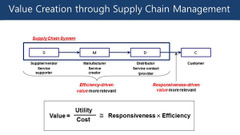
Learn about how to create maximum value through effective supply chain management, in particular, from a dynamic learning perspective.
Add to calendar

Trusted paper writing service WriteMyPaper.Today will write the papers of any difficulty.