

Courses tagged with "Customer Service Certification Program" (283)

The course consists of a sampling of topics from algebraic combinatorics. The topics include the matrix-tree theorem and other applications of linear algebra, applications of commutative and exterior algebra to counting faces of simplicial complexes, and applications of algebra to tilings.

The main aims of this seminar will be to go over the classification of surfaces (Enriques-Castelnuovo for characteristic zero, Bombieri-Mumford for characteristic p), while working out plenty of examples, and treating their geometry and arithmetic as far as possible.

This course provides an introduction to algebraic number theory. Topics covered include dedekind domains, unique factorization of prime ideals, number fields, splitting of primes, class group, lattice methods, finiteness of the class number, Dirichlet's units theorem, local fields, ramification, discriminants.

The goal of this course is to describe some of the tools which enter into the proof of Sullivan's conjecture.

This class covers the mathematics of inverse problems involving waves, with examples taken from reflection seismology, synthetic aperture radar, and computerized tomography.

In this graduate-level course, we will be covering advanced topics in combinatorial optimization. We will start with non-bipartite matchings and cover many results extending the fundamental results of matchings, flows and matroids. The emphasis is on the derivation of purely combinatorial results, including min-max relations, and not so much on the corresponding algorithmic questions of how to find such objects. The intended audience consists of Ph.D. students interested in optimization, combinatorics, or combinatorial algorithms.

This course will focus on various aspects of mirror symmetry. It is aimed at students who already have some basic knowledge in symplectic and complex geometry (18.966, or equivalent). The geometric concepts needed to formulate various mathematical versions of mirror symmetry will be introduced along the way, in variable levels of detail and rigor.

This course will give a detailed introduction to the theory of tensor categories and review some of its connections to other subjects (with a focus on representation-theoretic applications). In particular, we will discuss categorifications of such notions from ring theory as: module, morphism of modules, Morita equivalence of rings, commutative ring, the center of a ring, the centralizer of a subring, the double centralizer property, graded ring, etc.

This is a mostly self-contained research-oriented course designed for undergraduate students (but also extremely welcoming to graduate students) with an interest in doing research in theoretical aspects of algorithms that aim to extract information from data. These often lie in overlaps of two or more of the following: Mathematics, Applied Mathematics, Computer Science, Electrical Engineering, Statistics, and / or Operations Research.

This course covers harmonic theory on complex manifolds, the Hodge decomposition theorem, the Hard Lefschetz theorem, and Vanishing theorems. Some results and tools on deformation and uniformization of complex manifolds are also discussed.

The main goal of this course is to study the generalization ability of a number of popular machine learning algorithms such as boosting, support vector machines and neural networks. Topics include Vapnik-Chervonenkis theory, concentration inequalities in product spaces, and other elements of empirical process theory.

This course is a student-presented seminar in combinatorics, graph theory, and discrete mathematics in general. Instruction and practice in written and oral communication is emphasized, with participants reading and presenting papers from recent mathematics literature and writing a final paper in a related topic.

This graduate-level course introduces students to some fundamental 2D random objects, explains how they are related to each other, and explores some open problems in the field.

Wavelets are localized basis functions, good for representing short-time events. The coefficients at each scale are filtered and subsampled to give coefficients at the next scale. This is Mallat's pyramid algorithm for multiresolution, connecting wavelets to filter banks. Wavelets and multiscale algorithms for compression and signal/image processing are developed. Subject is project-based for engineering and scientific applications.

Курс линейной алгебры для нематематических факультетов

Курс посвящен базовым понятиям комбинаторики. Кроме основных принципов, в курс также включены современные проблемы комбинаторного анализа.

Теория игр изучает принципы принятия решений в условиях стратегического взаимодействия нескольких агентов — людей, компаний или правительств. Курс будет интересен желающим разобраться в том, как конкурируют друг с другом несколько компаний и можно ли гарантированно выиграть в шашки, есть ли смысл угрожать на переговорах и с кем стоит объединяться в коалиции в парламенте.
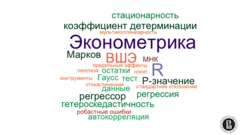
Мы будем учиться находить и оценивать зависимости в реальных данных, а также визуализировать, интерпретировать и использовать их для прогнозирования. We will learn to identify and estimate relationships in the real data, as well as visualize, interpret and apply them for making predictions.

课程从问题开始揭示一些数学思想形成的过程,和听众一起从思想上重走一遍前辈们走过的路,体会数学抽象的魅力。 In this course I share the processes which formed the core concepts of mathematical philosophy, walking with students as they experience, learn and enjoy mathematical abstraction.

這是一個機率的入門課程,著重的是教授機率基本概念。另外我們的作業將搭配臺大電機系所開發的多人競技線上遊戲方式,讓同學在遊戲中快樂的學習,快速培養同學們對於機率的洞察力與應用能力。
Add to calendar

Trusted paper writing service WriteMyPaper.Today will write the papers of any difficulty.