

Courses tagged with "Nutrition" (6413)

If you are an entrepreneur, one of your priorities, in addition to building your company, is ensuring you have enough money at the right times. Early Stage Capital will consider a broad range of questions that entrepreneurs deal with on this front, including the following: What should your strategy and your priorities be in raising early stage capital? What are the market norms and standards in structuring VC deals? What are the critical negotiating strategies and tactics? How will your company be valued? How can you obtain the optimal valuation for your new venture? What are the critical elements in the relationship between venture capitalists and entrepreneurs? How is the "venture model" evolving? Is it broken? What is the impact of Super Angels and micro VCs?
These are key questions that face all entrepreneurs in 2010, particularly first-time entrepreneurs. This course aims to prepare you for these decisions, as either a potential entrepreneur or venture capitalist. Using live interactions with leading figures in the venture finance community, most of the class sessions will analyze fundamental strategies of the venture-capital investment process and the critical importance of the relationship between entrepreneur and investor. As well, we will have a tactical focus on demystifying the legalities and jargon of the term sheet and the "A round" financing process. Significantly for 2010, we will also frequently consider the rapid and arguably fundamental change in VC today as the "lean startup" model threatens much of the traditional role and value of the venture investor.
Disclaimer: The websites for this course and the materials they offer are provided for educational use only. They are not a substitute for the advice of an attorney and no attorney-client relationship is created by using them. All materials are provided "as-is", without any express or implied warranties.

This subject examines the interactions of East Asia with the rest of the world and the relationships of each of the East Asian countries with each other, from ca. 1500 to 2000 A.D. Primary focus on China and Japan, with some reference to Korea, Vietnam, and Central Asia. Asks how international diplomatic, commercial, military, religious, and cultural relationships joined with internal processes to direct the development of East Asian societies. Subject addresses perceptions and misperceptions among East Asians and foreigners.

This subject is an introduction to various forms of culture in East Asia (focusing on China, Japan and Korea), including both traditional and contemporary examples. Critically examines the shared cultural elements that are widely considered to constitute "East Asian culture," and also the diversity within East Asia, historically and today. Examples include religious and philosophical beliefs (Confucianism and Buddhism), literature, art, food, architecture, and popular culture. The study of gender will be an integral part of this subject. The influence and presence of Asian cultural expressions in the U.S. are also considered.
This class is suitable for students of all levels, and requires no Asian language background. Students who wish to fulfill the MISTI-Singapore requirement may do the final project on Singapore. Taught in English.
The course includes field trips to the Museum of Fine Arts and the Peabody Essex Museum.
This subject is an introduction to various forms of culture in East Asia (focusing on China, Japan and Korea), including both traditional and contemporary examples. Critically examines the shared cultural elements that are widely considered to constitute "East Asian culture," and also the diversity within East Asia, historically and today. Examples include religious and philosophical beliefs (Confucianism and Buddhism), literature, art, food, architecture, and popular culture. The study of gender will be an integral part of this subject. The influence and presence of Asian cultural expressions in the U.S. are also considered.
This class is suitable for students of all levels, and requires no Asian language background. Students who wish to fulfill the MISTI-Singapore requirement may do the final project on Singapore. Taught in English.
The course includes field trips to the Museum of Fine Arts and the Peabody Essex Museum.
This subject is an introduction to various forms of culture in East Asia (focusing on China, Japan and Korea), including both traditional and contemporary examples. Critically examines the shared cultural elements that are widely considered to constitute "East Asian culture," and also the diversity within East Asia, historically and today. Examples include religious and philosophical beliefs (Confucianism and Buddhism), literature, art, food, architecture, and popular culture. The study of gender will be an integral part of this subject. The influence and presence of Asian cultural expressions in the U.S. are also considered.
This class is suitable for students of all levels, and requires no Asian language background. Students who wish to fulfill the MISTI-Singapore requirement may do the final project on Singapore. Taught in English.
The course includes field trips to the Museum of Fine Arts and the Peabody Essex Museum.

The course examines various aspects of culture in both premodern and modern East Asia, ranging from literature, art, performance, and cuisine to contemporary pop culture (film, manga, anime, etc.).

Introducing strategies for developing your spoken English communication skills in the context of doing business in Asia.
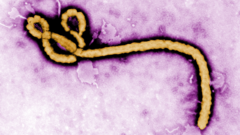
Learn about the evolving Ebola epidemic and its various aspects including disease prevention, management and treatment, response to the epidemic, ethical considerations, and the post-Ebola global health landscape.

March 2014 marked the starting point of the largest outbreak of Ebola virus disease in history. Although the disease seems to be on a decrease, we are not there yet and new outbreaks will surely emerge. New efforts to combat the outbreak are necessary. This is why we developed this online course about Ebola, targeted at health professionals across the world.

This course gives you the permission to take care of yourself by learning the skills to manage stress and optimize wellbeing.

Too often modern cities and suburbs are disorganized places where most new development makes daily life less pleasant, creates more traffic congestion, and contributes to climate change. This trend has to change; and our course is going to show you how.
Ecodesign means integrating planning, urban design and the conservation of natural systems to produce a sustainable built and natural environment. Ecodesign can be implemented through normal business practices and the kinds of capital programs and regulations already in use in most communities. We will show you how ecodesign has already been used for exceptional projects in many cities and suburbs—from Hammarby Sjöstad in Stockholm to False Creek North in Vancouver to Battery Park City in Manhattan, as well as many smaller-scale examples that can be adopted in any community. Cities and suburbs built according to ecodesign principles can and should become normal, instead of just a few special examples, transforming urban development into desirable, lower-carbon, compact and walkable communities and business centers.
As this course describes specific solutions to the vexing urban challenges we all face, course participants can see how these ideas might be applied in their own area. Participants will learn the conceptual framework of ecodesign, see many real, successful examples, and come to understand the tools, processes, and techniques for policy development and implementation.
Ecodesign thinking is relevant to anyone who has a part in shaping or influencing the future of cities and suburbs – citizens, students, designers, public officials, and politicians. At the conclusion of the course participants will have the tools and strategies necessary to advocate policies and projects for a neighbourhood or urban district using the ecodesign framework.

Ecologies of Construction examines the resource requirements for the making and maintenance of the contemporary built environment. This course introduces the field of industrial ecology as a primary source of concepts and methods in the mapping of material and energy expenditures dedicated to construction activities.

We will cover fundamentals of ecology, considering Earth as an integrated dynamic system. Topics include coevolution of the biosphere, geosphere, atmosphere and oceans; photosynthesis and respiration; the hydrologic, carbon and nitrogen cycles. We will examine the flow of energy and materials through ecosystems; regulation of the distribution and abundance of organisms; structure and function of ecosystems, including evolution and natural selection; metabolic diversity; productivity; trophic dynamics; models of population growth, competition, mutualism and predation. This course is designated as Communication-Intensive; instruction and practice in oral and written communication provided. Biology is a recommended prerequisite.

This course provides a review of physical, chemical, ecological, and economic principles used to examine interactions between humans and the natural environment. Mass balance concepts are applied to ecology, chemical kinetics, hydrology, and transportation; energy balance concepts are applied to building design, ecology, and climate change; and economic and life cycle concepts are applied to resource evaluation and engineering design. Numerical models are used to integrate concepts and to assess environmental impacts of human activities. Problem sets involve development of MATLAB® models for particular engineering applications. Some experience with computer programming is helpful but not essential.

Principles of Microeconomics belongs to the CLEP® PREP suite of Saylor courses. This version of ECON101 will help you master the subject of microeconomics and will help prepare you to take the CLEP® exam in microeconomics [1]. The purpose of this course is to provide you with a basic understanding of the principles of microeconomics. At its core, the study of economics deals with the choices and decisions that have to be made in order to manage scarce resources available to us. Microeconomics is the branch of economics that pertains to decisions made at the individual level, i.e., by individual consumers or individual firms after evaluating resources, costs, and tradeoffs. When we talk about the economy, we are referring to the marketplace or system in which these choices interact with one another. In this course, you will learn how and why these decisions are made and how they affect one another in the economy. Each of the following units has been designed as a building block, where the concepts you le…
The purpose of this course is to provide you with a basic understanding of the principles of microeconomics. At its core, the study of economics deals with the choices and decisions that have to be made in order to manage scarce resources available to us. Microeconomics is the branch of economics that pertains to decisions made at the individual level, i.e. by individual consumers or individual firms, after evaluating resources, costs, and tradeoffs. When we talk about “the economy,” then, we are referring to the marketplace or system in which these choices interact with one another. In this course, we will learn how and why these decisions are made and how they affect one another in the economy. Each of the following units has been designed as a building block, where the concepts you learn in one unit will enable you to understand the material you discover in the next. By the end of this course, you will have a strong grasp on the major issues that face microeconomists, including consumer and…
Economics is traditionally divided into two parts: microeconomics and macroeconomics. The main purpose of this course is to introduce you to the principles of macroeconomics. Macroeconomics is the study of how a country’s economy works while trying to discern among good, better, and best choices for improving and/or maintaining a nation’s standard of living and level of economic and societal well-being. Historical and contemporary perspectives on the roles and policies of government are part of the mix of interpretations and alternatives that surround questions of who or what gains and loses the most or least within a relatively small set of key interdependent players. In the broadest view, that set consists of households, consumers, savers, firm owners, investors, agency and elected officials, and global trading partners in which some wear many hats and face price considerations at two levels. Consider one distinction between macroeconomics and microeconomics though prices are taken into account in bot…
Economics is traditionally divided into two parts: microeconomics and macroeconomics. The purpose of this course is to provide you with a fundamental understanding of the principles of macroeconomics. Macroeconomists study how a country’s economy works and try to determine the best choices to improve the overall wellbeing of a nation. Typical topics include inflation (the overall level of prices), employment, fiscal policy (government taxing and spending), and money and banking (interest rates and lending policies). Individuals and firms need to consider how macroeconomic events will affect their own prosperity. To better define macroeconomics, consider its distinction from microeconomics. Imagine you are attempting to figure out how the price of a certain good has been determined. Microeconomics would focus on how supply and demand determine prices, while macroeconomics would study the determination of prices at all levels. To test particular policies and ideas, or to find out the causes of…
This course is designed to introduce you to the study of Calculus. You will learn concrete applications of how calculus is used and, more importantly, why it works. Calculus is not a new discipline; it has been around since the days of Archimedes. However, Isaac Newton and Gottfried Leibniz, two 17th-century European mathematicians concurrently working on the same intellectual discovery hundreds of miles apart, were responsible for developing the field as we know it today. This brings us to our first question, what is today's Calculus? In its simplest terms, calculus is the study of functions, rates of change, and continuity. While you may have cultivated a basic understanding of functions in previous math courses, in this course you will come to a more advanced understanding of their complexity, learning to take a closer look at their behaviors and nuances. In this course, we will address three major topics: limits, derivatives, and integrals, as well as study their respective foundations and a…
In this course, you will look at the properties behind the basic concepts of probability and statistics and focus on applications of statistical knowledge. You will learn about how statistics and probability work together. The subject of statistics involves the study of methods for collecting, summarizing, and interpreting data. Statistics formalizes the process of making decisions, and this course is designed to help you use statistical literacy to make better decisions. Note that this course has applications for the natural sciences, economics, computer science, finance, psychology, sociology, criminology, and many other fields. We read data in articles and reports every day. After finishing this course, you should be comfortable evaluating an author's use of data. You will be able to extract information from articles and display that information effectively. You will also be able to understand the basics of how to draw statistical conclusions. This course will begin with descriptive statistic…
Add to calendar

Trusted paper writing service WriteMyPaper.Today will write the papers of any difficulty.