

Courses tagged with "Nutrition" (6413)

This course aims to introduce graduate students to the “standard” basic methods and topics of microeconomic theory at the Ph.D. level while providing critical exposure to microeconomics as a domain of unsettled questions and live debates.

This course is a graduate introduction to natural language processing - the study of human language from a computational perspective. It covers syntactic, semantic and discourse processing models, emphasizing machine learning or corpus-based methods and algorithms. It also covers applications of these methods and models in syntactic parsing, information extraction, statistical machine translation, dialogue systems, and summarization. The subject qualifies as an Artificial Intelligence and Applications concentration subject.
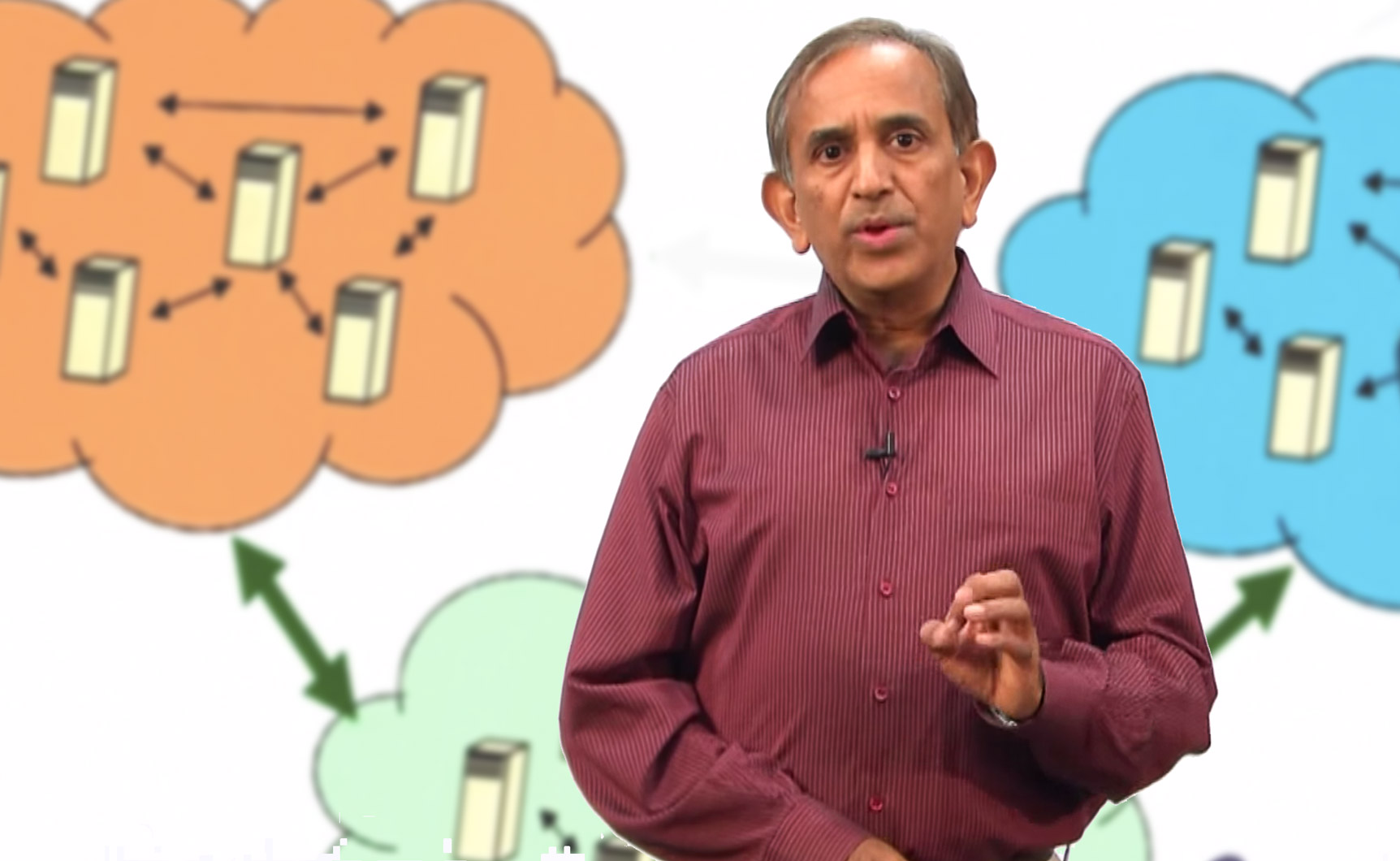
In this course, we will see all the advances that have led to the state-of-the-art operating system that we know today, covering variety of platforms -- cell phones, multi-core, parallel systems, distributed systems, and cloud computing.

This course deals with the application of structure and theory to the study of organic reaction mechanisms: Stereochemical features including conformation and stereoelectronic effects; reaction dynamics, isotope effects and molecular orbital theory applied to pericyclic and photochemical reactions; and special reactive intermediates including carbenes, carbanions, and free radicals.

The focus of the course is the concepts and techniques for solving the partial differential equations (PDE) that permeate various scientific disciplines. The emphasis is on nonlinear PDE. Applications include problems from fluid dynamics, electrical and mechanical engineering, materials science, quantum mechanics, etc.

This course focuses on phonological phenomena that are sensitive to morphological structure, including base-reduplicant identity, cyclicity, level ordering, derived environment effects, opaque rule interactions, and morpheme structure constraints. In the recent OT literature, it has been claimed that all of these phenomena can be analyzed with a single theoretical device: correspondence constraints, which regulate the similarity of lexically related forms (such as input and output, base and derivative, base and reduplicant).

This advanced video class serves goes into greater depth on the topics covered in 4.351 , Introduction to Video. It also will explore the nature and function of narrative in cinema and video through exercises and screenings culminating in a final project. Starting with a brief introduction to the basic principles of classical narrative cinema, we will proceed to explore strategies designed to test the elements of narrative: story trajectory, character development, verisimilitude, time-space continuity, viewer identification, suspension of disbelief, and closure.

This course is the second of the three parts of our graduate introduction to semantics. The others are 24.970 Introduction to Semantics and 24.954 Pragmatics in Linguistic Theory. Like the other courses, this one is not meant as an overview of the field and its current developments. Our aim is to help you to develop the ability for semantic analysis, and we think that exploring a few topics in detail together with hands-on practical work is more effective than offering a bird's-eye view of everything. Once you have gained some experience in doing semantic analysis, reading around in the many recent handbooks and in current issues of major journals and attending our seminars and colloquia will give you all you need to prosper. Because we want to focus, we need to make difficult choices as to which topics to cover.
This year, we will focus on topics having to do with modality, conditionals, tense, and aspect.

This course will explore the mutual influences of ideas of nature, theories of city design and planning, and practices of urban design, construction, and management. We will investigate how natural processes shape urban landscapes (from the scale of street corner to region) and how to intervene strategically in those processes in order to achieve certain goals. We will examine cases of cities that adapted successfully to natural processes and those that did not. Students will then have the opportunity to research a case of their choice and to present their findings for discussion. The subject may be historical or an an example of contemporary theory and practice. Additional information is also available at Professor Spirn's class website.
This course will explore the mutual influences of ideas of nature, theories of city design and planning, and practices of urban design, construction, and management. We will investigate how natural processes shape urban landscapes (from the scale of street corner to region) and how to intervene strategically in those processes in order to achieve certain goals. We will examine cases of cities that adapted successfully to natural processes and those that did not. Students will then have the opportunity to research a case of their choice and to present their findings for discussion. The subject may be historical or an an example of contemporary theory and practice. Additional information is also available at Professor Spirn's class website.

This computer science course is the second of a two-course sequence on how to write good software using modern software engineering techniques.
This course will dig deeper into what makes for "good" code -- safe from bugs, easy to understand, and ready for change. We will explore two paradigms for modern programming: (1) grammars, parsing, and recursive datatypes; and (2) concurrent programming with threads.
This is a challenging and rigorous course that will help you take the next step on your way to becoming a skilled software engineer.
Photo by raincrystal on Flickr. (CC-BY-SA) 2.0

This class presents the application of principles of soil mechanics. It considers the following topics: the origin and nature of soils; soil classification; the effective stress principle; hydraulic conductivity and seepage; stress-strain-strength behavior of cohesionless and cohesive soils and application to lateral earth stresses; bearing capacity and slope stability; consolidation theory and settlement analysis; and laboratory and field methods for evaluation of soil properties in design practice.
This class presents the application of principles of soil mechanics. It considers the following topics: the origin and nature of soils; soil classification; the effective stress principle; hydraulic conductivity and seepage; stress-strain-strength behavior of cohesionless and cohesive soils and application to lateral earth stresses; bearing capacity and slope stability; consolidation theory and settlement analysis; and laboratory and field methods for evaluation of soil properties in design practice.

En este curso el estudiante perfeccionará su comunicación oral y escrita mediante el estudio y la discusión de temas relacionados al impacto social y cultural de la ciencia y la tecnología en ciertas sociedades hispanas. Algunos de los temas a tratar son los efectos de los cambios tecnológicos en la estructura familiar y comunitaria, en las relaciones entre los sexos, en la identidad personal y cultural, en el mundo natural y en los sistemas de valores, la religión, la educación y el trabajo. También se examinan y discuten diversas actitudes hacia la innovación tecnológica y científica así como las ramificaciones éticas de las decisiones tecnológicas.

En este curso el estudiante perfeccionará su comunicación oral y escrita mediante el estudio y la discusión de temas relacionados al impacto social y cultural de la ciencia y la tecnología en ciertas sociedades hispanas. Algunos de los temas a tratar son los efectos de los cambios tecnológicos en la estructura familiar y comunitaria, en las relaciones entre los sexos, en la identidad personal y cultural, en el mundo natural y en los sistemas de valores, la religión, la educación y el trabajo. También se examinan y discuten diversas actitudes hacia la innovación tecnológica y científica así como las ramificaciones éticas de las decisiones tecnológicas.

This course is for advanced students who wish to build confidence and skills in spoken English. It focuses on the appropriate oral presentation of material in a variety of professional contexts: group discussions, classroom explanations and interactions, and theses/research proposals. It is valuable for those who intend to teach or lecture in English and includes language laboratory assignments. The goal of the workshop is to develop effective speaking and listening skills for academic and professional contexts.
This course is for advanced students who wish to build confidence and skills in spoken English. It focuses on the appropriate oral presentation of material in a variety of professional contexts: group discussions, classroom explanations and interactions, and theses/research proposals. It is valuable for those who intend to teach or lecture in English and includes language laboratory assignments. The goal of the workshop is to develop effective speaking and listening skills for academic and professional contexts.

This course is for advanced students who wish to build confidence and skills in spoken English. It focuses on the appropriate oral presentation of material in a variety of professional contexts: group discussions, classroom explanations and interactions, and theses/research proposals. It is valuable for those who intend to teach or lecture in English and includes language laboratory assignments. The goal of the workshop is to develop effective speaking and listening skills for academic and professional contexts.

The class covers the analysis and modeling of stochastic processes. Topics include measure theoretic probability, martingales, filtration, and stopping theorems, elements of large deviations theory, Brownian motion and reflected Brownian motion, stochastic integration and Ito calculus and functional limit theorems. In addition, the class will go over some applications to finance theory, insurance, queueing and inventory models.

This class covers the analysis and modeling of stochastic processes. Topics include measure theoretic probability, martingales, filtration, and stopping theorems, elements of large deviations theory, Brownian motion and reflected Brownian motion, stochastic integration and Ito calculus and functional limit theorems. In addition, the class will go over some applications to finance theory, insurance, queueing and inventory models.
Add to calendar

Trusted paper writing service WriteMyPaper.Today will write the papers of any difficulty.