

Courses tagged with "Nutrition" (6413)

This course will provide a market-oriented framework for analyzing the major types of financial decisions made by corporations. Lectures and readings will provide an introduction to present value techniques, capital budgeting principles, asset valuation, the operation and efficiency of financial markets, the financial decisions of firms, and derivatives.

Imagine that you are a bank and a main part of your daily business is to lend money. Unfortunately, lending money is a risky business - there is no 100% guarantee that you will get all your money back. If the borrower defaults, you will face losses in your portfolio. Or, in a bit less extreme scenario, if the credit quality of your counterparty deteriorates according to some rating system, the loan will become more risky. These are typical situations in which credit risk manifests itself.
According to the Basel Accord, a global regulation framework for financial institutions, credit risk is one of the three fundamental risks a bank or any other regulated financial institution has to face when operating in the markets (the two other risks being market risk and operational risk). As the 2008 financial crisis has shown us, a correct understanding of credit risk and the ability to manage it are fundamental in today’s world.
This course offers you an introduction to credit risk modelling and hedging. We will approach credit risk from the point of view of banks, but most of the tools and models we will overview can be beneficial at the corporate level as well.
At the end of the course, you will be able to understand and correctly use the basic tools of credit risk management, both from a theoretical and, most of all, a practical point of view. This will be a quite unconventional course. For each methodology, we will analyse its strengths as well as its weaknesses. We will do this in a rigorous way, but also with fun: there is no need to be boring.
Thanks to the wonderful feedback of last year’s students, the course has been further improved.
Follow us on Twitter @CRMooc for updates and hints about the course.
FAQs
What is the estimated effort for course?
The total effort is 48 hours. You can decide for yourself when you will work on the course.
How much does it cost to take the course?
Nothing! The course is free.
Will the text of the lectures be available?
Yes. All of our lectures will have transcripts synced to the videos.
Do I need to watch the lectures live?
No. You can watch the lectures at your leisure.
Is this course related to campus courses of Delft University of Technology?
Yes, this course can be seen as an evolution of the WI3421TU Risk Management course, a compulsory course of the Minor Finance at TU Delft.

This eight-week course explores effective teaching strategies for college or university STEM (science, technology, engineering, mathematics) classrooms

This course is designed to provide future STEM faculty, graduate students and post-doctoral fellows with an introduction to effective teaching strategies and the research that supports them.
The goal of the eight-week course is to equip the next generation of STEM faculty to be effective teachers, thus improving the learning experience for the thousands of students they will teach.
The course draws on the expertise of experienced STEM faculty, educational researchers, and staff from university teaching centers, many of them affiliated with the Center for the Integration of Research, Teaching, and Learning (CIRTL), a network of research universities collaborating in the preparation of STEM graduate students and post-docs as future faculty members.

This course will improve your fluency in financial accounting, the language of business. You will learn how to read, understand, and analyze most of the information provided by companies in their financial statements. These skills will help you make more informed decisions using financial information.

Learn about functional analysis

This course will provide you with an overview of the most important health challenges facing the world today. You will gain insight into how challenges have changed over time, we will discuss the likely determinants of such changes and examine future projections. Successful international strategies and programs promoting human health will be highlighted and global health governance structures will be mapped and the role of the key actors explored.

Global Health is a new field within public health sciences that integrates the knowledge from fields such as epidemiology, medicine, economy and the behavioral sciences. The main aim of the course, An Introduction to Global Health, is to describe and analyze variation in health between and within countries. This will provide an understanding of causes of the variation. The course will include measurements and determinants of health. Further, the course offers a public health perspective of the global burden of diseases. The course will specifically address: Maternal and Child Health; Sexual reproductive health and rights; Major infectious disease - malaria, TB, HIV, pneumonia; Non communicable disease; Mental health; Disasters; Injuries; Health systems and financing; and Health policy. Analysis will be done from a gender and equity perspective.
The course combines different teaching methods: lectures, self-study, and exercises using gapminder tools (Gapminder.org) to analyze indicators. An added value is that the course is open to participants from different parts of the world, which creates an intercultural learning and teaching environment.
By the end of this course, you should have a good idea of how these key global health challenges are approached by different stakeholders. You will have developed an understanding of what kind of solutions exist today and hopefully you will be curious as to how to make positive difference in the world.

Intelligent Transportation Systems (ITS) represent a major transition in transportation on many dimensions. This course considers ITS as a lens through which one can view many transportation and societal issues. ITS is an international program intended to improve the effectiveness and efficiency of surface transportation systems through advanced technologies in information systems, communications, and sensors. In the United States, ITS represents the major post-Interstate-era program for advancing surface transportation in highways and public transportation, and is potentially comparable to the air traffic control system in impact. The readings for the class come primarily from the instructor's own text: Sussman, Joseph. Perspectives on Intelligent Transportation Systems (ITS). New York, NY: Springer, 2005. ISBN: 0387232575.

This course is designed to be a fun introduction to the basics of programming in Python. Our main focus will be on building simple interactive games such as Pong, Blackjack and Asteroids.
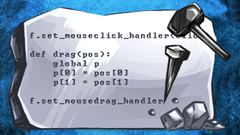
This two-part course is designed to be a fun introduction to the basics of programming in Python. Our main focus will be on building simple interactive games such as Pong, Blackjack and Asteroids.

This two-part course is designed to be a fun introduction to the basics of programming in Python. Our main focus will be on building simple interactive games such as Pong, Blackjack and Asteroids.

This Wharton course will teach the fundamentals of marketing by getting to the root of customer decision making. The course will focus on branding strategies, customer centricity and new market entry.

This course will teach you how to analyze and improve business processes, be it in services or in manufacturing. You will learn how to improve productivity, how to provide more choice to customers, how to reduce response times, and how to improve quality.
Explore the history and practice of physical theatre training using internationally recognised approach to acting: biomechanics.

RE: LAUNCHING ON JUNE 7TH 2016. This MOOC is aimed at anyone wishing to understand the basics of population health. It provides a general introduction to some of the key themes, topics and discussion relevant to population health across the world. Primarily aimed for the general public, the course will also help those already working in health and social care who wish to improve their knowledge and understanding on this topic.

Explore how food intersects with public health and the environment as it moves from field to plate.

The aim of this class is to introduce the exciting and often under appreciated discoveries in RNA biology by exploring the diversity of RNAs—encompassing classical molecules such as ribosomal RNAs (rRNAs), transfer RNAs (tRNAs) and messenger RNAs (mRNAs) as well as newer species, such as microRNAs (miRNAs), long-noncoding RNAs (lncRNAs), and circular RNAs (circRNAs). For each new class of RNA, we will evaluate the evidence for its existence as well as for its proposed function. Students will develop both a deep understanding of the field of RNA biology and the ability to critically assess new papers in this fast-paced field.
This course is one of many Advanced Undergraduate Seminars offered by the Biology Department at MIT. These seminars are tailored for students with an interest in using primary research literature to discuss and learn about current biological research in a highly interactive setting. Many instructors of the Advanced Undergraduate Seminars are postdoctoral scientists with a strong interest in teaching.

Por que os corpos se movem? Entenda como ocorreu a evolução da ideia do movimento dos corpos e aprenda a prever e a analisar o movimento de um objeto de forma moderna e interessante.

Ce cours contient les 7 premiers chapitres d'un cours donné aux étudiants bachelor de l'EPFL. Il est basé sur le livre "Introduction à l'analyse numérique", J. Rappaz M. Picasso, Ed. PPUR. Des outils de base sont décrits dans les 5 premiers chapitres. Les deux derniers chapitres abordent la question de la résolution numérique d'équations différentielles.
Add to calendar

Trusted paper writing service WriteMyPaper.Today will write the papers of any difficulty.