

Courses tagged with "Nutrition" (6413)

¿Sabe usted qué riesgo representan para su salud los problemas de sueño?
En este curso usted aprenderá cómo se manifiestan algunos de los problemas del sueño en niños y adultos, qué consecuencias pueden generar en su salud física y mental, cómo tener una adecuada higiene de sueño, por qué ocurren algunos de estos trastornos y cuáles son algunas de las formas para diagnosticarlos.
Teniendo en cuenta que el ser humano pasa casi 8500 días durmiendo, es fundamental y apasionante comprender algunos puntos claves de la evolución del conocimiento acerca del sueño, sus alteraciones, implicaciones e impacto en calidad de vida, economía mundial, algunas herramientas diagnósticas, nuevas investigaciones y muchas cosas más.
Es importante aclarar que simplemente se trata de un curso introductorio para generar inquietudes y preguntas en ustedes.
Este MOOC fue desarrollado en colaboración con las Doctoras Patricia Hidalgo M. y Patricia Panqueva C. de la Clínica de sueño del HUSI.

Without customers, your business does not exist. Marketing helps you understand your potential user and focus your product on their needs. This course will help you organize a strategy of identifying your perfect user, find ways to connect with them and what you’ll say when you find them. This covers research, planning, execution and most importantly how to grow your user base. This course is part of our Tech Entrepreneur Nanodegree Program, click [here to learn more](https://www.udacity.com/course/tech-entrepreneur-nanodegree--nd007).

There is no higher form of user validation than having customers support your product with their wallets. However, the path to a profitable business is not necessarily an easy one. This course blends instruction with real life examples to help you effectively develop, implement, and measure your monetization strategy, iterating on the model as appropriate. This course is part of our Tech Entrepreneur Nanodegree Program, click [here to learn more](/course/nd007).

This course addresses the modeling and analysis of static equilibrium problems with an emphasis on real world engineering systems and problem solving.

This course focuses on the practical applications of the continuum concept for deformation of solids and fluids, emphasizing force balance. Topics include stress tensor, infinitesimal and finite strain, and rotation tensors. Constitutive relations applicable to geological materials, including elastic, viscous, brittle, and plastic deformation are studied.

From simulating complex phenomenon on supercomputers to storing the coordinates needed in modern 3D printing, data is a huge and growing part of our world. A major tool to manipulate and study this data is linear algebra. This course is part 1 of a 2-part course. In this part, we’ll learn basics of matrix algebra with an emphasis on application. This class has a focus on computer graphics while also containing examples in data mining. We’ll learn to make an image transparent, fade from one image to another, and rotate a 3D wireframe model. We’ll also mine data; for example, we will find similar movies that one might enjoy seeing. In the topic of sports ranking, we’ll be ready to participate in March Madness and submit our own mathematically generated brackets to compete against millions of others. The lectures are developed to encourage you to explore and create your own ideas either through your own programming but also with online tools developed for the course. Come to this course ready to investigate your own ideas.
Courses offered via edX.org are not eligible for academic credit from Davidson College. A passing score in a DavidsonX course(s) will only be eligible for a verified certificate generated by edX.org.

Our world is in a data deluge with ever increasing sizes of datasets. Linear algebra is a tool to manage and analyze such data.
This course is part 2 of a 2-part course, with this part extending smoothly from the first. Note, however, that part 1, is not a prerequisite for part 2. In this part of the course, we'll develop the linear algebra more fully than part 1. This class has a focus on data mining with some applications of computer graphics. We'll discuss, in further depth than part 1, sports ranking and ways to rate teams from thousands of games. We’ll apply the methods to March Madness. We'll also learn methods behind web search, utilized by such companies as Google. We'll also learn to cluster data to find similar groups and also how to compress images to lower the amount of storage used to store them. The tools that we learn can be applied to applications of your interest. For instance, clustering data to find similar movies can be applied to find similar songs or friends. So, come to this course ready to investigate your own ideas.
Courses offered via edX.org are not eligible for academic credit from Davidson College. A passing score in a DavidsonX course(s) will only be eligible for a verified certificate generated by edX.org.

15.875 is a project-based course that explores how organizations can use system dynamics to achieve important goals. In small groups, students learn modeling and consulting skills by working on a term-long project with real-life managers. A diverse set of businesses and organizations sponsor class projects, from start-ups to the Fortune 500. The course focuses on gaining practical insight from the system dynamics process, and appeals to people interested in system dynamics, consulting, or managerial policy-making.

Cryptography is present in everyday life, from paying with a credit card to using the telephone. Learn all about making and breaking puzzles in computing.

This course covers empirical strategies for applied micro research questions. Our agenda includes regression and matching, instrumental variables, differences-in-differences, regression discontinuity designs, standard errors, and a module consisting of 8–9 lectures on the analysis of high-dimensional data sets a.k.a. "Big Data".

The fact of scarcity forces individuals, firms, and societies to choose among alternative uses – or allocations – of its limited resources. Accordingly, the first part of this summer course seeks to understand how economists model the choice process of individual consumers and firms, and how markets work to coordinate these choices. It also examines how well markets perform this function using the economist's criterion of market efficiency.
Overall, this course focuses on microeconomics, with some topics from macroeconomics and international trade. It emphasizes the integration of theory, data, and judgment in the analysis of corporate decisions and public policy, and in the assessment of changing U.S. and international business environments.

This course provides theoretical and practical training on the increasingly popular logistic regression model, which has become the standard analytical method for use with a binary response variable.

This course provides theoretical and practical training for epidemiologists, biostatisticians, and professionals of related disciplines in statistical modeling with particular emphasis on logistic regression.

This course is part of the Microsoft Professional Program Certificate in Data Science.
In this data science course, you will explore the theory and practice of select advanced methods commonly used in data science.
In the first two modules, you will learn about common applications of specialized data types. Then, in the remaining two modules, you will focus on unstructured data. You will work with tools such as R, Python, and Azure Machine Learning to solve advanced data science problems.

15.012 Applied Macro- and International Economics uses case studies to investigate the macroeconomic environment in which firms operate. The first half of the course develops the basic tools of macroeconomic management: monetary, fiscal, and exchange rate policy. The class discusses recent emerging market and financial crises by examining their causes and considering how best to address them and prevent them from recurring in the future. The second half evaluates different strategies of economic development. Topics covered in the second half of this course include growth, the role of debt and foreign aid, and the reliance on natural resources.

This course seeks to establish understanding of the development processes of societies and economies by studying several dimensions of sustainability (environmental, social, political, institutional, economy, organizational, relational, and personal) and the balance among them. It explores the basics of governmental intervention, focusing on areas such as the judicial system, environment, social security, and health, and builds skills to determine what type of policy is most appropriate. We also consider implications of new technologies on the financial sector: Internationalization of currencies, mobile payment systems, and cryptocurrencies, and discuss the institutional framework to ensure choices are sustainable across all dimensions and applications.

This course explores elements of nuclear physics for engineering students. It covers basic properties of the nucleus and nuclear radiations; quantum mechanical calculations of deuteron bound-state wave function and energy; n-p scattering cross section; transition probability per unit time and barrier transmission probability. It also covers binding energy and nuclear stability; interactions of charged particles, neutrons, and gamma rays with matter; radioactive decays; and energetics and general cross section behavior in nuclear reactions.

6.728 is offered under the department's "Devices, Circuits, and Systems" concentration. The course covers concepts in elementary quantum mechanics and statistical physics, introduces applied quantum physics, and emphasizes an experimental basis for quantum mechanics. Concepts covered include: Schrodinger's equation applied to the free particle, tunneling, the harmonic oscillator, and hydrogen atom, variational methods, Fermi-Dirac, Bose-Einstein, and Boltzmann distribution functions, and simple models for metals, semiconductors, and devices such as electron microscopes, scanning tunneling microscope, thermonic emitters, atomic force microscope, and others.
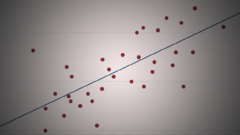
Regression modeling is the standard method for analysis of continuous response data. This course provides theoretical and practical training in statistical modeling with particular emphasis on linear and multiple regression.

Regression modeling has long been the standard method for analysis of continuous response data in the health sciences. This course provides training in statistical modeling with particular emphasis on linear and multiple regression.
Add to calendar

Trusted paper writing service WriteMyPaper.Today will write the papers of any difficulty.