Courses tagged with "Structural+engineering" (100)
Sort by: Name, Rating, Price
Start time: Any, Upcoming, Recent started, New, Always Open
Price: Any, Free, Paid
89 votes
Khan Academy Free Closed [?] Business Abnormal sexual function Biology Class2Go Global Structural+engineering Trig+identities+and+examples

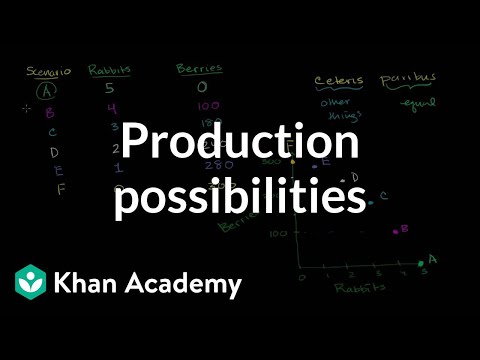
Topics covered in a traditional college level introductory microeconomics course. Production Possibilities Frontier. Opportunity Cost. Increasing Opportunity Cost. Allocative Efficiency and Marginal Benefit. Economic Growth through Investment. Comparative Advantage Specialization and Gains from Trade. Comparative Advantage and Absolute Advantage. Law of Demand. Price of Related Products and Demand. Changes in Income, Population, or Preferences. Normal and Inferior Goods. Inferior Goods Clarification. Law of Supply. Factors Affecting Supply. Market Equilibrium. Changes in Market Equilibrium. Price Elasticity of Demand. More on Elasticity of Demand. Perfect Inelasticity and Perfect Elasticity of Demand. Constant Unit Elasticity. Total Revenue and Elasticity. More on Total Revenue and Elasticity. Cross Elasticity of Demand. Elasticity of Supply. Elasticity and Strange Percent Changes. Demand Curve as Marginal Benefit Curve. Consumer Surplus Introduction. Total Consumer Surplus as Area. Producer Surplus. Rent Control and Deadweight Loss. Minimum Wage and Price Floors. Taxation and Dead Weight Loss. Percentage Tax on Hamburgers. Taxes and Perfectly Inelastic Demand. Taxes and Perfectly Elastic Demand. Marginal Utility. Equalizing Marginal Utility per Dollar Spent. Deriving Demand Curve from Tweaking Marginal Utility per Dollar. Budget Line. Optimal Point on Budget Line. Types of Indifference Curves. Economic Profit vs Accounting Profit. Depreciation and Opportunity Cost of Capital. Fixed, Variable, and Marginal Cost.. Visualizing Average Costs and Marginal Costs as Slope. Marginal Cost and Average Total Cost. Marginal Revenue and Marginal Cost. Marginal Revenue Below Average Total Cost. Long Term Supply Curve and Economic Profit. Perfect Competition. Monopoly Basics. Review of Revenue and Cost Graphs for a Monopoly. Monopolist Optimizing Price (part 1)- Total Revenue.. Monopolist Optimizing Price (part 2)- Marginal Revenue. Monopolist Optimizing Price (part 3)- Dead Weight Loss.avi. Optional Calculus Proof to Show that MR has Twice Slope of Demand. Oligopolies and Monopolistic Competition. Monopolistic Competition and Economic Profit. Oligopolies, Duopolies, Collusion, and Cartels. Prisoners' Dilemma and Nash Equilibrium. More on Nash Equilibrium. Why Parties to Cartels Cheat. Game Theory of Cheating Firms. Negative Externalities. Taxes for Factoring in Negative Externalities. Positive Externalities. Tragedy of the Commons. First Degree Price Discrimination. A Firm's Marginal Product Revenue Curve. How Many People to Hire Given the MPR curve. Adding Demand Curves.

Starts : 2014-04-30
No votes
Iversity Free Closed [?] Business English Design.htm%252525253Fstart%252525253D460&limit%252525253D20.htm%2525253Fcategoryid%2525253D10.htm%25 Design.htm%252525253Fstart%252525253D460&limit%252525253D20.htm%2525253Fcategoryid%2525253D10.htm%25 EdX.htm%2525253Fcategoryid%2525253D6.htm%25253Fcategoryid%25253D21.htm%3Fsortby%3Dprice& History+of+Math Structural+engineering

Non-bankers can learn to understand the mathematical models that have made the headlines so many times in recent years. A course for students of economics, business studies, mathematics, physics and computer science.

Starts : 2009-09-01
10 votes
MIT OpenCourseWare (OCW) Free Business Infor Information control Information Theory Nutrition Structural+engineering

Networks are ubiquitous in our modern society. The World Wide Web that links us to and enables information flows with the rest of the world is the most visible example. It is, however, only one of many networks within which we are situated. Our social life is organized around networks of friends and colleagues. These networks determine our information, influence our opinions, and shape our political attitudes. They also link us, often through important but weak ties, to everybody else in the United States and in the world. Economic and financial markets also look much more like networks than anonymous marketplaces. Firms interact with the same suppliers and customers and use Web-like supply chains. Financial linkages, both among banks and between consumers, companies and banks, also form a network over which funds flow and risks are shared. Systemic risk in financial markets often results from the counterparty risks created within this financial network. Food chains, interacting biological systems and the spread and containment of epidemics are some of the other natural and social phenomena that exhibit a marked networked structure.

This course will introduce the tools for the study of networks. It will show how certain common principles permeate the functioning of these diverse networks and how the same issues related to robustness, fragility, and interlinkages arise in several different types of networks.

Starts : 2007-02-01
8 votes
MIT OpenCourseWare (OCW) Free Business Infor Information environments Information Theory Nutrition Structural+engineering

This course focuses on recent developments in econometrics, especially structural estimation. The topics include nonseparable models, models of imperfect competition, auction models, duration models, and nonlinear panel data. Results are illustrated with economic applications.

Starts : 2007-09-01
14 votes
MIT OpenCourseWare (OCW) Free Business Infor Information environments Information Theory Nutrition Structural+engineering

This course presents micro-econometric models, including large sample theory for estimation and hypothesis testing, generalized method of moments (GMM), estimation of censored and truncated specifications, quantile regression, structural estimation, nonparametric and semiparametric estimation, treatment effects, panel data, bootstrapping, simulation methods, and Bayesian methods. The methods are illustrated with economic applications.

Starts : 2009-02-01
10 votes
MIT OpenCourseWare (OCW) Free Business Infor Information environments Information Theory Nutrition Structural+engineering

This course in organizational economics prepares doctoral students for further study in the field. The course introduces the classic papers and some recent research. The material is organized into the following modules: boundaries of the firm, employment in organizations, decision-making in organizations, and structures and processes in organizations. Each class session covers a few leading papers.

This course was joint-taught between faculty of the Massachusetts Institute of Technology and Harvard University. The Harvard course is Economics 2670 Organizational Economics.

Starts : 2012-09-01
No votes
MIT OpenCourseWare (OCW) Free Error occured ! We are notified and will try and resolve this as soon as possible.
WARNING! [2] count(): Parameter must be an array or an object that implements Countable . Line 151 in file /home/gelembjuk/domains/myeducationpath.com/tmp/templates_c/0340369fde89e913580260084903ef992deaaadb_0.file.course_thumbnail_half.htm.php. Continue execution. 3125221; index.php; 216.73.216.168; GET; url=search/tag/Structural+engineering.htm&start=80&start=80; ; Mozilla/5.0 AppleWebKit/537.36 (KHTML, like Gecko; compatible; ClaudeBot/1.0; +claudebot@anthropic.com); ; Executon time: 0Error occured ! We are notified and will try and resolve this as soon as possible.
WARNING! [2] count(): Parameter must be an array or an object that implements Countable . Line 151 in file /home/gelembjuk/domains/myeducationpath.com/tmp/templates_c/0340369fde89e913580260084903ef992deaaadb_0.file.course_thumbnail_half.htm.php. Continue execution. 3125221; index.php; 216.73.216.168; GET; url=search/tag/Structural+engineering.htm&start=80&start=80; ; Mozilla/5.0 AppleWebKit/537.36 (KHTML, like Gecko; compatible; ClaudeBot/1.0; +claudebot@anthropic.com); ; Executon time: 0 Infor Information control Information Theory Nutrition Structural+engineering

This course explores the relationship between political institutions and economic development, covering key theoretical issues as well as recent empirical evidence. Topics include corruption, democracy, dictatorship, and war. Discusses not just what we know on these topics, but how we know it, covering how to craft a good empirical study or field experiment and how to discriminate between reliable and unreliable evidence.

Starts : 2014-02-01
9 votes
MIT OpenCourseWare (OCW) Free Business Infor Information control Information Theory Nutrition Structural+engineering

This course provides an overview of macroeconomic issues: the determination of output, employment, unemployment, interest rates, and inflation. Monetary and fiscal policies are discussed. Important policy debates such as, the sub-prime crisis, social security, the public debt, and international economic issues are critically explored. The course introduces basic models of macroeconomics and illustrates principles with the experience of the U.S. and foreign economies.

Starts : 2007-09-01
10 votes
MIT OpenCourseWare (OCW) Free Business Infor Information control Information Theory Nutrition Structural+engineering

This introductory course teaches the fundamentals of microeconomics. Topics include consumer theory, producer theory, the behavior of firms, market equilibrium, monopoly, and the role of the government in the economy. 14.01 is a Humanities, Arts, and Social Sciences (HASS) elective and is offered both terms.

This course is a core subject in MIT's undergraduate Energy Studies Minor. This Institute-wide program complements the deep expertise obtained in any major with a broad understanding of the interlinked realms of science, technology, and social sciences as they relate to energy and associated environmental challenges.

15 votes
MIT OpenCourseWare (OCW) Free Business Infor Information control Information Theory Nutrition Structural+engineering

14.01 Principles of Microeconomics is an introductory undergraduate course that teaches the fundamentals of microeconomics. This course introduces microeconomic concepts and analysis, supply and demand analysis, theories of the firm and individual behavior, competition and monopoly, and welfare economics. Students will also be introduced to the use of microeconomic applications to address problems in current economic policy throughout the semester.

This course is a core subject in MIT's undergraduate Energy Studies Minor. This Institute-wide program complements the deep expertise obtained in any major with a broad understanding of the interlinked realms of science, technology, and social sciences as they relate to energy and associated environmental challenges.

Course Format


Click to get started. This course has been designed for independent study. It includes all of the materials you will need to understand the concepts covered in this subject. The materials in this course include:

  • A complete set of Lecture Videos by Prof. Jon Gruber.
  • Reading Assignments in your choice of two textbooks – one of which is a free online edition - as preparation for the lectures.
  • Multiple-choice Quizzes to assess your understanding of the key concepts in each session.
  • Problem Sets with solution keys to test your ability to apply to concepts covered in lecture, and Problem Solving Videos to provide step-by-step instruction through several problem set solutions.
  • A collection of links For Further Study to provide supplemental online content.
  • A full set of Exams, including review material and practice exams to help you prepare.

Other Versions

Other OCW Versions

OCW has published multiple versions of this subject. Question_OVT logo

Related Content

Starts : 2012-09-01
13 votes
MIT OpenCourseWare (OCW) Free Business Infor Information environments Information Theory Nutrition Structural+engineering

This course covers theory and evidence on government taxation policy. Topics include tax incidence, optimal tax theory, the effect of taxation on labor supply and savings, taxation and corporate behavior, and tax expenditure policy.

Starts : 2004-02-01
10 votes
MIT OpenCourseWare (OCW) Free Business Infor Information environments Information Theory Nutrition Structural+engineering

This course covers theory and evidence on government expenditure policy-- topics include: The theory of public goods; Education; State and local public goods; Political economy; Redistribution and welfare policy; Social insurance programs such as social security and unemployment insurance; and Health care policy.

Starts : 2010-09-01
15 votes
MIT OpenCourseWare (OCW) Free Business Infor Information control Information Theory Nutrition Structural+engineering

Explores the role of government in the economy, applying tools of basic microeconomics to answer important policy questions such as government response to global warming, school choice by K-12 students, Social Security versus private retirement savings accounts, government versus private health insurance, setting income tax rates for individuals and corporations.

Starts : 2015-01-13
No votes
Iversity Free Closed [?] English History+of+Math Structural+engineering

####**Course Summary** Join the Talk & Spread the Word' is a course developed by Homuork in collaboration with professor Joan Francesc Cánovas from Universitat Pompeu Fabra (UPF) in Barcelona and other Public Speaking experts, that aims to explain techniques and provide resources that will aid you in preparing your presentations and delivering ideas convincingly. Our public speaking is a key element of how we are perceived, both in professional and private environments: that is why it is so scary! For 6 weeks, participants will submerge themselves in the world of public speaking analyzing famous speeches through TED videos, political interventions or business gurus), will work on their individual weak spots, and improve drastically while having fun. Moreover, you’ll have the ability to put your learnings in practice during the 1st Elevator Pitch Contest, which will be held in Spring 2015 in Barcelona! Alexandra Maratchi (Homuork CEO) will lead the course, guiding you along a variety of techniques that help prepare, structure, rehearse and deliver a great speech. In addition, international experts and coaches in communication like Jeremey Donovan, Sebastian Lora and Jean-Roch Michel will jump in on various occasions to share their research, illustrate techniques and ensure you get a well-rounded view of the success factors in public speaking. The course is taught in English, but there will be subtitles to help our MOOCers. The total workload will be about 2h/week, dedicated to watching video lectures, taking quizzes and completing recommended exercises. ####**What do I learn?** The course enables participants to learn tricks and tips to enhance their presentations and therefore feel comfortable while presenting. In addition to taking the course and exchanging with peers, we expect participants to develop an understanding of different communication styles which they can subsequently apply to their daily conversations. ####**What do I need to know?** No prior knowledge is necessary to take this course. ####**Course Structure** **Chapter 1 - Discover your communicative style
** **Available: 13.01.2015** Unit 1 - My experience Unit 2 - What makes a good presentation?
 Unit 3.1 - Communicative styles of your audience
 Unit 3.2 - Personal communicative audit - exercise **Chapter 2 - Structure your presentation
** **Available: 19.01.2015** Unit 1 - Meet your audience Unit 2.1 - Preparation technique 1: 6 w's
 Unit 2.2 - Preparation technique 2: Visual mapping Unit 2.3 - Preparation technique 3: Communication circle
 Unit 3 - Reason & argue or how to win your battles **Chapter 3 - Write and design your presentation** **Available: 26.01.2015** Unit 1 - Tell us a story Unit 2 - Be funny Unit 3.1 - Write well
 Unit 3.2 - Write well: rhetorical resources Unit 4 - Be elegant or how to prepare your visuals Bonus track: elevator pitch **Chapter 4 - Rehearse your presentation
** **Available: 02.02.2015** Unit 1 - Practice makes excellence
 Unit 2.1 - Prepare for rehearsal
 Unit 2.2 - Train your diction
 Unit 3.1 - Set the tone & speed
 Unit 3.2 - Set the tone & speed - exercise
 **Chapter 5 - Deliver your presentation** **Available: 09.02.2015** Unit 1 – Talkative bodies
 Unit 2 - Use the space
 Unit 3 - Stress management Unit 3.1 - Neuro Linguistic Programming applied to Public Speaking fear Unit 4 - Get dressed ####**Workload** Approximately 2 hours per week for watching lecture videos and completing quizzes and homework assignments.

Starts : 2013-09-01
11 votes
MIT OpenCourseWare (OCW) Free Business Infor Information environments Information Theory Nutrition Structural+engineering

This course is divided into two sections, Part I and Part II.  Part I, found here, provides an introduction to statistical theory. A brief review of probability will be given mainly as background material, however, it is assumed to be known. Topics include normal distribution, limit theorems, Bayesian concepts, and testing, among others. 

Part II prepares students for the remainder of the econometrics sequence and and can be found by visiting 14.381 Fall 2006


Starts : 2016-02-01
No votes
MIT OpenCourseWare (OCW) Free Infor Information control Information Theory Nutrition Structural+engineering

This is an advanced course in game theory. We begin with a rigorous overview of the main equilibrium concepts for non-­cooperative games in both static and dynamic settings with either complete or incomplete information. We define and explore properties of iterated strict dominance, rationalizability, Nash equilibrium, subgame perfection, sequential, perfect and proper equilibria, the intuitive criterion, and iterated weak dominance. We discuss applications to auctions, bargaining, and repeated games. Then we introduce solution concepts for cooperative games and study non-­cooperative implementations. Other topics include matching theory and networks.
 

Starts : 2011-02-01
18 votes
MIT OpenCourseWare (OCW) Free Business Infor Information control Information Theory Nutrition Structural+engineering

This is a course for those who are interested in the challenge posed by massive and persistent world poverty, and are hopeful that economists might have something useful to say about this challenge. The questions we will take up include: Is extreme poverty a thing of the past? What is economic life like when living under a dollar per day? Why do some countries grow fast and others fall further behind? Does growth help the poor? Are famines unavoidable? How can we end child labor—or should we? How do we make schools work for poor citizens? How do we deal with the disease burden? Is micro finance invaluable or overrated? Without property rights, is life destined to be "nasty, brutish and short"? Has globalization been good to the poor? Should we leave economic development to the market? Should we leave economic development to non-governmental organizations (NGOs)? Does foreign aid help or hinder? Where is the best place to intervene?

Starts : 2013-09-01
8 votes
MIT OpenCourseWare (OCW) Free Business Infor Information environments Information Theory Nutrition Structural+engineering

The course provides a survey of the theory and application of time series methods in econometrics. Topics covered will include univariate stationary and non-stationary models, vector autoregressions, frequency domain methods, models for estimation and inference in persistent time series, and structural breaks.

We will cover different methods of estimation and inferences of modern dynamic stochastic general equilibrium models (DSGE): simulated method of moments, Maximum likelihood and Bayesian approach. The empirical applications in the course will be drawn primarily from macroeconomics.

Starts : 2009-09-01
18 votes
MIT OpenCourseWare (OCW) Free Business Infor Information environments Information Theory Nutrition Structural+engineering

This course is an advanced topics course on market and mechanism design. We will study existing or new market institutions, understand their properties, and think about whether they can be re-engineered or improved. Topics discussed include mechanism design, auction theory, one-sided matching in house allocation, two-sided matching, stochastic matching mechanisms, student assignment, and school choice.

Trusted paper writing service WriteMyPaper.Today will write the papers of any difficulty.