

Courses tagged with "Website Development" (161)

The level of popularity you experienced in childhood and adolescence is still affecting you today in ways that you may not even realize. Learn about how psychologists study popularity and how these same concepts can be used in adulthood to be more successful at work, become better parents, and have a happier life.

This course is designed to teach you about managing application containers, using Kubernetes. We've built this course in partnership with experts such as Kelsey Hightower and Carter Morgan from Google and Netflix’s former Cloud Architect, Adrian Cockcroft (current Technology Fellow at Battery Ventures), who provide critical learning throughout the course. Mastering highly resilient and scalable infrastructure management is very important, because the modern expectation is that your favorite sites will be up 24/7, and that they will roll out new features frequently and without disruption of the service. Achieving this requires tools that allow you to ensure speed of development, infrastructure stability and ability to scale. Students with backgrounds in Operations or Development who are interested in managing container based infrastructure with Kubernetes are recommended to enroll! In this course you will learn to: - Containerize an application by creating Docker config files and build processes to produce all the necessary Docker images - Configure and launch an auto-scaling, self-healing Kubernetes cluster - Use Kubernetes to manage deploying, scaling, and updating your applications - Employ best practices for using containers in general, and specifically Kubernetes, when architecting and developing new microservices

In this class you will learn how to debug programs systematically, how to automate the debugging process and build several automated debugging tools in Python.

In this course, you will learn about software defined networking and how it is changing the way communications networks are managed, maintained, and secured.

In this course, you will learn about software defined networking and how it is changing the way communications networks are managed, maintained, and secured.
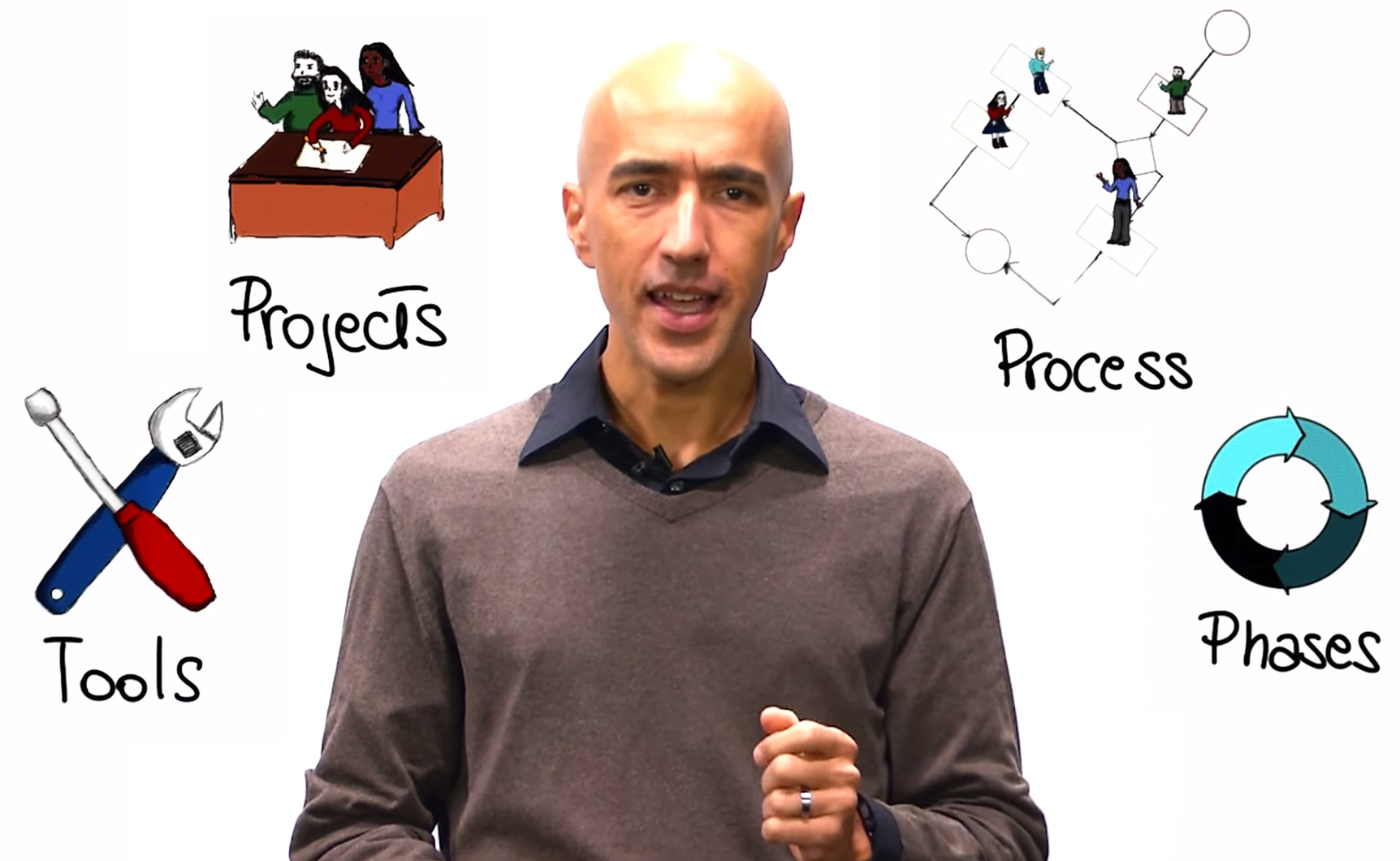
This class is offered as CS6300 at Georgia Tech where it is a part of the [Online Masters Degree (OMS)](http://www.omscs.gatech.edu/). Taking this course here will not earn credit towards the OMS degree. In SDP, you will learn how to select and implement the ideal software process for your development project. Through Professor Orso's engaging examples and interviews with industry insiders, you will learn both conceptual and practical aspects of software engineering. The course covers requirements engineering, architecture and design, testing and maintenance, and software quality in general. The goal of this class is to equip you with the skills necessary to define requirements, set up an integrated development environment (IDE), learn Git (and Github!) and use Unified Modeling Language (UML) to design and build an Android application. We will also examine several testing practices and refactoring techniques that are helpful before the launch of your software project. While everyone working with software should have these skills, they are particularly important for Software Engineers and Engineering Managers.

When writing software, destruction can be just as valuable as creation. Learn how to catch bugs and break software as you discover different testing methods that will help you build better software.

Learn the engineering skills needed to build a technology startup from the ground up.

Are you ready to conquer your next interview? To succeed, you need to understand the expectations. Virtually all technical interviews follow a very set pattern: you get asked a very specific type of question, you're required to have very specific knowledge, and you're expected to answer—and interact with your interviewer—in a very particular way. Knowing this in advance, and preparing accordingly, is the key to success. This course was designed to give you what you need to ace a technical interview. Included are: - videos that walk you through the algorithms and data structures concepts commonly asked in technical interviews - an explanation of efficiency, and an explanation of how it relates to topics covered throughout the class - practice problems and quizzes to test your understanding - a mock interview with a breakdown explaining how interviewers expect you to explain your thought process - curated links to outside resources, including a special link to live practice interviewing with other Udacity students on Pramp - if you’re a Nanodegree student, a final project where you can answer interview questions and get feedback from a trained reviewer. The goal of this course is to prepare you for a real technical interview, so we focus on the material you'll actually be expected to do.

This Capstone MOOC gives students who have passed all previous courses with Verified Certificates in the Mobile Cloud Computing with Android Specialization. It is an opportunity to integrate and demonstrate the knowledge they've acquired across the six earlier content area courses.

The "Fundamentals of Computing" series concludes with a two-week course that reviews the series material and whose primary assessment is a cumulative "capstone" exam.

Learn how to build and deploy modern web application architectures – applications that run over the Internet, in the "cloud," using a browser as the user interface.

¿Alguna vez pensaste en crear tus propios juegos de computadora, pero no tenías idea cómo hacerlo o por dónde comenzar? Este curso te enseñará a programar utilizando Scratch, un lenguaje de programación visual muy fácil de usar, y más importante aún, aprenderás los principios fundamentales de la computación para que comiences a pensar como ingeniero/a de software.

本课程针对医学图像的特征,结合临床需求,由浅入深地讲解医学图像的种类、特征、应用领域、数字化存储形式,并分类讲解图像处理的理论和算法,结合应用案例和课程实践使学生熟练掌握祥光领域的知识和技能,并具备一定的动手能力。

《程序设计实习》课程是北京大学的本科生主干基础课程。课程的主要目标有二: 一、掌握C++语言的语法和标准模板库,能用C++语言以面向对象的方法来编写规模较大的程序。 二、掌握枚举、递归、搜索、动态规划等基本的算法思想。通过大量的高强度的编程训练,提高动手能力,做到能较为熟练、完整、准确地实现自己设计的程序,为进一步学习其他计算机专业课程,或在其他专业领域运用计算机编程解决问题奠定良好的基础。

讲授计算机辅助翻译技术的基本概念,及多种辅助翻译工具的原理和使用方法,锻炼学生在技术环境下从事翻译工作等其他各类语言服务工作的能力,并帮助学生理解信息化时代的语言服务工作。 This course introduces the basic concepts of computer-aided translation technology and helps students learn to use computer-aided translation tools.

理解软件测试原理,掌握软件测试方法,实践软件测试技术

通过大量、丰富、完整、不同领域、应用不同技术的案例,深入、完整地讲解当今主流的面向对象软件开发方法的分析、设计及实现方法。
Add to calendar

Trusted paper writing service WriteMyPaper.Today will write the papers of any difficulty.