

Online courses directory (19947)

Aprende a modelar en ZBrush la Venus de Milo y aprende lo conceptos anatómicos importantes para la creación de un rosto

Aprende a crear una escultura de arcilla mediante el uso de herramientas básicas de escultura concept art

Learn how to utilize various 3d modeling tools and methods in Maya to create a fun theme park ride - a ROLLER COASTER!

ESD.864 Modeling and Assessment for Policy explores how scientific information and quantitative models can be used to inform policy decision-making. Students will develop an understanding of quantitative modeling techniques and their role in the policy process through case studies and interactive activities. The course addresses issues such as analysis of scientific assessment processes, uses of integrated assessment models, public perception of quantitative information, methods for dealing with uncertainties, and design choices in building policy-relevant models. Examples used in this class focus on models and information used in earth system governance.

ESD.864 Modeling and Assessment for Policy explores how scientific information and quantitative models can be used to inform policy decision-making. Students will develop an understanding of quantitative modeling techniques and their role in the policy process through case studies and interactive activities. The course addresses issues such as analysis of scientific assessment processes, uses of integrated assessment models, public perception of quantitative information, methods for dealing with uncertainties, and design choices in building policy-relevant models. Examples used in this class focus on models and information used in earth system governance.

This course models multi-domain engineering systems at a level of detail suitable for design and control system implementation. Topics include network representation, state-space models; multi-port energy storage and dissipation, Legendre transforms; nonlinear mechanics, transformation theory, Lagrangian and Hamiltonian forms; and control-relevant properties. Application examples may include electro-mechanical transducers, mechanisms, electronics, fluid and thermal systems, compressible flow, chemical processes, diffusion, and wave transmission.

Bringing together insights from physics, chemistry, biology, earth and atmospheric sciences -- and even some economics -- this course is geared to curious enthusiasts, allowing them to work with real climate data and simulations of the earth’s changing climate.
This eight-week class takes a quantitative approach to the science of global warming and will enable students to understand the greenhouse effect, the planet's carbon cycle, and how burning fossil fuel affects that cycle; and to evaluate the potential severity of humans’ impact on Earth’s climate.
Learn a new way to approach problem solving by stating the problem and letting powerful constraint solving software do the rest. This class teaches you the art of encoding complex discrete optimization problems in the MiniZinc modeling language and then shows you how to effortlessly solve them by leveraging state-of-the-art open-source constraint solving software.

This course is the first of a two term sequence in modeling, analysis and control of dynamic systems. The various topics covered are as follows: mechanical translation, uniaxial rotation, electrical circuits and their coupling via levers, gears and electro-mechanical devices, analytical and computational solution of linear differential equations, state-determined systems, Laplace transforms, transfer functions, frequency response, Bode plots, vibrations, modal analysis, open- and closed-loop control, instability, time-domain controller design, and introduction to frequency-domain control design techniques. Case studies of engineering applications are also covered.

This course provides an introduction to the study of environmental phenomena that exhibit both organized structure and wide variability—i.e., complexity. Through focused study of a variety of physical, biological, and chemical problems in conjunction with theoretical models, we learn a series of lessons with wide applicability to understanding the structure and organization of the natural world. Students also learn how to construct minimal mathematical, physical, and computational models that provide informative answers to precise questions.
This course is appropriate for advanced undergraduates. Beginning graduate students are encouraged to register for 12.586 (graduate version of 12.086). Students taking the graduate version complete different assignments.
This course provides an introduction to the study of environmental phenomena that exhibit both organized structure and wide variability—i.e., complexity. Through focused study of a variety of physical, biological, and chemical problems in conjunction with theoretical models, we learn a series of lessons with wide applicability to understanding the structure and organization of the natural world. Students also learn how to construct minimal mathematical, physical, and computational models that provide informative answers to precise questions.
This course is appropriate for advanced undergraduates. Beginning graduate students are encouraged to register for 12.586 (graduate version of 12.086). Students taking the graduate version complete different assignments.

This course explores the theory and practice of scientific modeling in the context of auditory and speech biophysics. Based on seminar-style discussions of the research literature, the class draws on examples from hearing and speech, and explores general, meta-theoretical issues that transcend the particular subject matter. Examples include: What is a model? What is the process of model building? What are the different approaches to modeling? What is the relationship between theory and experiment? How are models tested? What constitutes a good model?

Selected workflow control and resource patterns

Workshop di modellazione e rendering, impareremo a modellare una cucina partendo da zero. 10 Videolezioni + PDF incluso.

In questo videocorso di modellazione con tecniche NURBS e Mesh in Blender 3D, con successivo rendering in Cycles.

Course Summary
Modelling and simulation make a particular part of the world easier to define, visualize and understand. Both require the identification of relevant aspects of a situation in the real world and then the use of different types of models for different objectives and the definition of the most suitable model parameters.
This course provides to you a number of methods suitable for modelling technical systems and processes in a wide range of applications. These applications cover a range from image processing via machine learning to face recognition.
After introducing the techniques in general, you train their application to real problems employing the widely used modelling and simulation tool MATLAB®.
What will I learn?
- You will be acquainted with the concepts of modelling and simulation
- You will be able to implement and simulate models using MATLAB®.
- You will acquire further knowledge of Image Processing, Optical Character Recognition, Machine Learning and Face Recognition.
- If you are an enthusiastic student with only rudimentary programming knowledge you can acquire an understanding of basic MATLAB® programming.
What do I have to know?
The course will be taught on an academic level for undergraduate students. Therefore, mathematics and physics knowledge of at least secondary education level as well as programming knowledge is a prerequisite. MATLAB® is commercial software. As a result of support from MathWorks, students will be granted a downloadable license to MATLAB® for the duration of the course.
Course Schedule
Chapter 1: Introduction to MATLAB Concepts
Chapter 2: Modelling and Simulation
Chapter 3: The Basic Problem Solving Toolbox
Chapter 4: Advanced Problem Solving Methods
Chapter 5: Statistics and Image Processing
Chapter 6: Machine Learning in a Nutshell
Chapter 7: Optical Character Recognition
Cahpter 8: Face Recognition
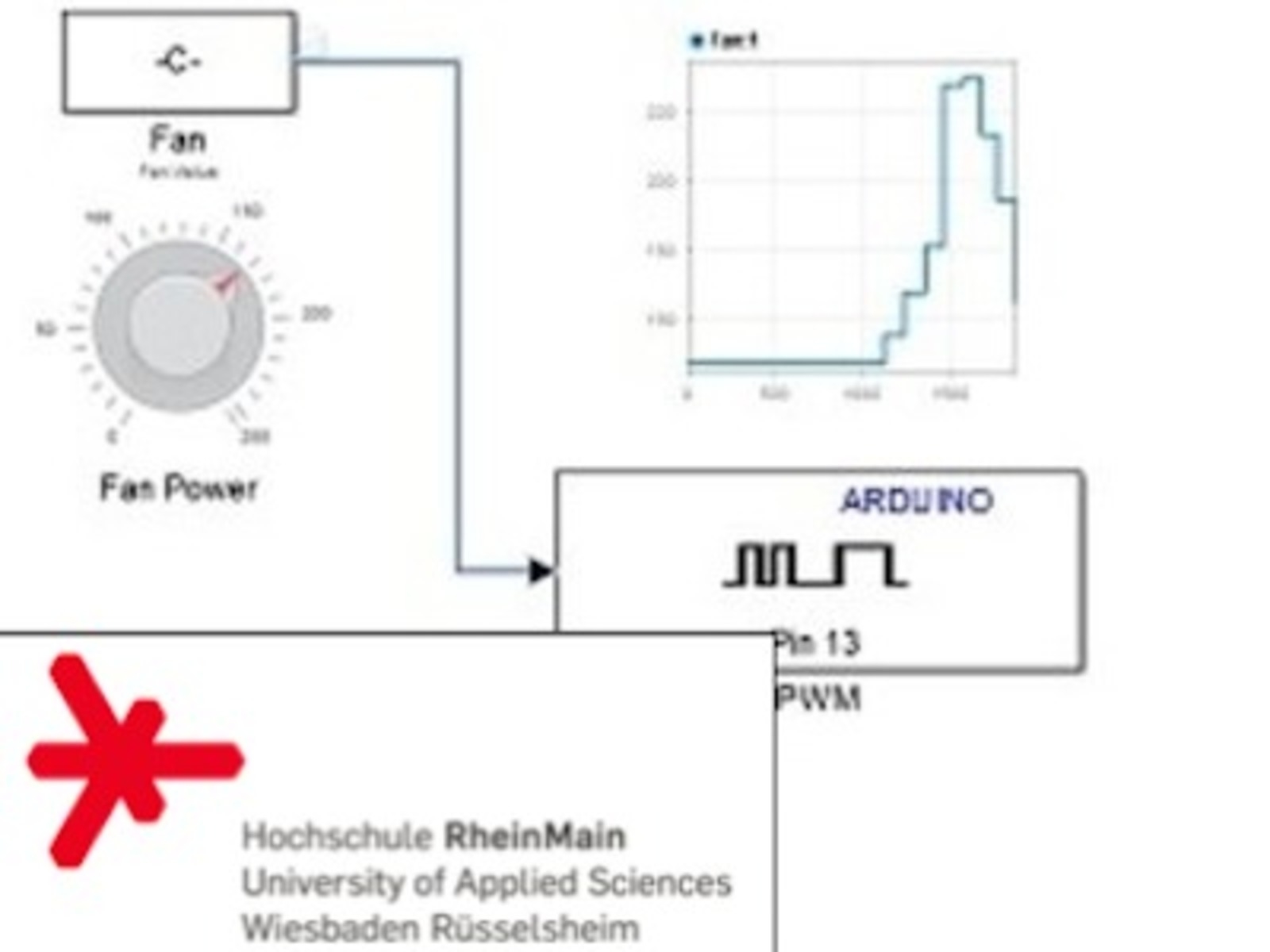
The main objective of this MOOC is to teach the use of Simulink® as a simulation tool for a broad variety of application domains. We will specifically focus on topics of interaction of the simulation models with the real world using Arduino Microcontrollers and Simulink®'s corresponding Arduino Hardware Support Package.
First, we will explain modelling and simulation concepts in general and introduce Simulink®. As a first application, we show how a simplified model of a Water Treatment Plant is implemented using Simulink®. We will then use an Arduino microcontroller to access hardware in the real world. We will go on to introduce control engineering techniques using Simulink® and apply these techniques to drive an example system of a ball floating in an airstream.
What will I learn?
By the end of this course, you will be able to implement simulation models using the tool Simulink®. These models can cover applications in the engineering domain and you know methods and technologies to create simulation models of realistic complexity.
In the engineering domain, microcontrollers are frequently used to control some physical system. Therefore, in this course you will also learn how to use an Arduino microcontroller for this purpose and how programmes for such a microcontroller are implemented in Simulink®. You will specifically learn techniques of control engineering by applying them to a technically simple physical system that is yet difficult to control.
What do I need to know?
This course will be taught on an academic level for undergraduate students. Therefore, knowledge in mathematics and physics of at least secondary education level as well as programming knowledge is a prerequisite.
Having already passed our MOOC "Modelling and Simulation using MATLAB" is helpful but not mandatory.
Course Structure
Chapter 1: My first Simulink® model
Chapter 2: Advanced Simulink® modelling
Chapter 3: Modelling a Water Treatment Plant
Chapter 4: The Arduino microcontroller and the corresponding Simulink® support package
Chapter 5: Control Engineering using Simulink®
Chapter 6: Control Engineering using the Arduino
SOBRE EL CURSO
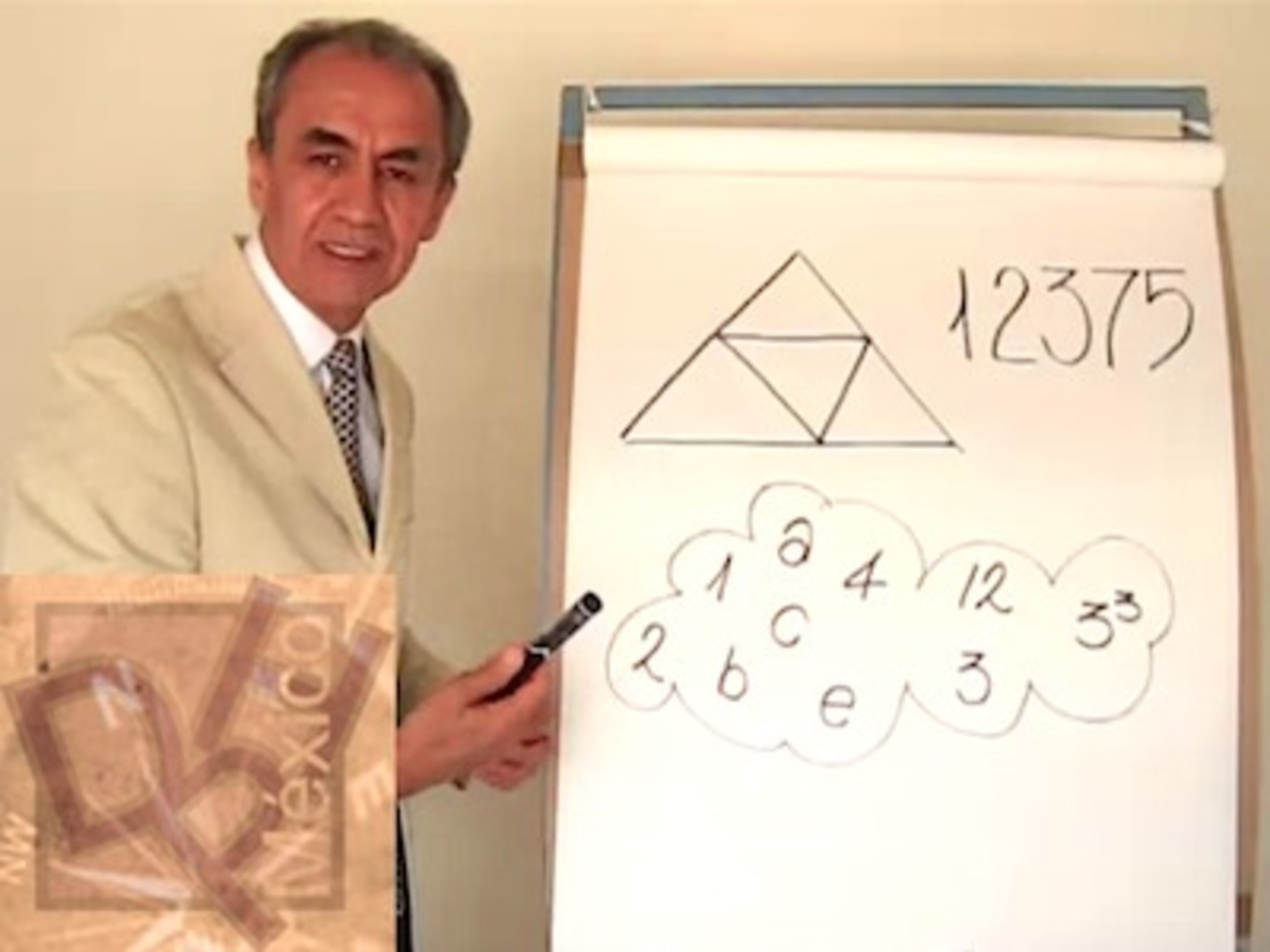
Cada vez se abre más la brecha entre los Modelos Educativos exitosos del primer mundo y los impulsados por los países emergentes o del tercer mundo. Sin embargo, y pese a que la materia prima fundamental es el razonamiento, se ha exagerado en la proliferación de propuestas en múltiples sentidos, aunado a visiones restringidas de las potencialidades del cerebro humano. Somos firmes en creer que la inteligencia se desarrolla al igual que el conocimiento universal, y que es necesaria una reconstrucción de los enfoques educativos y cognitivos que los sustentan, a fin de promover su crecimiento y fortalecimiento sostenido.
Lamentablemente, su repercusión en la práctica profesional cotidiana demuestra que cada día dependemos más de nuevas propuestas para la solución de problemas, las cuales resultan costosas para ser implantadas en las empresas que los enfrentan. Tal es el caso del Razonamiento o Pensamiento Disruptivo, o el CPS Creative Problem Solving.
Es por ello que consideramos urgente que los Modelos Educativos consideren la necesidad de formar a los alumnos en esta línea, y en el caso de las empresas o instituciones, reflexionen acerca de esta problemática.
Las ventajas competitivas del MIRM, son:
1. Englobar, bajo un único enfoque, las diferentes corrientes de pensamiento, como son: Convergente, Divergente o Paralelo, Crítico, Intuitivo, Disruptivo, etc.
2. Ampliar el enfoque del DHP (Desarrollo de Habilidades del Pensamiento), como herramienta de apoyo fundamental.
3. Aplicar el MIRM como alternativa de solución creativa de los problemas, toda vez que es un Modelo que genera Modelos Estratégicos.
4. Ofrecer, para los que obtengan la certificación de este curso, materiales online editables y reusables en sus áreas profesionales de trabajo, libres de derechos.
EL CURSO ESTÁ ORIENTADO, A
• Empresas, Despachos o Instituciones que requieran herramientas formativas y de aplicación práctica en la Solución Creativa de Problemas.
• Instituciones promotoras de nuevos e innovadores horizontes educativos.
• Investigadores Educativos que buscan esquemas propositivos más eficientes.
• Universidades que consideren factible el reorientar el rumbo de sus esquemas de investigación educativa, impulsando el propio desarrollo de Objetos de Conocimiento (construidos con herramientas de lenguajes de programación)
• Desarrolladores de software interesados en participar en propuestas vía online, aportando recursos abiertos disponibles para uso gratuito universal.
• Maestros y alumnos preocupados por la dispersión agravada de los modelos actuales que siguen privilegiando la memorización y no el razonamiento.
CONOCIMIENTO PREVIO
Es deseable, no indispensable:
• Contar con referencias previas, o haber escuchado, de Modelos y Paradigmas Educativos.
• Saber de la existencia o haber aplicado técnicas diversas de Desarrollo de Habilidades del Pensamiento.
• Ser sensible o afecto al Enfoque Sistémico (Teoría General de Sistemas), Re-Ingeniería, Psicología Cognitiva, y áreas afines.
• Tener deseos de irrumpir con esquemas no convencionales para la solución de problemas.
LOS OBJETIVOS DE APRENDIZAJE
- Desarrollar una visión propia y sustentada de un Moldeo altamente factible, soportado con técnicas aplicables en el ámbito profesional y sujeto a un Ciclo de Mejora Continua.
- Estructurar y encausar una herramienta de trabajo, con enfoques: Epistemológico, Heurístico y Holístico, y orientada a la Solución de Problemas.
- Fortalecer el conocimiento del Paradigma por Competencias Laborales, como visión actual del mundo contemporáneo.
LA ESTRUCTURA DEL CURSO
Capítulos:
1. Bienvenida.
2. Introducción general.
3. Inteligencia adquirida.
4. El DHP como estrategia, no como fin.
5. Estructura atómica del Razonamiento Inferencial.
6. Modelo Integral para El Razonamiento Múltiple.
7. Principios estratégicos y funcionales del MIRM.
8. El MIRM, como estrategia basada en Applets (Objetos de Conocimiento)
9. Instrumentos de evaluación bajo la óptica MIRM.

¿Cómo son los negocios que triunfan siguiendo los principios de la economía colaborativa? Ej: Spotify, Wikipedia...

Physical and digital design skills are key to practitioners in art, design, and engineering, as well as many other creative professions. Models are essential in architecture. In design practice all kinds of physical scale models and digital models are used side by side.
In this architecture course, you will gain experience that will help and inspire you to advance in your personal and professional development. You will attain skills in a practical way. First, we will focus on sketch models for the early stages of a design process, then we will continue with virtual representations for design communication and finally more precise and detailed models will be used for further development of the ideas.
In the theoretical part of the course, you will learn about many different sorts of models: how architects use these and how they are essential in the design process.
The practical part of the course addresses a number of challenges. In small steps we will guide you through technical and creative difficulties in exciting, playful, and pleasant ways.
LICENSE
The course materials of this course are Copyright Delft University of Technology and are licensed under a Creative Commons Attribution-NonCommercial-ShareAlike (CC-BY-NC-SA) 4.0 International License.
Add to calendar

Trusted paper writing service WriteMyPaper.Today will write the papers of any difficulty.