

Courses tagged with "Software analysis" (15)

An introduction to the marketing concept and its role in business strategy. NOTE: Options A and B use different texts.

Great managers are made, not born. Learn about the qualities and skills of great managers in this Business 101 course. Instructor Sherri Hartzell holds both an MBA and Ed.D., so she's an excellent choice to teach you about principles of management.
Start by learning about the different levels of management in organizations and then dive into how good managers lead to great employees. Students of business, budding entrepreneurs and independent online learners alike can benefit from these short, engaging video lessons and interactive online quizzes. Business 101: Principles of Management can prepare you to earn real, widely transferable college credit by taking the Principles of Management CLEP exam or the Excelsior Principles of Management exam .

Learn the secret strategies to becoming your company's most famous salesperson in just 20 days.

In this course, you will learn about the marketing process and examine the range of marketing decisions that an organization must make in order to sell its products and services. You will also learn how to think like a marketer, discovering that the focus of marketing has always been on the consumer. You will begin to ask, “Who is the consumer of goods and services?” What does the consumer need? What does the consumer want? Marketing is an understanding of how to communicate with the consumer, and is characterized by four activities: Creating products and services that serve consumers Communicating a clear value proposition Delivering products and services in a way that optimizes value Exchanging, or trading, value for those offerings Many people incorrectly believe that marketing and advertising are one in the same. In reality, advertising is just one of many tools used in marketing, which is the process by which firms determine which products to offer, how to price those products, and to whom th…

This Wharton course will teach the fundamentals of marketing by getting to the root of customer decision making. The course will focus on branding strategies, customer centricity and new market entry.

Your step-by-step guide to creating simple yet professional videos using profitable strategies to grow your business

Dieser Kurs vermittelt die Grundzüge des Marketings und gibt einen Überblick von Konzepten, Strategien und Werkzeugen. Im Zentrum des Kurses stehen vier Themenbereiche: Produkt-, Kommunikations-, Preis- und Distributionspolitik.

Explore the latest trends in digital marketing. Get beneath the hype. What are the implications? How will you respond?

Course Summary
In an age of self-service stores, saturated markets, and ever more demanding customers, the creative and science-driven design of the point of sale has become a crucial success factor for both retailers and service businesses. In this MOOC, you will be introduced to shopper marketing. You will learn to understand shopping behavior and how to optimize the design of retail stores and service environments to increase customer satisfaction and sales. While the focus is on the practical applicability of the concepts discussed, the MOOC is also firmly grounded in consumer and psychological research. In the lessons, I will draw on both the recent research literature and my own experience in marketing consulting and consumer research.
The topics covered in the MOOC are:
• Store layout: Influencing how shoppers navigate the store
• Helping shopper orientation in the store
• Store design factors
• Visual merchandising techniques
• Influencing the store atmosphere
• Experiential store design: Making shopping fun
• Specific applications of store design principles
What will I learn?
By the end this MOOC, you will have developed an understanding of consumer behavior at the point of sale and be able to apply this knowledge to the (re)design of retail spaces and service environments.
Specifically, you will:
• appreciate the relevance of shopper marketing and store design
• understand the goals of store and servicescape design
• be able to apply environmental psychology principles to the design of retail and service spaces
• understand the effect of sensory clues such as music, scents and colors on shopping behavior
• understand how emotions influence shopping decisions and be able to trigger emotions in shoppers
• understand the importance of experiential marketing and store design
• be able to influence consumer behavior with specific store design and visual merchandising techniques
• be able to apply the knowledge gained in this MOOC to evaluate retail spaces and servicescapes
Also, you should have fun in this MOOC :-)
What do I need to know?
No prior marketing, business or psychology knowledge is required.
Course Structure
Week 1: Shopper movement and behavior in the store
Find out how shoppers navigate the store, how they search for products, and how you can make them find the products you want them to see and buy.
1.0 Welcome to the course
1.1 Overview of the module
1.2 Shopper shadowing: Tracking shoppers in the store
1.3 Four principles of how shoppers move in the store
1.4 Grid and free form: Creating a store layout that suits the store
1.5 Follow the yellow brick road: Influencing shopper movement through a loop
1.6 How I ended up buying potato chips: Where to place products so that shoppers buy them
1.7 Eye level is buy level: The principles of shelf placement
1.8 Horizontal, not vertical: Shoppers’ search patterns
1.9 Follow the eye: Eyetracking at the Point of Sale
From my bookshelf
Week 2: Shopper orientation and disorientation
Learn why shopper confusion kills every sale and how you can help shoppers find their way—all the way to the cash register.
2.1 Overview of the module
2.2 I’m so lost… and I hate this place: The effects of shopper disorientation
2.3 It’s all stored in the head: Improving shopper orientation through cognitive maps
2.4 Beware of the magic number 7: Improving shopper orientation through signs
2.5 Words and pictures: Applying dual coding theory
2.6 You are here: Improving orientation through store maps
2.7 The store as a forbidden place: Consumer disinformation
From my bookshelf
Week 3: Influencing shoppers through the store atmosphere
Learn how to appeal to shopper emotions through use of colors, scents, light, and music.
3.1 Overview of the module
3.2 Communicating through the senses: How the store atmosphere influences emotions
3.3 How the environment influences shoppers: The Mehrabian-Russell-Model
3.4 Arousal and pleasure: The key drivers of in-store behavior
3.5 Better slow than fast: Using background music in the store
3.6 The smell of happy memories: Using ambient scents
3.7 Let the sunshine in: Store lighting
3.8 Red or blue? Colors in the store
3.9 Everything must fit: The importance of congruence
From my bookshelf
Week 4: Visual merchandising – the art and science of product presentation
Let me show you what the most attention-grabbing and profitable ways to present your merchandise are.
4.1 Overview of the module
4.2 The art and science of seducing shoppers with the merchandise: What is visual merchandising?
4.3 Shoppers buy only what they see: The 3 key principles of visual merchandising
4.4 Less is more: Avoiding the choice overload effect
4.5 Choosing the right company for your products: The bundled presentation merchandising technique
4.6 Creating visual magnets: Directing the shoppers’ attention
4.7 A picture says more than a thousand words: Using in-store graphics to trigger cognitive schemas
From my bookshelf
Week 5: Making shopping fun through experiential store design
I'll teach you to make shopping memorable and fun by creating unique experiences.
5.1 Overview of the module
5.2 Competing with cyberspace: Reasons for experiential store design
5.3 Necessity or fun: Utilitarian and hedonic shopping
5.4 Appealing to the pleasure seekers: 4 steps for creating shopping experiences for hedonic shoppers
5.5 Exciting places and live entertainment: Designing experiences for adventure shoppers
5.6 Creating a third place: Designing experiences for social shoppers
5.7 Gifts, indulgence and curiosity: Experiences for role, gratification, and idea shoppers
5.8 Appealing to the bargain hunters: Designing experiences for deal-prone consumers
5.9 Jungles, castles and Harry Potter: Creating effective themed experiences
From my bookshelf
Week 6: Recipes for influencing shoppers
Find out how you can apply the concepts learned in this course to influence specific shopping behaviors and achieve positive effects for the store.
6.1 Overview of the module
6.2 How much longer? Shorten consumers’ wait-time perceptions
6.3 Expensive or cheap? Influence shoppers’ price perceptions
6.4 Accessibility for all: Design the store for senior citizens
6.5 Wait, wait, don’t go! Keep shoppers in the store longer
6.6 I must have that! Encourage impulse purchases
6.7 Make shopping simple and fun: The importance of processing fluency
6.8 Course conclusion

Why do you need Digital Marketing?
With budgets for digital marketing constantly growing, organisations are facing a major skills shortage. The need for individuals who understand business combined with technical knowledge in Digital Marketing has never been greater. This course is based on European case studies showing current digital and social media marketing practices across Europe. Europe is one of the largest regions for digital and social marketing used but there are many local preferences and this course will help you to navigate these complexities. This course combines practical skills and theoretical knowledge with the goal of teaching you the skills to improve digital and social media marketing in organisations.
Who is this course for?
This course is aimed at two audiences:
- Organisations who want to establish and improve their digital and social media marketing footprint.
- Everyone interested in digital and social media marketing who might consider studying or working in the field.
What do I need to know?
Basic computer knowledge and skills are necessary and a business background would be advantageous but is not essential.
Learning Objectives
- Introduce current and core practices of Digital and Social Media Marketing that will allow learners to analyse, plan, execute and evaluate a digital marketing strategy.
- Introduce core tools currently used in Digital and Social Media Marketing that will allow learners to analyse, plan, execute and evaluate a digital marketing strategy.
- Develop an understanding of Search Engine Optimisation (SEO), Social Media Optimisation, Affiliate and other relevant communication channels for engagement of digital communities.
Course Structure
1. Why is Digital and Social Media Marketing important today and in the future?
1.1. Introduction to strategic planning
1.2 SWOT analysis
1.3. Developing SMART objectives for strategy and campaigns
1.4. Digital Business Maturity Model
1.5. The consumer journey to online purchase
1.6. Introduction to core concepts of digital and social media marketing
1.7. Introduction to online branding
2. Understanding the different nature of digital channels based on geographic, demographic and digital fit for a campaign
2.1 Search Engines - differences in countries - based on the case study examples
2.2 Social Media platforms differences in countries and how to they can be used
2.3 Email marketing and how it can be used
2.4 Affiliate marketing and how it can be used
2.5 Mobile marketing and how it could be used
2.6 Paid channels overview - search and social
2.7 Communities focused engagement
3. Buyer persona development
3.1 The importance of understanding who the target audience is and how search and social help to develop this understanding
3.2 Planning integration of search and social media
3.3 Keyword research for buyer persona
3.4 Social media channels for buyer persona
3.5 Develop keyword plan for a campaign
3.6 PPC keyword vs organic keyword plan
3.7 Develop social media editorial calendar
4. How campaigns fit into a wider implementation of the overall organisation strategy
4.1 Example company campaign plan
4.2 Key elements of campaign management - Gantt chart
4.3 Risk management
4.4 Digital project management tools and techniques
4.5 Project plan monitoring and review
4.6 Marketing automation
4.7 PPC campaign planning
5. Choosing the right digital profiles for the right audience
5.1 Facebook
5.2 YouTube
5.3 Twitter
5.4 LinkedIn
5.5 PPC optimisation
5.6 What makes content to go Viral?
5.7 How to create content viral?
6. The importance of ongoing monitoring and learning from your engagement
6.1 Understanding of Social Capital and its importance case study
6.2 Accessing data in Google Analytics
6.3 Accessing data from Facebook
6.4 Accessing data from Twitter
6.5 Using spreadsheets to analyse and populate reports
6.6 Learning from digital results
6.7 PPC report
WHAT IS THIS COURSE ABOUT?
Have you ever wondered why 90% of musicians (and artists) don't make a living in the digital era - although they want to?
The answer is simple: they are still stuck in the last century mindset. The truth is, if you want to become a full-time artist doing what you love, you have to structure a business around your art, not just merely hope!
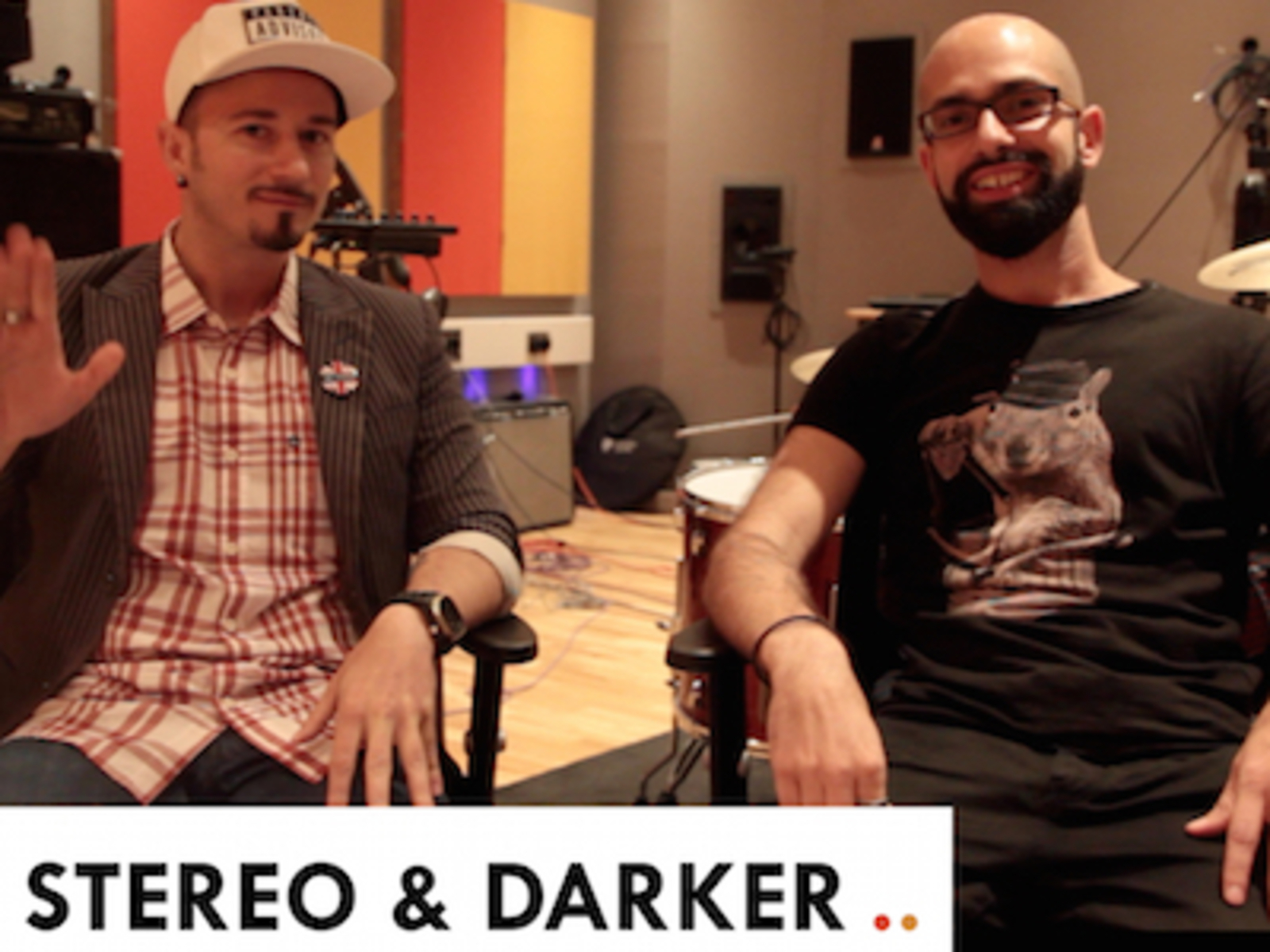
In this practical, 8-week course, two full-time practitioner musicians and academic educators, Tommy Darker and Stereo Mike, will guide you though the process of creating your very own business model, how to market yourself as a startup, how to be agile, motivated and productive, how to develop a work-in-progress brand, and how to adapt to the new mindset.
This is a course for all artists, and 'music' will be used as a case study. You will learn through practical assignments, so that you can implement what you learn in the real world, and get practical results.
This is the first MOOC in the world of its kind. It will be exciting. Shall we start?
WHO IS THIS COURSE FOR?
The course would be of interest to musicians and artists seeking entrepreneurial knowledge, as well as business practitioners working within an artistic context.
The specific target audience for the course includes practitioners in the field of music and arts, with an active interest in developing professional careers and becoming full-time artists.
WHAT DO I NEED TO KNOW?
There is no academic prerequisite necessary in order to be able to engage with and benefit from the course - just bring your appetite to learn.
However, an active musician or arts practitioner will be able to leverage the philosophy, practice and challenges set by directly applying the studied principles to their developing careers.
WHAT WILL I LEARN?
Upon completion of the course, the students should be able to:
1. Apply contemporary entrepreneurial approaches to their musical/artistic careers
2. Identify changing industry trends in order to define relevant opportunities for their practice
3. Balance artistic and business personal development, ensuring longevity
4. Discover scalable business models and recurring revenue streams
5. Produce actionable plans to exploit their art entrepreneurially, through practical assignments
6. Innovate, recognising future trends and technological progress
COURSE STRUCTURE
Week 1: Introduction
Historical Context | The New Ecosystem | Modern Concepts
Week 2 & 3: Business Models
Business Model Structure | Revenue models | Audience
Week 4: Lean Startup
Validated Learning | MVP | Prototyping | Management
Week 5: Agile Philosophy Principles
Productivity & Motivation | Startup Mindset | Communication
Week 6: Presence, Product, Process
Work-in-progress Brand | Demo | The Drip Method
Week 7: Digital Opportunities & Digital Paradigms
Power of Free | Digital-to-analogue | Network
Week 8: Deconstruction
Case Studies | Leadership & Innovation | What's Next?

Digital Branding is still an underrepresented and unexplored field in research and practice. The multiplicity of cultural differences within international brand management is vast.
Following a primer on brand management and the particulars of digital media and technologies, participants experience how to present a brand using digital brand storytelling. In the latter portion of the course, you will learn advanced methods and techniques used to generate strong, ownable emotions around a brand.
The course addresses the following questions:
• How can I use the unique attributes of digital media and digital technologies for my own digital brand management work?
• How do I stage – like a theater production – my brand effectively in digital media?
• How can I tell exciting, successful stories?
• How can I place my digital brand management (concept) in the minds of my consumers and other important stakeholder groups?
Who should take this course?
The course is aimed at those who believe in the digital future and actively want to shape it, which means that we should cover some basic premises at the outset.
What counts most is passion and the will to build strong digital brands. To be a pioneer. To search out new inspiration, input and to meet new people to share your passion and network with.
What do I need to know?
Some of you already have previous knowledge of branding or of digital media, which is welcome but not required. Interest and curiosity in digital brand management as well as in the unique attributes of digital media and technologies are all you need to participate.
What will I learn?
By the end of the course:
• You will have learned how to use the unique attributes of digital media and digital technologies for your own digital brand management work.
• You will be able to stage – like a theater production – your brand effectively in digital media.
• You will be able to tell exciting, successful stories.
• You will understand how to place your digital brand management (concept) in the minds of your consumers and other important stakeholder groups in an effective manner.
Course Structure
Chapter 1:
In the first chapter, we will define the most important terms of branding. You will be formulating your own Brand Reward Promise and you'll be dealing with the Limbic Map, which will guide you toward the possibilities for positioning your brand/product in an emotionally and rewarding manner.
Chapter 2:
We will learn about the unique attributes of digital media and digital technologies.
Chapter 3:
We will experience how to present a brand using digital brand storytelling.
Chapter 4:
We will deal with Emotional Brand Codes and learn advanced methods and techniques used to generate strong, ownable emotions around a brand.
Add to calendar

Trusted paper writing service WriteMyPaper.Today will write the papers of any difficulty.